When board oversight strays, so do companies, and if board oversight doesn’t exist, well, that can lead to an $8 billion fraud. Protiviti’s Jim DeLoach continues his series on governance failures with three more examples that provide lessons in sound business decision-making.
Last month, I identified lessons from two corporate governance failures resulting in the demise of two companies — Blockbuster and Washington Mutual — and one involving an audacious fraud in another company, Theranos. Lessons from governance failures highlight the importance of ethical behavior, risk management, accountability and board oversight. These failures often leave in their wake significant losses, reputational damage, brand erosion and legal penalties. They also destroy enterprise value and investor portfolios that had been built over many years.
Here, I address three more failures, including one in which there was no governance at all.
Overcooked books
No discussion of governance failures is complete without a mention of Enron. Once the darling of Wall Street with a high-profile CEO, a COO who had the “magic touch” and a CFO who received accolades from Fortune and CFO Magazine, Enron is a classic example of “The higher they get, the harder they fall.” The 25-year anniversary of Enron’s collapse, one of the most infamous in history, is approaching this fall. The sad story is one of financial fraud perpetrated through an opaque corporate and reporting structure that stretched the bounds of mark-to-market accounting to record projected profits as if they were actual profits earned, thereby inflating earnings reports.
A waiver of the Enron conflicts-of-interest policy by the board of directors enabled the CFO to engage in massive self-dealing using special purpose entities he controlled that were designed to move assets and debts off Enron’s balance sheet. This deception made the company appear more financially stable and less indebted than it actually was. He engineered complex financial instruments that few understood, often involving intricate investment partnerships and transactions that served no other purpose than to disguise the company’s debts and faltering lines of business. He personally managed two hedge funds to which Enron could sell failing assets to inflate revenue and profits while also getting them off the company’s books. And, of course, he enriched himself with millions in “management fees.”
The company’s public disclosures were intentionally designed to be so complex that few investors and analysts could decipher the true nature of its financial dealings and health. All these factors led to a massive lack of transparency that invited skepticism and scrutiny and led to a loss of credibility and trust.
Lesson
What was the board thinking? Its waiver of policy enabled a serious conflict of interest that impaired the company’s control structure by allowing the CFO to stand on both sides of significant transactions. A fundamental tenet of internal control is the presumption that transactions are undertaken at arm’s length. Despite directors’ claims during the post-collapse blame game, the board knew enough about what was going on. They not only approved many of the deals, but they were also aware of and condoned the manipulation. For example, the CFO had a spreadsheet that tracked the impact of the structured finance deals he engineered on Enron’s credit rating to show how they allowed the company to be rated BBB+ when it was really a BB- company. When it was presented to the board, a director on the finance committee called him “a f—— genius.”
One need only examine the construction of the Sarbanes-Oxley legislation of 2002 to recognize that the story of Enron has many lessons to it. The SOX Act reads as if someone wrote a list of myriad corporate abuses on a whiteboard and patterned the legislation to address each abuse. The lesson emphasized above is that a board undertaking actions that enable unethical and misleading practices contributes to a flawed corporate culture that could ultimately take a company down. A flawed culture starts with the tone at the top.
Lessons Learned From 3 Corporate Governance Failures
Innovation, risk management & honesty should never hit these lows
Read moreDetailsA duty of loyalty failure
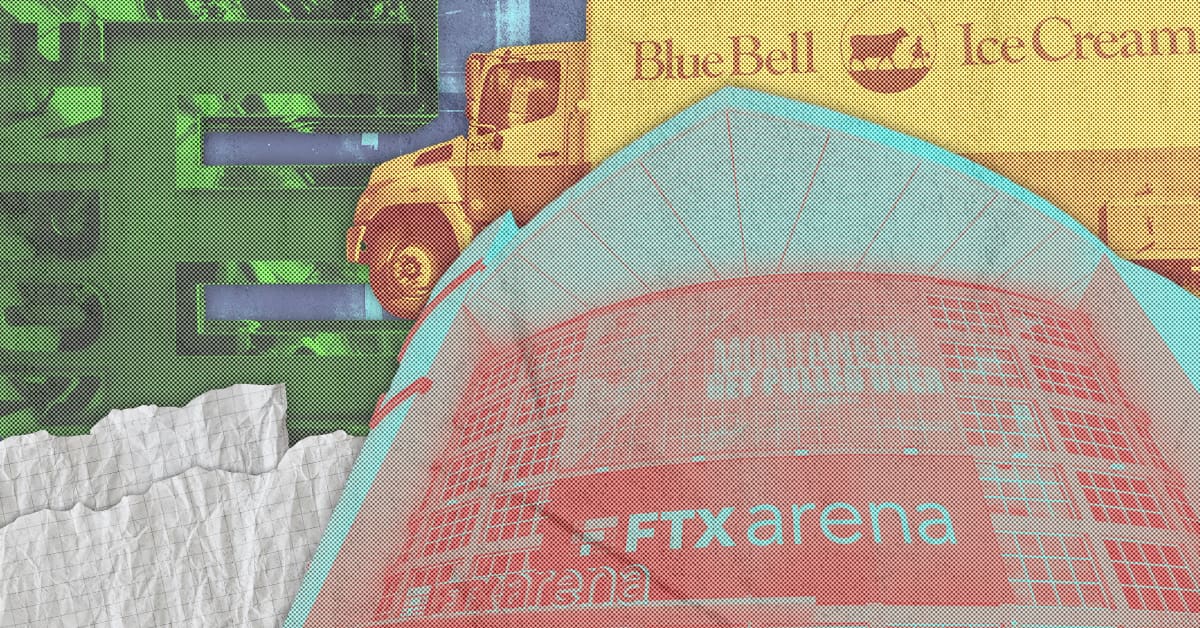
If I were pressed to name the best ice cream I have ever tasted, Blue Bell would be high on my list. With distribution centers in Texas, Oklahoma and Alabama, Blue Bell Creameries sells its offerings in over 20 states across the Southern, Western and Midwestern US. In 2015, the FDA and several state health agencies found evidence of the listeria bacteria in its products, which had resulted in the deaths of three people. As a result, Blue Bell had to recall all its ice cream products and shut down all its production operations. Needless to say, the impact on the company’s operations was devastating.
The company’s limited partners brought forth a complaint that the board breached its common law fiduciary duties. In ruling for the plaintiff, the court noted: “Directors have a duty ‘to exercise oversight’ and to monitor the corporation’s operational viability, legal compliance, and financial performance. A board’s ‘utter failure to attempt to assure a reasonable information and reporting system exists’ is an act of bad faith in breach of the duty of loyalty.”
This historic decision demonstrated that the high bar of the formidable Caremark standard could be scaled by the plaintiff bar in certain circumstances. In this decision, the court was compelled by the facts of the case — the simplicity of the company’s business model, the obvious enterprise risk of food safety, the lack of board focus on overseeing food safety issues and the absence of protocols by which the board expected to be advised of food safety reports and developments. According to the court, the facts created “a reasonable inference that the directors consciously failed ‘to attempt to ensure a reasonable information and reporting system exist(ed).’”
Lesson
Although it applied to a limited partnership, the court’s ruling has important ramifications for public boards and executive management. In understanding who is responsible for the key risks, the broad strokes of the risk responses in place and the nature of any issues arising from them, the board should effectively monitor mission-critical matters and have significant matters escalated to its attention in a timely manner, especially those related to compliance. In the Blue Bell case, had the board members put in place an information and monitoring system, that action might have substantiated their defense of, “We weren’t told anything until it was too late.” The point is clear: The judiciary will not respect a hands-off approach like when Blue Bell’s directors apparently left the matter to management after finally recognizing the full magnitude of the problem.
Duped by a siren song
In Greek mythology, Sirens were dangerous creatures that lured sailors to shipwreck with their music and voices. The siren song of FTX, a major cryptocurrency exchange, led to collapse in 2022, exposed widespread fraud, misrepresentations and mismanagement. At the center of the story is FTX’s founder and controlling shareholder, Sam Bankman-Fried, whose star power contributed to the deception.
The story of FTX is not one of a startup that began on sound footing and then steered in the wrong direction. It was a scam from the very beginning. When customers opened accounts on the FTX exchange, the funds were directed into bank accounts controlled by a sister company, Alameda Research, also owned and controlled by FTX’s founder. Alameda Research traded in cryptocurrency and “borrowed” as much capital from FTX as it needed to trade, operate and cover its risky bets. When customers tried to withdraw their funds, FTX could not cover the withdrawals, leading to a liquidity crisis because a significant portion of the firm’s assets were either tied up in illiquid investments or had been lost in the sister company’s recklessly risky trading. As a result, a run on the bank occurred and, ultimately, FTX declared bankruptcy.
The trading bets generated losses, and the recordkeeping was sloppy, leading to a lack of transparency and a loss of trust. In essence, more than $8 billion in customer deposits were embezzled and used for other purposes, including personal luxury items for Bankman-Fried, elaborate advertising campaigns and political donations — an egregious violation of trust and fiduciary responsibility that prioritized risky ventures over the safety of customer assets.
Several factors enabled the fraud. The story begins with Bankman-Fried. He pitched a message of ethics and morality. He spun a narrative that fooled everybody. But it may also be true that everyone he fooled with his lies simply wanted to believe — and the list of believers is long. They include:
- The hedge funds burned by the bankruptcy. Investing in FTX was likely seen as a market-neutral-exposure play on crypto markets emphasizing a fee income model and no trading or balance sheet risk. That is what Bankman-Fried offered them. At the time these firms invested, FTX was viewed in the marketplace as a rapidly growing and profitable cryptocurrency exchange, with a high trading volume and a unicorn valuation. Thus, it appeared to be attractive as a high-potential investment opportunity.
- The politicians who received donations and appearance fees. Bankman-Fried used $100 million of the stolen funds, federal prosecutors said, to make political campaign contributions to both major US political parties so he could lobby Congress and regulatory agencies to support legislation and regulation to facilitate FTX’s operating model and growth. FTX also paid significant sums to a former US president and a former British prime minister to appear at a conference. These investments, along with various celebrity endorsements, were part of a scheme to enhance FTX’s illusory public image and appearance of legitimacy.
- The regulators struggling to keep up with the crypto market. Regulators were several steps behind FTX and its founder for a number of reasons. FTX operated in a regulatory vacuum, as the crypto industry was relatively new and regulations were still being developed. Also, because FTX was headquartered in the Bahamas, it was challenging for US regulators to exert control over the company. In addition, the founder’s public image and advocacy for regulation created a narrative that may have led regulators to look past the red flags.
- The media. Forbes named the founder the richest person on the planet under 30. He told journalists he would never lie. His aggressive marketing campaign included Super Bowl ads, celebrity endorsements and naming rights to the arena where the NBA’s Miami Heat play. FTX’s marketing campaigns promised that people who put their money in its accounts would earn higher yields than the average bank. Ever heard that one before?
- And, of course, the investors. Those who boosted crypto claimed they were in the vanguard of a revolution that would democratize finance and lead to generational wealth for all those who chose to believe. Rapidly rising prices silenced the skeptics. Investors, particularly wealthy investors, wanted to board the train of higher returns. The founder was the boy genius to whom they gravitated.
Lesson
The new FTX CEO tasked with leading the crypto exchange through bankruptcy stated that never in his career had he seen “such a complete failure of corporate controls and such a complete absence of trustworthy financial information.” That is quite an indictment by the man who also oversaw the Enron bankruptcy. And where was the board? Well, there wasn’t one, unless you consider a board consisting of the founder, an unnamed lawyer from Antigua and Barbuda and a former FTX executive to be an effective governing body. It didn’t even hold meetings or maintain records.
More importantly, there was a lack of independent governance between FTX and its sister crypto trading company. As discussed above, the FTX scandal also underscored the need for regulation in the cryptocurrency industry. The accounting firm that audited FTX’s financial statements apparently didn’t do a very good job, and it agreed to pay almost $2 million to the SEC to resolve actions alleging misconduct in its audits of FTX and auditor independence violations.
The lack of governance is beyond stunning. But just as remarkable is the lack of due diligence. Had the founder been asked if FTX had a chief risk officer, the answer would have been no. Had he been asked if the firm had a chief financial officer, the answer would also have been no. Bankman-Fried often boasted that FTX’s controls were among the strongest in the industry, with strict adherence to investor protection principles. Had someone asked him to provide some examples of this alleged control structure, his “answer” might have been enlightening. Furthermore, an inquiry regarding the composition of the board of directors would have disclosed that a functioning board acting as a check on the founder’s actions wasn’t in place.
One can only conclude that the power of the siren song created by Bankman-Fried and FTX along with the irrational exuberance over crypto kept very smart people from asking the questions that would have sounded alarm bells. It would have saved a lot of people a lot of money and trouble.
As a subscript, Forbes introduced a “Hall of Shame” list in 2023, highlighting 10 individuals who had previously been featured on its prestigious “30 Under 30” list but whose actions or reputations made the publication wish it could take back its prior recognition. Needless to say, the FTX founder made that list, too.
Lessons learned are not just about avoiding mistakes. When embraced by leaders and directors, the lessons can lead to stronger, more resilient and more effective organizations that are better equipped to navigate the complexities of the business environment. They also highlight the need for healthy skepticism.
 Jim DeLoach, a founding