Culture among board members and for an organization as a whole continues to be an important aspect of corporate governance. Protiviti’s Jim DeLoach examines titanic corporate failures that reveal the importance of creating a culture that is fit for purpose in rapidly changing times.
Lessons from corporate governance failures — even familiar ones — highlight the importance of ethical behavior, risk management and accountability. They demonstrate how failures in these areas can lead to significant financial losses, reputational damage, brand erosion and legal consequences. They also can lead to the ultimate demise of the company.
The following three cases give insights into corporate governance failures of public companies.
Failure to innovate
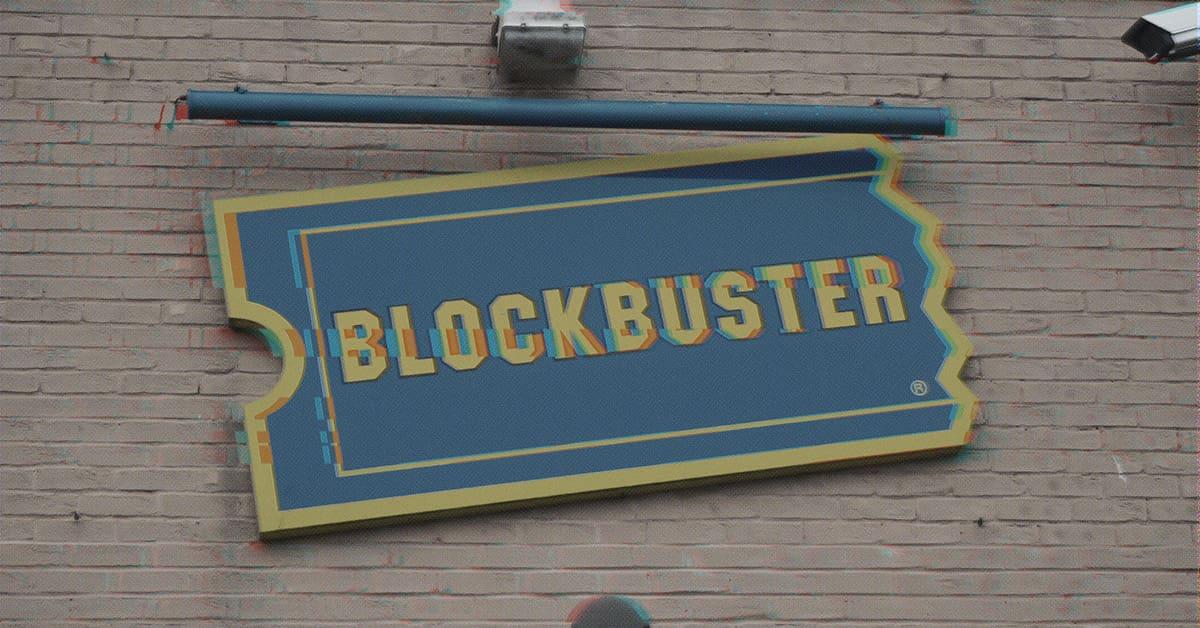
I will never forget entering the very first Blockbuster store in 1985 in a Dallas strip mall near the corner of East Northwest Highway and Skillman Street. At the time, most video stores were ratty, musty places that were unattractive, cramped and encumbered with a section of X-rated titles. When I walked in, I couldn’t believe my eyes. Blockbuster looked like a video store should — wide open, inviting to browse titles and genres, family-friendly and comfortably colorful in bold blue and yellow. In the ensuing years, Blockbuster became the dominant provider of video rentals. It was truly a concept that worked in its day.
We all know the story that unfolded: The former worldwide leader in video rentals played its hand as far as it could before cable, mass retailers selling DVDs as loss leaders and streaming killed its business model. Simply stated, the market moved on as the company clung to the status quo by sustaining its own movie and video game rental operations and acquiring retail competitors. The company ultimately filed for bankruptcy protection in 2010. In 2011, its remaining stores were bought by Dish Network. By 2014, the last 300 company-owned stores were closed.
Interestingly, 26 years ago, the founders of Netflix had offered to sell their company to Blockbuster for $50 million. According to one of the founders, Blockbuster leaders “laughed us out of the room.” Blockbuster eventually offered an online rental-by-post service, but Netflix would soon transition to streaming. As of this writing, Netflix has a market capitalization of just under $400 billion. In essence, Blockbuster turned down a once-in-a-generation investment opportunity. The company clearly lacked the corporate culture, will, creativity and business strategy to foster innovative thinking. The world moved on — a common theme underpinning the classic “brick-and-mortar” blind spot category of corporate failures.
Lesson
At a recent conference, a Microsoft executive shared a quote: “Change is hard. Becoming irrelevant is harder.” It is truly stunning that Blockbuster let the digital age pass it by. It never embraced the sense of urgency needed to create a pace to match its competitors.
The lesson is clear: Management cannot be content to merely achieve excellence in the company’s legacy operations. When evaluating business model performance, the focus should be on the bigger picture of how technology, data and ecosystems can alter the customer experience. Driving value for the customer should be at the heart of all decision-making, creating new types of value for existing customers while opening up new markets. This pursuit is a constant drive to imagine better business models and processes in an ever-changing marketplace. Fueling this drive is urgency to gather feedback and learn, and then execute decisions. Anything short of that is tantamount to playing to lose in the digital economy.
And Blockbuster’s failure prompts questions: Where was the board of directors during the company’s fall from relevance? How could board members stand by and watch the downward spiral?

14 Risk Oversight Principles You Haven’t Heard Before
Are you doing enterprise list management or enterprise risk management?
Read moreDetailsBig enough to fail
The 2008 collapse of Washington Mutual was the largest bank failure in the history of the United States. For a long time, Wall Street facilitated capital flows to housing markets through loan securitizations involving the pooling of large numbers of loans. These securities were backed by the revenue stream from borrower mortgage payments. In addition to designing the loan pools and asset-backed securities, Wall Street firms worked with credit rating agencies to obtain favorable ratings for the securities and sold the securities to investors like pension funds, insurance companies, municipalities, university endowments, hedge funds and high-income clients seeking higher fixed-rate returns.
Eventually, the fees that banks and Wall Street firms made from their securitization activities were so large that securitization became an end in itself. Loan originators churned out the sausage as underwriting standards deteriorated over time, enabling low-documentation and even no-documentation lending. Whether the loans would be repaid didn’t matter, as their job was to originate them, collect their fees and pass them on to a mortgage lender.
Once these risky mortgages were pooled into securities, given high ratings by the credit rating agencies and sold to investors, the securitization process had successfully obscured the true risks of the underlying mortgages. The money made by all parties drove an insatiable demand for more, such that volume and speed, as opposed to loan quality, became the order of the day and was the focus of the reward system. The result: The buyers who were misled by the siren song of attractive returns were left holding a sack of credit risk.
There is more: Cheap money from low interest rates was a clear enabler of the dysfunction. Financial regulation and supervision were inadequate. Derivatives like credit default swaps were used extensively, purportedly to hedge the risk of default. However, they also created systemic risk. To illustrate, purchasers doubting the creditworthiness of the securities they bought acquired them anyway so long as they could purchase the “insurance” offered by the credit default swaps.
To make matters worse, financial institutions operated with high levels of debt relative to their equity, magnifying returns during good times as housing prices rose. Once housing prices declined, mortgage delinquencies and foreclosures significantly increased, triggering a crisis as the excessive leverage exacerbated the magnitude of the losses incurred. When the global financial system experienced a severe liquidity crunch, banks stopped lending to each other, the credit markets froze, and in 2007, the most serious financial crisis since the Great Depression of the 1930s began.
The crisis led to the demise of Lehman Brothers, Wachovia, Countrywide and Washington Mutual (WaMu), among others. The story of WaMu is one of disregarding increasing credit risks, ignoring the warning signs posted by the risk management function, refusing to alter the business model as long as the profits and compensation flowed and creating a culture that was not receptive to bad news. It is a story about “making the numbers” regardless of the risks, largely because almost everyone in the industry was doing the same thing, creating shareholder-expectations risk. For example, in a move that eventually was seen to be highly prudent, JPMorgan initially caught flak from The Wall Street Journal in 2007 for its substandard performance that year as it reduced its exposure to subprime loans. Refusing to follow the herd of recklessly risky behavior in favor of a more prudent approach is the ultimate test of leadership.
As for shareholder risk, it is a two-sided coin. Consider these comments from irate shareholders at a contentious shareholders meeting in April 2008 as quoted in the 2012 book “The Lost Bank: The Story of Washington Mutual — The Biggest Bank Failure in American History.”
- “To our great regret, Washington Mutual has become a poster child of board failure to protect the interests of shareholders. Specifically, from 2005 to 2007, the finance committee knew the housing bubble would burst, would collapse, yet allowed Washington Mutual to expand its Option ARM and subprime exposure, leading to a devastating 75% decline in shareholder value.”
- “Sadly, here at WaMu, we really feel we have a board that has lost its way … The company as recently as last week (stated,) ‘The directors that have been targeted have a demonstrable record of skill, diligence and independent thinking. We cannot conceive of a more inopportune time to urge the needless disruption and distraction of a change in board composition.’ We beg to differ.”
Lesson
These comments point to the importance of the board’s risk oversight of management’s strategy and consideration of disruptive change in the market. In particular, it is important to watch out for reckless risk-taking due to the absence of limits, checks and balances, independent monitoring and reporting and skin-in-the-game compensation structures. Ironically, reckless risk-taking is often perpetrated by the smartest people in the room. Falling prey to a herd mentality or committing to dance until the music stops rather than seeking to become an early mover to act on fresh market opportunities or emerging risks before they become common knowledge is a recipe for disaster.
If it’s too good to be true, it probably is
The rise and fall of Theranos, a Silicon Valley startup once valued at $9 billion, is a fascinating story of how effective the combination of deceit and intimidation can be when underpinned by a vision that was expected to change the world. The company claimed that it had devised compact automated devices that could perform hundreds of blood tests quickly and accurately with only small amounts of blood from a finger prick. Sadly, it was all based on audacious fraud. Until the web of deception was uncovered, the company misled investors, patients and business partners by presenting falsified data and results to create the illusion that its technology was functional and revolutionary.
The scandal highlighted issues with oversight, transparency and the validation of scientific claims. The company operated with extreme secrecy, limiting access to information even internally by requiring employees to work in silos to prevent collaboration, scrutiny and a big-picture view. The company avoided peer-reviewed studies of its technology or any other form of independent scientific validation. The company’s board of directors was not well-positioned to challenge management because of its composition, consisting primarily of high-profile individuals with political and military backgrounds, rather than experts in healthcare or biotechnology. This limited the board’s ability to evaluate management’s claims or critically evaluate the company’s operations and processes.
The founder and CEO, Elizabeth Holmes, was viewed like Steve Jobs as she cultivated an image as a visionary entrepreneur and attracted influential investors and endorsements from prominent figures. For several years, her charade created an aura of credibility, shielding the company from skepticism and deflecting critical scrutiny.
In reality, she nurtured a toxic workplace environment, discouraged dissent, oppressed workplace communications and sought to exercise tight control over company operations with no accountability. Secrecy and paranoia surrounded her as employees who raised concerns about the technology’s flaws were often intimidated with questions regarding their loyalty, were fired or were silenced through legal threats. She deceived her investors with exaggerated claims and misrepresentations and failed to comply with regulatory requirements.
The company’s evasive tactics and incomplete disclosures frustrated the efforts of regulatory agencies to detect the fraud. Test results from its proprietary technology produced inaccurate results, putting patients at risk with misdiagnoses. To sustain the deception, the company secretly relied on commercial blood-testing machines for a majority of its tests while claiming the tests were conducted with its technology.
Because it took years for regulators to intervene, the scandal was ultimately exposed by whistleblowers and investigative journalists (the story broke in The Wall Street Journal) who disclosed a culture of intimidation and secrecy, technology that repeatedly failed quality assurance, lies and unmet promises to the board of directors and, most importantly, test results given to actual patients that were inaccurate and upon which medical decisions were made. The FDA investigations subsequently determined that the technology did not function as represented. This reveal led to the company’s collapse and criminal conviction of the CEO and former COO Ramesh “Sunny” Balwani.
Lesson
How could smart people be fooled by this circus? Theranos and its CEO founder are a cautionary saga of how charisma, a noble vision and a complete lack of ethical values and transparency can help a bold fraud obscure reality. A board consisting of “true believers” who lacked the expertise to see through the smoke and mirrors failed to exercise the necessary oversight and due diligence. By failing to insist on independent scientific validation under the threat of resignation, board members aided and abetted the illusion with their reputations. For example, one board member, George Shultz — a former US secretary of state — refused to listen to his grandson, who had initially been the CEO’s protégé but eventually became a whistleblower. The bottom line: Board members must pay attention to the warning signs.

 Jim DeLoach, a founding