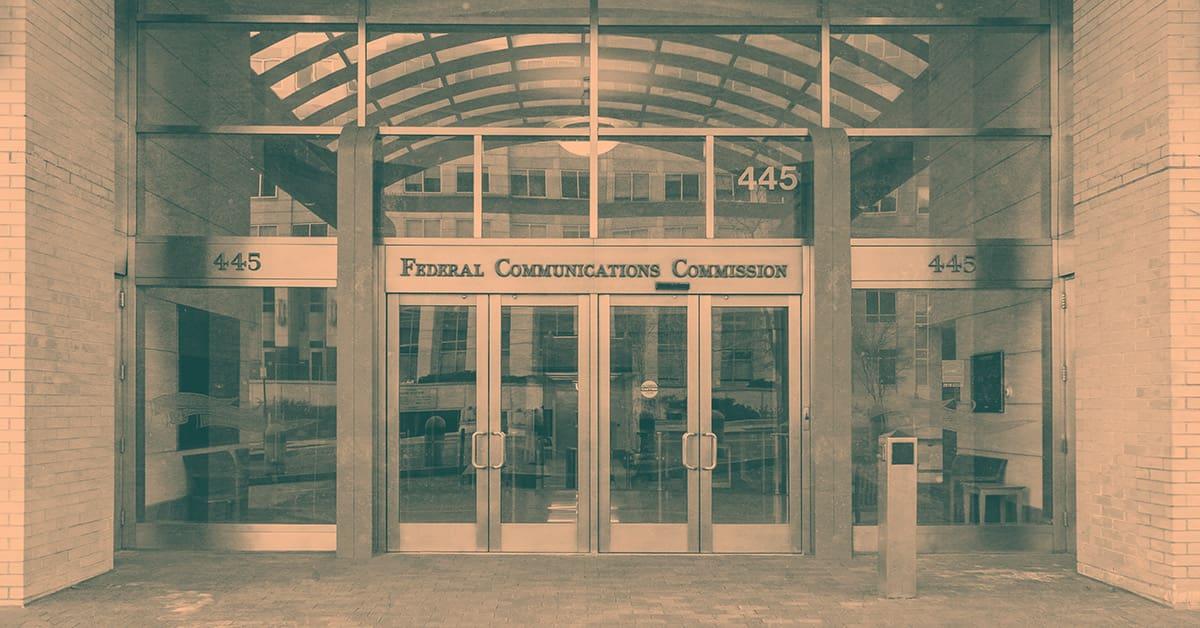
The FCC’s Office of Inspector General is moving away from one-off audits of single recipients toward a data-driven model that matches risk indicators across programs and funding years. Diana Shaw, Megan Brown, Mark Sweet and Lois Ahn of Wiley explain what that means for funding recipients: a red flag in a pandemic-era program can now prompt scrutiny across a company’s other FCC funding.
Federal Communications Commission (FCC) funding recipients should prepare for greater scrutiny and compliance risks as the agency’s Office of Inspector General (OIG) implements a broader, more data-driven approach to oversight. The FCC OIG’s 2026-27 work plan, together with its recent reporting to Congress, signal that the OIG is increasingly using advanced analytics and cross-program risk indicators to identify targets for audits and investigations. As a result, a red flag in one program, or even one funding year, may no longer stay confined there. For companies participating in FCC programs — including the emergency connectivity fund (ECF) and universal service fund (USF) — this shift raises the stakes for documentation, internal controls, remediation and readiness for OIG scrutiny.
The work plan
In late May, the OIG issued its 2026-27 work plan, outlining the audits, inspections and evaluations it plans to undertake over the next two years. The plan reflects the OIG’s continued focus on preventing fraud, waste and abuse in the FCC’s operations. But more notably, it indicates a more targeted and data-driven approach to oversight going forward, particularly for pandemic-era programs like the ECF. Read alongside OIG’s recent semiannual report to Congress, the work plan reflects a more sophisticated approach to oversight, signaling the potential for broader scrutiny — and, therefore, greater exposure — for FCC funding recipients. In particular, issues identified in pandemic-era programs could result in scrutiny in other FCC funding streams, increasing compliance risks for entities that participate in multiple FCC programs.
The plan acts as a strategic roadmap and provides transparency around how the OIG intends to carry out its mission and focus its resources. Among other things, the plan identifies the OIG’s expected discretionary projects. Because these projects are elective, their focus and the challenges they are meant to address offer useful insights into office priorities for the next two years. Among the discretionary projects in the 2026-27 work plan are: “A risk-based review of ECF participants to determine compliance with program requirements and identify potential fraud and improper payments,” and “A review of USAC’s program integrity activities, processes, and protocols related to USF.”
Safeguarding the integrity of the USF and pandemic-era programs has been an important oversight priority of the FCC OIG for years. But due to limited resources, the OIG’s oversight of these programs had been discrete and less systematic in prior years. For instance, in the past, audits focused on a single funding recipient, such as a single rural healthcare facility or a single county public library and assessed its compliance with program rules during one or two funding years. Even when the OIG pursued a program-wide audit, it did so through a narrow lens, typically focusing on narrow time periods, discrete program elements and/or relatively small samples.

When Oversight Findings Lead to More Oversight: An OIG Report on China Exports
Six steps exporters should take to ready their due diligence, documentation and escalation for closer scrutiny
Read moreDetailsA data-driven shift at FCC OIG
The FCC OIG’s most recent work plan suggests that it may be adopting a new approach to how it scopes and executes its discretionary projects. The plan and report to Congress suggest that the office has adopted an integrated, data-driven and risk-based oversight model that, importantly, leverages cross-program analytics to better target limited resources.
Specifically, the work plan notes that the OIG intends to “us[e] data analytics to focus on high-risk areas and prioritiz[e] work that will assist FCC in addressing its top challenges.” The report to Congress elaborates on this intent, describing the OIG’s partnership with the Pandemic Response Accountability Committee (PRAC). The PRAC established the Pandemic Analytics Center of Excellence (PACE) to provide “a leading-edge analytic platform with the capacity and scale to help oversee more than $5 trillion in pandemic-related emergency spending.” PACE offers a range of analytic support tools to OIGs that include “data matching, anomaly detection, risk modeling, social network analysis, robotic process automation, link analysis, business intelligence, and open-source intelligence.”
These offerings have vastly enhanced federal OIGs’ ability to identify higher-risk recipients, detect anomalous patterns across large datasets and target audits and investigations more efficiently. With respect to the FCC OIG in particular, it has enabled the agency to develop data dashboards to better identify risks in three pandemic-era FCC programs: ECF, the Covid-19 telehealth program and the Emergency Broadband Benefit Program. According to the spring report, the dashboards incorporate over 30 risk indicators, such as “Small Business Administration fraud hold codes,” “delinquent federal debt” and “single audit findings,” drawn from various federal datasets. And by matching the risk indicators with the FCC’s program participants, the dashboards help the OIG identify high-risk targets for potential audits and investigations.
OIG auditors and investigators are already actively using the dashboards for their investigation and inspection of the Covid-19 telehealth program, and will use them for a “full scope risk-based review of the ECF program.” Participants who trigger multiple risk indicators will likely face heightened scrutiny, particularly where those indicators point to potential fraud, improper payments or weak internal controls.
Scaling oversight through data analytics
These same tools also may allow the FCC OIG to scale the scope of its audits and investigations in ways that were more difficult under its prior, more discrete oversight model. Rather than reviewing a single recipient, a narrow funding period or a limited sample of transactions, the OIG can use the analytical tools now available to identify patterns across larger populations of participants, longer time periods and multiple risk indicators. This may enable the office to design broader reviews that test compliance issues across a wider universe of recipients while still focusing investigative resources on those entities or transactions that appear most anomalous. In practice, that means future audits and investigations may be both broader in reach and more targeted in execution, increasing the likelihood that issues identified in one subset of data will prompt expanded review of related recipients, claims or funding periods.
Expanded exposure across FCC funding streams
Furthermore, the OIG’s new oversight approach may have implications beyond the specific pandemic-era programs under review. The office explained in its semiannual report that because “bad actors do not limit their fraud,” it enhanced the dashboards “to identify recipients in the[] COVID-era programs that participate in and receive funds from other similar FCC programs, such as Lifeline, E-Rate, and Rural Health Care.” The OIG further explained that though receiving subsequent funding is not itself problematic, being flagged for fraud, improper payments or other issues within the pandemic-era programs could result in scrutiny in multiple other FCC funding streams.
This is a meaningful development for FCC funding recipients. A finding or red flag in an emergency Covid program may prompt broader scrutiny of the participant’s conduct across other FCC funding streams, including ongoing USF programs. Taken together, the work plan and semiannual report indicate that the FCC OIG is working toward a more integrated oversight infrastructure, one that combines external datasets, interagency partnerships, risk scoring and cross-program review to identify targets and pursue remedies. This approach may allow the OIG to conduct broader and more targeted oversight despite its limited resources and may increase the compliance stakes for entities that participate in multiple FCC funding programs.
Implications for firms participating in FCC funding programs
For companies that participate in FCC funding programs, the key takeaway is that compliance issues are increasingly unlikely to remain isolated to a single claim, funding year or program. As the OIG becomes better able to identify patterns across datasets and funding streams, participants should expect that weak documentation, recurring control failures or unresolved audit findings may receive greater attention and potentially trigger broader review.
These risks are all the more significant in light of the FCC’s recent adoption of its own suspension-and-debarment program, which gives the agency a formal mechanism to exclude companies or individuals from participation in FCC funding programs such as the USF. The implications of a debarment under the program are not limited to FCC funding: Barred entities may also be precluded from doing business with the federal government more broadly.
Companies should therefore assess whether their compliance programs and internal controls are calibrated not only to meet program-specific requirements but also to withstand a more holistic, data-driven oversight review. In practical terms, that means maintaining clear support for funding requests and certifications, promptly remediating identified weaknesses and ensuring that compliance personnel can explain how controls operate across related FCC programs. Participants also may benefit from conducting targeted internal reviews of higher-risk submissions, vendors or program areas before an OIG inquiry arises.
This was adapted with permission.

 Diana Shaw
 Megan Brown
 Mark Sweet
 Lois Ahn