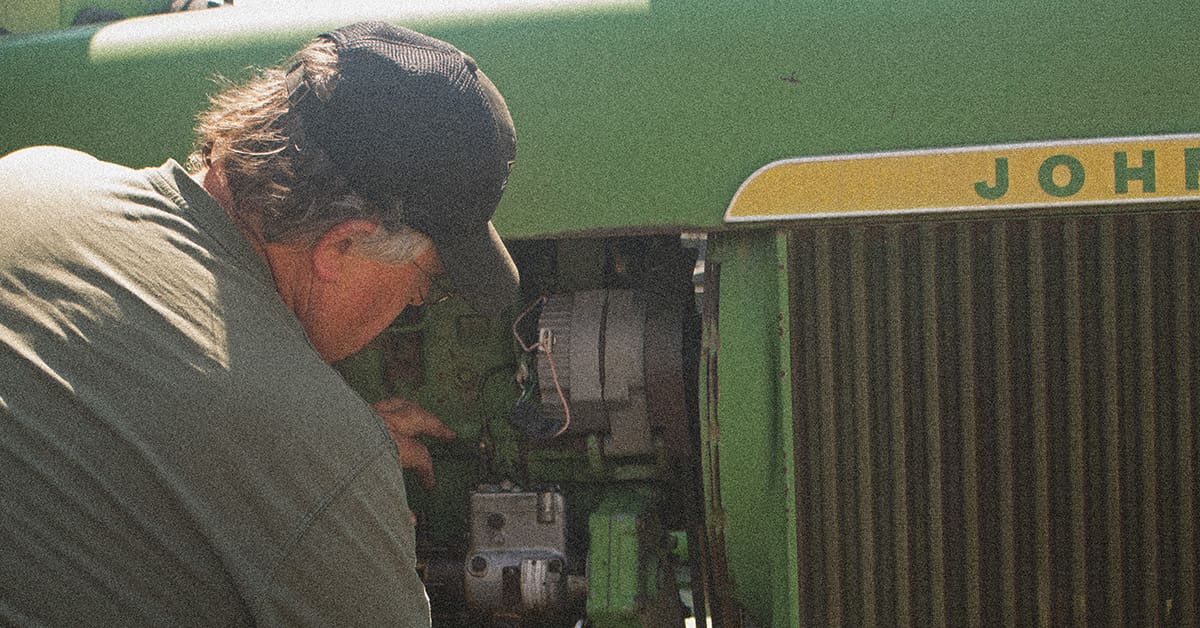
The right to repair movement isn’t just about whether farmers have access to the advanced tech needed to fix their tractors, which is at the heart of an ongoing antitrust case against John Deere. McCarter & English attorney Robin Crauthers says the potential compliance exposure goes far beyond the American heartland and may be hiding in unexpected places.
For years, right to repair (R2R) — the principles allowing owners of products (i.e. consumers) to fix their own items rather than having to rely solely on the product manufacturer — sat in the consumer-advocacy bucket, as important but easy for many companies to treat as a policy debate rather than an enterprise risk. That framing is outdated.
The Federal Trade Commission (FTC) has explicitly tied repair restrictions to higher repair costs, longer downtime and unnecessary waste, and it has signaled a willingness to use both consumer protection and competition tools when repair limits function as market restraints rather than narrowly tailored safety or security controls.
For compliance officers, general counsel and risk managers, the implication is practical: R2R is a claims-to-controls alignment risk that touches product architecture, warranty administration, dealer/channel strategy, software access controls, cybersecurity posture and marketing substantiation.
Why this is a governance issue
R2R disputes become high risk when they show up as operational bottlenecks that customers cannot avoid:
- Repair delays translate into contract risk (service-level agreements, uptime commitments, liquidated damages).
- Repair channel lock-in rates increase total cost of ownership, inviting scrutiny from enterprise customers and enforcers.
- Repair restrictions can create reputational externalities (waste and sustainability critiques).
- If the restriction is software-enabled (diagnostics, pairing, firmware locks), the story can become exclusion by design, not brand protection.
A compliance-forward company treats repair restrictions the same way it treats privacy notices or safety labels: a controlled, cross-functional program with documented rationale, tailored controls, training and monitoring.
The FTC’s enforcement hook: Warranty tie-ins
The most concrete, straightforward compliance target to start with is warranty language and warranty-adjacent communications.
The FTC has brought and settled matters alleging companies unlawfully implied that warranties would be void if customers used independent repairers or third-party parts, using the Magnuson-Moss Warranty Act, combined with FTC Act theories. In October 2022, the FTC approved final orders against multiple companies requiring them to stop illegal warranty restrictions and to clarify consumers’ repair rights.
Warranty and repair as a single controlled system
Risk rarely sits only in the warranty booklet. It shows up in:
- Warranty PDFs, inserts and website FAQs
- Packaging language (“warranty void if removed”-style messaging)
- Customer support scripts/macros and chatbot flows
- Dealer/service center communications (authorized-only steering language)
No customer-facing content should suggest that using a third-party part or an independent repairer automatically voids coverage unless that statement is accurate, narrowly framed and consistent with law and policy.
The FTC’s 2021 policy statement
The FTC’s July 2021 policy statement is effectively a roadmap of where enforcers look for potential violations: restrictions that may be anticompetitive or unfair/deceptive, including limited access to parts, tools, manuals and diagnostic software. The statement emphasizes that restricting how consumers and businesses repair products can raise total repair costs and increase wait times — and that providing repair choice can reduce costs and waste.
A recurring corporate instinct is to justify restrictions with broad categories — security, safety, quality, intellectual property protection. These concerns can be legitimate but can fail to convince an enforcer when:
- The restriction is broader than necessary to mitigate the risk
- There is no written decision record showing alternative, less restrictive options were evaluated
The FTC has signaled it will scrutinize “repair restrictions” as implemented, not just as described in policy.

Not Ready for a Full-Blown ERM Program? Consider the Middle Road
Combined assurance balances strict processes and limited resources
Read moreDetailsJohn Deere: How this becomes a competition case
The FTC’s and select state attorneys general lawsuit against Deere & Co. shows how R2R escalates from “warranty cleanup” to a competition matter with supply chain and dealer network consequences. The complaint alleges Deere restricted access to essential repair tools/software and steered customers to authorized dealers, driving up independent repair costs and limiting competition in the repair market.
Even more important for risk assessment, a federal judge later ruled Deere must face the FTC’s antitrust suit (the case survived early dismissal efforts), underscoring that these theories can clear procedural hurdles in at least some fact patterns.
Companies that control any of the following and use that control to direct repairs into a closed ecosystem should expect heightened scrutiny on:
- Diagnostic software and codes
- Firmware access/calibration tools
- Parts authentication or pairing
- Repair manuals and service documentation
- Distribution terms that functionally foreclose independent repairers
Building a compliance program for repair restrictions
A compliance-centered approach does not require a company to abandon safety, security or quality controls. It requires governance and tailoring.
Here is a suggested checklist:
Create a repair restrictions register (aka, a risk register)
For each restriction (parts access, software access, manuals, pairing, authorized-only policies), document:
- Business purpose and risk addressed (cyber threat model, safety hazard, regulatory requirement)
- Restriction mechanics (what is blocked, for whom, under what conditions)
- Tailoring (why the scope is no broader than necessary)
- Alternatives assessed (certification pathways, secure application programming interfaces, tiered access, escrowed tools, auditability)
- Customer impact (downtime, cost, availability, geographic service coverage)
- Accountability (owner, review cadence, metrics)
Align claims with reality (warranties, marketing & support)
A common enforcement trigger is inconsistency — what the company does vs. what it says. For example:
- Warranty team says “Third-party repairs allowed.”
- Dealer scripts say “authorized only.”
- Support says “We can’t help unless you come in.”
That mismatch is where deception allegations can live.
Consider the three lines of defense for R2R
- Product/engineering: Implement security and safety controls that are demonstrably necessary; create secure access options where feasible.
- Commercial/channel: Ensure dealer programs and incentives don’t operate as de facto exclusionary restraints without documented justification.
- Compliance/legal: Govern warranty language, training, complaint intake, monitoring and periodic audits of customer-facing statements.
Watch for red flags
- Do any materials state or imply “warranty void” for third-party repair/parts?
- Is diagnostic software/tool access limited to authorized dealers only? If yes, is there a written, tailored risk justification and a considered alternatives memo?
- Are independent repairers denied access to the same functional tools available to authorized service providers?
- Are repair delays or parts shortages recurring drivers of customer escalations?
- Do enterprise customers raise R2R in procurement, requests for proposals or contract negotiations?
How Made in America could shift compliance priorities and narratives
President Donald Trump nominated David MacNeil, the CEO of WeatherTech and a staunch supporter of Made in America, to an FTC commissioner seat in January. His confirmation is pending. From a compliance lens, the key is not predicting how he will vote in any particular case; it’s anticipating how the Made in America frame could alter what gets emphasized.
Made in America could support broader R2R narratives, with a domestic-capacity lens making R2R sound less like consumer activism and more like strengthening local service ecosystems (independent repair, refurbishment, remanufacturing) or keeping life cycle value and jobs in U.S. communities.
Or it could constrain R2R remedies toward narrower claims policing. A manufacturing-first worldview can also be more sympathetic to original equipment manufacturer arguments around quality control and brand integrity, safety and cybersecurity risks from uncontrolled repair ecosystems and preference for integrated authorized service models.
Practically, this could translate into prioritizing clear-cut warranty/representation issues rather than broad mandates around open tools/diagnostics access (depending on case posture and FTC dynamics).
If Made in America becomes a louder FTC theme, companies should expect continued scrutiny of US-origin claims. The FTC’s guidance on the Made in USA standard notes that unqualified claims must meet the all or virtually all standard and that civil penalties can apply under the Made in USA labeling rule.
What to do now
Marketing/legal/compliance bandwidth is finite. If the FTC’s consumer protection agenda places more visible emphasis on origin claims while competition staff continue to pursue repair lockout theories, many companies will need to run two adjacent, high-scrutiny compliance tracks at once.
- Warranty remediation sprint: Inventory every warranty and warranty-adjacent statement; remove/repair tie-in language and harmonize support/dealer scripts.
- Repair restrictions register: Build the register and require sign-off from engineering, security, legal and commercial owners.
- Documentation tailoring: For each lockout or restriction, write the “why this is necessary” memo with threat/safety specifics and alternatives assessed.
- Channel governance review: Evaluate dealer terms, incentives and communications for foreclosure/steering risk, especially where the company controls diagnostics or parts authentication.
- Metrics and monitoring: Track downtime drivers, repair lead times, parts availability disputes, warranty denial reasons and R2R-related complaints.
- Claims substantiation alignment: If you make US-origin claims, revalidate substantiation and labeling/online usage under FTC guidance.
In short, R2R is no longer a peripheral policy debate. It is a live governance, competition and consumer protection risk that cuts across product design, warranty administration, channel strategy and marketing claims. The FTC has made clear that repair restrictions will be judged not by broad assertions of safety or security but by how narrowly tailored and well-documented they are in practice.
Companies that treat repair and warranty as a single, controlled compliance system — i.e., aligning claims with operational reality, documenting the necessity of any restrictions and monitoring dealer and customer-facing communications — will be far better positioned to withstand scrutiny. In the current environment, proactive repair governance is not just regulatory hygiene; it is enterprise risk management.

 Robin Crauthers is a partner with McCarter & English, based in Washington, D.C. A former trial attorney with the DOJ, her practice focuses on antitrust matters, including litigation, government investigations and merger control.