Governance

The Top 5 Mistakes Boards Make in Overseeing Compliance
How to Avoid Costly Missteps Russell Reynolds Associates’ Cynthia Dow and Anthony Goodman, compliance and board experts, interviewed leading chief legal officers, chief compliance officers, former investigators and board directions to under the biggest compliance missteps boards make. with co-author Anthony Goodman We can all easily recount a recent compliance problem that became front-page news. But what’s not so easy...

Thriving in the GRC Trenches
3 Multidisciplinary Lessons Learned GRC leaders shouldn't expect to find an off-the-shelf GRC solution that truly meets their needs. Instead, they should focus on adopting a balanced, iterative approach, likely one involving a variety of technology schemes that include practical, best-practice steps to encourage multiple assurance stakeholders to recognize their shared goals and frameworks while also supporting the unique needs of each group....

5 Ways Boards Must Improve Compliance Oversight
Control or be Controlled: 5 Problem Areas for Boards Compliance is evolving, and board members may now be unsure of their related responsibilities. Board members are more and more reliant on the data obtained from information systems to make their decisions. How can they use this information, and what are the traps they need to avoid? The role of the...

The Board’s Overlooked Role in Compliance
How Involved is Your Board? It’s long been said that an effective compliance program can’t exist without a strong culture of ethics and compliance. Also critical is tone from the top, without which there’s no clear directive for the organization and employees on the importance of compliance. The board of directors plays a critical role in setting the right tone....

Strengthening Protections for Federal Government Whistleblowers
While many expect the new administration and Congress to chip away at employee protections, several initiatives in Congress and the executive branch suggest a trend in the opposite direction for federal employees. Two Acts currently pending in Congress are designed to fill gaps in protection for federal employees and prevent agencies from enforcing gag orders.
SEC Votes on Use of Inline XBRL
The SEC’s new and proposed rules allow companies to update and simplify their disclosure requirements as part of the SEC’s overall disclosure effectiveness review. This modernization of the SEC disclosure system discussed in the SEC’s Regulation S-K concept release in 2016 is designed to eliminate redundant, overlapping and outdated requirements and align them with current accounting principles and improvement in...

2017: A Transformational Year for GRC
Driven by technology advances, GRC is going through a sea change. Practitioners are completely rethinking the GRC infrastructure and will use digital transformation and data analytics to make their programs far more responsive to the evolving needs of their organizations. GRC practitioners who ignore this transformation do so at their organizations’ peril.

New IGPMM Essential in Confronting Data Challenges
The Information Governance Process Maturity Model (IGPMM), developed by the Compliance, Governance and Oversight Council (CGOC) in 2012, has become a standard foundation for starting and revising enterprise information governance programs. The CGOC has now released a new version of the model to help organizations deal with today’s information realities.

Self-Appointed Leadership Positions
The vast majority of board candidates are self-appointed leaders – those who have created a high level of visibility for themselves, directed efforts to achieve superior results and created learning opportunities for themselves to advance their expertise and position themselves for advancement. Here are a few tips to help board candidates as they seek appointments.
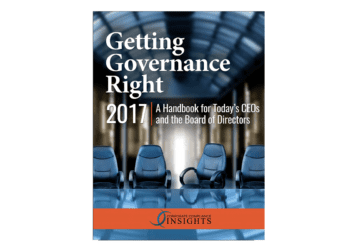
Getting Governance Right: a Handbook for Today’s CEO and the Board of Directors
This book brings together expertise on all things Board related, exploring topics from best practices to the benefit of diversity and the Board’s role in reducing risk and improving cybersecurity. In this comprehensive guide, our expert authors explore the top issues plaguing Boards and prescribe actionable solutions.

Compliance Expertise Needed on the Board
The Case for a Compliance SME Just as it wouldn’t be wise to have a tax attorney negotiate a bribery settlement, you don’t want someone with minimal compliance experience serving as your board’s subject matter expert on compliance. The DOJ has continually stressed the importance of having a compliance expert on the board, and it will only be a matter...

Guarding Against Privilege Waiver in Federal Agency Investigations, Part 2
Rule 502 offers novel and expansive protections for litigants in federal court, but when applied in the course of a federal investigation, its regulations concerning privilege waiver offer little peace of mind. Part 1 covered issues with the Rule, and today’s follow-up delves into protections against subject matter waiver and tips to employ the Rule effectively.