Editor’s note: This article has been updated to reflect changes in Russian sanctions status.
The through-line in OFAC’s 2025 enforcement priorities isn’t a single country or industry — it’s the expectation that companies look past legal formalities to the underlying economic reality of their relationships. Paul Weiss attorneys Jessica Carey, Roberto Gonzalez, Nicole Succar and Sam Kleiner survey a year of sanctions activity spanning cartels, scam networks and Russian oil majors, and identify what compliance teams should be revisiting heading into 2026.
In the first year of the second Trump Administration, Treasury’s Office of Foreign Assets Control (OFAC) imposed sanctions on over 1,300 individuals and entities, prioritizing certain areas like cartels and counternarcotics, Southeast Asia-based scam networks, Iran’s shadow fleet and shadow banking networks and China.
Although this number of designations is substantial, it is less than the number of designations each year from 2022-24, when Russia-related sanctions increased significantly.
While sanctions on Russia had been a major focus for the prior administration, the Trump Administration refrained from sanctioning new Russian entities while it prioritized negotiations to end the conflict. In October 2025, the administration sanctioned major Russian oil companies Rosneft and Lukoil but in March 2026 offered significant sanctions relief to the Russian oil sector to address rising oil prices following US-Israeli military action in Iran. 2025 also saw the lifting of comprehensive sanctions on Syria, while Venezuelan sanctions are in a state of transition following the January 2026 apprehension of President Nicolás Maduro.
On the enforcement front, OFAC took 14 public enforcement actions in 2025, with a focus on violations of Russian sanctions by US non-bank “gatekeepers,” such as private equity funds, real estate companies and attorneys. The total value of these enforcement actions was $266 million, with $215 million of that total representing OFAC’s penalty notice issued against GVA Capital.
OFAC also took action against manufacturers and logistics providers for diversionary sales and services support to Iran, Venezuela and Cuba. And more recently, in February 2026, OFAC penalized a Florida school for receiving tuition payments, via third parties, from Mexican cartel-related sanctioned parties, which led OFAC to warn that even companies that consider themselves “predominantly domestic” have sanctions risk.
Sanctions program developments
Counter-narcotics
As part of the administration’s multi-agency effort to target cartels, OFAC designated numerous individuals and entities associated with cartels’ money‑laundering and revenue diversification efforts, including designations focused on the cartels’ huachicol fuel theft and crude oil smuggling, arms trafficking, human trafficking, extortion and timeshare fraud schemes. OFAC continued this focus in early 2026, designating numerous persons related to a timeshare fraud network led by a Mexican cartel. The actions underscored that the administration is focused not only on the cartels’ narcotics activities but also on their alternative revenue sources.
Notably, in February 2025, the State Department designated a number of Mexican, Salvadoran and Venezuelan drug cartels — almost all of which were already sanctioned by OFAC under counternarcotics authorities — as foreign terrorist organizations (FTOs), and specially designated global terrorists (SDGTs). These unprecedented FTO designations expose companies and financial institutions that operate in Latin America where cartels play significant roles in the licit and illicit economies to heightened risks of criminal and civil liability. For its part, the DOJ has prioritized the “total elimination” of cartels and transnational criminal organizations and has reassigned prosecutors and made organization changes to further this priority.
Utilizing its counter-narcotics authorities, OFAC also targeted the regimes of Venezuela and Colombia. In October 2025, OFAC added Colombian President Gustavo Francisco Petro Urrego to the SDN List and in December 2025 it imposed sanctions on associates of then-President Maduro (himself sanctioned since 2017).
Venezuelan sanctions remain in a state of flux. Following the US apprehension of Maduro and his wife in January 2026, OFAC issued several general licenses (GLs) to permit US companies, subject to various conditions, to engage in business with the Venezuelan state oil company with respect to Venezuela-origin oil. While the GLs permit a range of activities with Venezuela’s energy sector, GLs are also easily revocable and could be withdrawn based on the evolution of events in the US/Venezuelan relationship.
Scam networks
In coordination with the DOJ and FinCEN, consistent with the administration’s focus on scams that target Americans, OFAC issued numerous sanctions designations in 2025 that targeted Southeast Asia‑based scam networks, primarily in Burma and Cambodia. These designations represent a relatively new area of focus for OFAC and underscore that the scams are frequently perpetuated through sophisticated networks, with designations targeting “scam compounds” and related networks.
On March 6, President Donald Trump issued an executive order targeting the transnational criminal organizations that engage in cyber-enabled frauds and scams, including from “scam centers.” The order requires an interagency review of the “relevant operational, technical, diplomatic, and regulatory frameworks” and the development of an “action plan” to address these threats.
Iran
Consistent with the White House’s “maximum pressure” strategy, Iran was another focus for OFAC in 2025 and early 2026. In 2025, OFAC sanctioned 155 Iranian persons and 460 non-Iranian persons (including those located in China and Hong Kong, the United Arab Emirates and Turkey) under Iran-related authorities. OFAC’s actions targeted Iran’s illicit oil revenue, including through its “shadow fleet” and “shadow banking” network, and its procurement of foreign military‑relevant items. According to OFAC, by December 2025 the administration had “sanctioned more than 180 vessels responsible for shipping Iranian petroleum and petroleum products, driving up costs for Iranian oil exporters and reducing the revenue Iran receives for each barrel of oil sold.”
In early 2026, OFAC imposed additional sanctions on Iranian targets, including Iranian government officials who took part in anti-democratic actions related to protests, and then starting on Feb. 28, the US and Israel began joint military operations in Iran, which resulted in the killing of Iranian Supreme Leader Ayatollah Ali Khamenei and a number of senior Iranian officials. The use of sanctions as a foreign policy tool has been eclipsed for now by the use of military force in Iran, but we expect that sanctions will remain a significant tool in the US foreign policy toolkit with respect to Iran.
With oil prices rising following Iran’s actions to close the Strait of Hormuz, the administration took actions to reduce the global price of oil, including issuing an OFAC general license that temporarily authorizes the delivery and sale of Russian-origin crude oil and petroleum products that were already on the water as of March 12.
China
In 2025, the Department of State designated six Chinese and Hong Kong officials for having “engaged in actions or policies that have degraded the autonomy of Hong Kong, including in connection with transnational repression targeting individuals residing in the United States.” And OFAC designated more than 200 Chinese persons under various sanctions programs, including Iran (particularly related to the sale of Iranian oil to China), cyber (related to hackers), North Korea (related to IT workers) and counter-narcotics (related to the manufacture and sale of fentanyl precursor chemicals). These actions highlight that sanctions remain among the administration’s primary tools in confronting China across various issue areas, although it is possible that OFAC may take a more restrained approach leading up until the Trump-Xi summit in early April.
In the 2026 defense spending bill, Congress authorized OFAC to prohibit US persons from “investing in or purchasing significant amounts of equity or debt instruments” of “covered foreign person[s],” which includes entities organized in China that knowingly engaged in “significant operations” in the defense or surveillance technology sectors. This is a variation on OFAC’s existing China military industrial companies (CMIC) sanctions program, but its restrictions extend to non-publicly traded securities.
Russia/Ukraine
In 2025, the administration largely held off on additional designations as it pursued a negotiated resolution to the conflict. However, in October 2025, OFAC sanctioned two significant Russian oil companies, Rosneft and Lukoil. Treasury Secretary Scott Bessent noted that the action responded to Russian President Vladimir Putin’s refusal to end the war and that “Treasury is prepared to take further action if necessary.” In connection with the Rosneft and Lukoil actions, OFAC reinforced that “foreign financial institutions that conduct or facilitate significant transactions or provide any service involving Russia’s military-industrial base,” risk secondary sanctions.
Syria
Following the fall of the Assad regime in December 2024, in 2025, the US government lifted comprehensive sanctions against Syria. OFAC delisted 518 parties while redesignating 139 Assad-affiliated actors under other authorities. Although some individuals tied to the former regime remain sanctioned, the removal of comprehensive sanctions as well as the repeal of the Caesar Act, mark a major shift in US policy.

Enforcement
OFAC issued 14 enforcement actions in 2025. Several of these actions were against what OFAC terms non-bank “gatekeepers,” including US private equity firms, real estate companies and professionals like attorneys, that continued to manage property interests of Russian oligarchs following their OFAC designations.
Two of these cases involving private equity firms, GVA Capital and IPI Partners, had some novel elements. OFAC found that the firms, following the party’s sanctions designation, continued indirectly to provide services to the party through a known proxy or representative. OFAC also rejected legal opinions obtained by those firms finding that the firms’ immediate clients were not owned by a sanctioned party. OFAC emphasized that it expects companies “to look beyond legal formalities to underlying practical and economic realities.”
Several OFAC actions also targeted manufacturers and logistics providers for diversionary sales and services support to Iran, Venezuela and Cuba. And continuing with a theme over the past several years, two actions involved broker-dealers and cryptocurrency platforms that failed to implement IP and other geolocation controls.
In February 2026, OFAC announced a $1.7 million settlement with IMG Academy, a Florida school and training facility, for receiving, through third-parties, tuition payments from Mexican cartel-related sanctioned parties over the course of several years. OFAC observed that this case “highlights the pervasiveness of sanctions risk across a wide variety of sectors and institutions,” even for entities “operating largely domestically.” OFAC went on to say that schools and universities that often enroll or host students and faculty from other countries and collaborate with foreign institutions should be attentive to sanctions risk and implement appropriate sanctions screening.
In 2025, the Department of Justice’s Criminal Division highlighted sanctions evasion as one of its top 10 white-collar enforcement priorities. The DOJ continues to prosecute sanctions cases, including against a California-based talent agency and its CEO for business dealings with a sanctioned, cartel-linked music promoter and another against the founder of a cryptocurrency company for transactions with sanctioned Russian companies.
Meanwhile, in keeping with its emphasis on incentivizing voluntary self-disclosures, the DOJ also issued a declination to a private equity firm, White Deer, that reported Iran-related sanctions violations at a company it had acquired, Unicat. Unicat entered into a non-prosecution agreement (NPA) with the DOJ and a settlement agreement with OFAC, and its former CEO pleaded guilty to a criminal sanctions violation.
In 2025, the DOJ identified sanctions evasion as a priority area for whistleblower tips. Treasury’s FinCEN has also been collecting whistleblower tips involving sanctions and anti-money laundering violations, particularly after the AML Act of 2020 significantly increased the financial incentives for these types of tips.
In February 2026, FinCEN launched a dedicated website to confidentially accept whistleblower tips. In a bulletin, FinCEN highlighted two sanctions typologies as priorities: companies that submit “falsified trade-related documentation,” which can obfuscate connections with sanctioned jurisdictions or parties, and US-based persons “sending multiple, structured or repetitive wire transfers to Mexican financial institutions with memos such as ‘taxes’ or ‘fees’ for a timeshare, indicating that the beneficiaries may be acting on behalf of an SDN.”
Conclusion
We expect that the administration will continue to utilize sanctions as a primary instrument for advancing its foreign policy and national security objectives. As such, financial institutions and other companies (including those that are largely domestic) should consider refreshing their risk assessments and their sanctions controls in light of the administration’s priorities, including cartels, scam networks and timeshare fraud and Iranian activity. And following OFAC’s actions in GVA Capital and IPI Partners, companies may wish to revisit their diligence playbooks for when a customer has a link to a sanctioned party but does not appear to be owned 50% or more by that party.
Finally, with the increasing importance of whistleblower tips in sanctions enforcement, companies should consider pressure testing and potentially enhancing their whistleblower programs so that they have an improved chance of hearing from whistleblowers in the first instance.

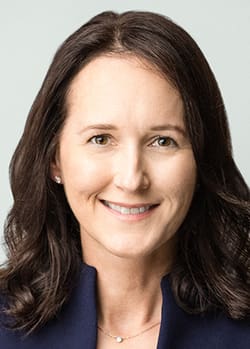 Co-chair of the Paul, Weiss litigation department and a member of the firm’s management committee, Jessica Carey has deep experience handling a wide range of sensitive criminal, regulatory and complex commercial litigation matters, particularly on behalf of financial institutions. Jessica has helped numerous clients successfully navigate their most significant, threatening white-collar matters and internal investigations.
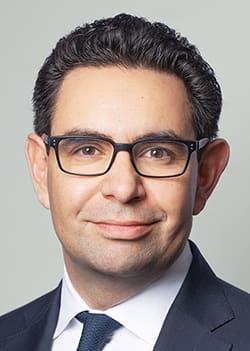 Roberto Gonzalez
 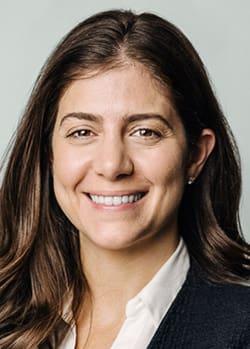 Nicole Succar
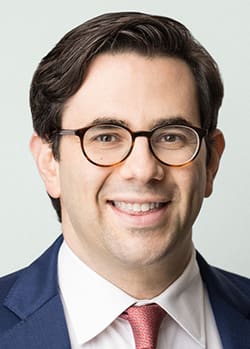 A counsel in the Paul, Weiss litigation department, Sam Kleiner represents clients in high-stakes litigation, government and internal investigations and regulatory proceedings. Prior to joining Paul, Weiss, he served as a senior adviser to the general counsel and the under secretary for terrorism and financial intelligence at the Department of the Treasury, where he advised on sanctions, anti-money laundering, CFIUS and litigation matters.