Risk
Risk refers to threats an organization faces -- loss of earnings, loss of reputation, or harm of any kind. These articles explore the challenges of preventing, identifying and mitigating risk.
Risk can come in many forms, including financial issues, legal liabilities, strategic or leadership errors, or accidents and natural disasters. Today, IT- and data-related risks are growing concerns.
The following articles about risk look at the issue from many angles, especially from that of compliance officers and risk managers.

Risk Management During the Coronavirus
Vicky Yu has seen the effects of the coronavirus firsthand. Here, she offers lessons learned, hopefully to protect those organizations who may yet get an up-close-and-personal view into the outbreak. Since the coronavirus outbreak in China late December 2019, many Chinese companies or multinational companies that have offices in China are facing stress from government regulations and their own employees....

The Game You Must Win
Disruptive innovation has a clear impact on the half-life of companies’ business models. Protiviti's Jim DeLoach discusses how industry disruption and digital transformation present a new frontier of opportunity and risk that is shaping – and speeding up – business model changes. Disruptive change has been present throughout recorded history, but the contemporary notion of disruptive change really came into...

The Compliance and Operational Risks in a Total Compensation Approach
With an emphasis on attracting, retaining and motivating the best employees, a total compensation approach is crucial for organizational success given the dynamics of today’s workforce – but this approach is not without its risks. Elliot Dinkin discusses the possible rewards and what to be aware of. Unemployment in the United States is now at an 18-year low – no...

Executives Have a Murky View of Reputation Risk
Reputation has always been a catalyst for company success, but the attention it now demands in our culture is of a critical nature as a driver of competent risk management. Still, it is being undervalued in practice. Michael Toebe discusses the disconnect. Follow the media closely; shortcomings are more frequent than you might imagine. New research is also providing evidence...
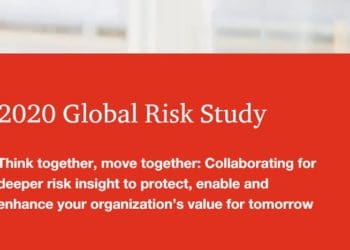
PwC’s 2020 Global Risk Study
PwC has just published the 2020 Global Risk Study, compiling insights from risk management, compliance and internal audit professionals to better understand how the risk function at large can succeed in today’s interconnected, 4IR technology-driven and increasingly complex risk landscape. The study revealed some of the most common challenges executives are facing, including: Organizations moving and connecting faster than the risk...

Top 10 Risks for 2020
Leaders of organizations of virtually every size, industry and geographic location are reminded all too frequently that they operate in an increasingly risky world. Protiviti’s Jim DeLoach provides an update from the ERM Initiative of the various risks organizations face relative to two years ago. Overall, 1,063 C-level executives and directors participated in this year’s global study, with 39 percent...

MetricStream: The Future of Integrated Risk Management
Discover how to build a forward-looking, integrated risk framework that can help you identify "unknown-unknowns" by understanding how various emerging and existing risks intersect with each other. This whitepaper from MetricStream provides: A framework that brings together diverse and dispersed risks, providing a means to understand the intersections between these risks An analysis of how to build an adaptive program...

How to Grow Your Compliance Practices as You Scale
It’s critical for small business owners to minimize exposure and risk; for SMBs, a single ethical or regulatory violation can be catastrophic financially and reputationally. ComplianceLine’s Giovanni Gallo provides guidance for SMBs on how to minimize those risks. Many small to medium businesses (SMBs) are tempted to not deal with compliance and risk management until they’re forced to. They don’t...

FTI Consulting’s Resilience Barometer 2020
FTI Consulting Survey Finds Business Resilience Remains Low Despite Persistent Risks As executives continue to confront cybersecurity, financial crime and regulatory threats in 2020, companies remain largely unprepared for events that can impact revenue, valuation and reputation, according to a new survey released at the World Economic Forum in Davos, Switzerland. The "FTI Consulting Resilience Barometer 2020," a survey of more...

The Implications of Technical Debt to Your Company’s Competitiveness
For decades, arcane discussions on technical debt have occurred within the ranks of IT, with little engagement from executive management and the board. As Protiviti’s Jim DeLoach explains, today, directors and executives have no choice. They must increase their awareness and understanding of this issue and its impact on the company. Technical debt can be a formidable barrier to sustaining...

What’s Ahead for Enterprise Risk Management In 2020
With fresh corporate scandals in the news seemingly every day, enterprise risk management is growing in importance for organization leadership – and rightly so. LogicGate CEO Matt Kunkel discusses what he foresees for ERM in the year ahead. The global market for enterprise risk management is growing as organizations increasingly prioritize their risk mitigation strategies. Because data breaches are becoming...
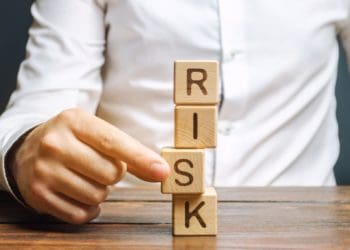
Minimizing Liability Under the SEC’s Reg-BI
RumbergerKirk’s Pete Tepley and Meredith Lees highlight litigation risks posed by the SEC’s Regulation Best Interest (Reg-BI), litigation risks that may arise from Reg-BI’s care and compliance obligations and best practices to mitigate those risks. By looking beyond Reg-BI’s June 30, 2020 compliance date to some of the litigation risks posed by Reg-BI, this article addresses: The possible litigation risks...