
What does a board director need beyond a moral character? Plenty, writes Ask an Ethicist columnist Vera Cherepanova, who says we should start with understanding the roles business leaders play in society.
“Ethics in the boardroom — what is it really about? We have been around long enough to know that a spotless personal reputation is an important characteristic of a business leader, directors included. Ethics is a matter of personal integrity, and it has always been so. If my character is strong, what else is required of me?” — BJ
Your question gets to one of the most important weaknesses in how we talk about business ethics. Boards and companies still tend to treat ethics or integrity primarily as a personal virtue — a character trait that individual directors or executives either possess or do not. To support this with empirical evidence, recent analysis of S&P 500 companies’ proxy statements, including the disclosures on director biographies, found that integrity is frequently presented not as a competence, expertise or experience that can be developed but as an inherent personal quality.
Personal integrity is certainly a baseline for directors, as it is for all good human beings, but something tells me it is not sufficient for the governance process. Why?
Apart from being squarely naive, the idea that if we get business leaders to be better people or to more sincerely commit to moral values underplays the social, economic and political influence that businesses have in society and the problems that come from either a cynical or benevolent use of that influence.
A “good person” CEO can still preside over a harmful business model, just as a well-intentioned board can still make poor decisions if it lacks the right processes, information, challenge and understanding of its role.
Boards are collectives. Every director influences the group and is influenced by it, often without being fully aware of the dynamics involved. Power, informal roles, behavioral norms, deference, dissent and group dynamics all affect how decisions are made. Ethical performance at the board level cannot simply be a function of the personal integrity of one director, any more than the ethicality of a company can be a function of whether the CEO is kind, nice or morally sincere.
The market failures approach, associated in business ethics with Joseph Heath, helps explain why. Its point is that markets are socially justified because, under the right conditions, competition can produce efficient outcomes. When firms exploit conditions that prevent markets from working properly — externalities, information asymmetry, monopoly power, barriers to entry, manipulation or regulatory gaps — they are undermining the institutional justification that gives them their license to pursue profit in the first place. That is slightly more deep than “they are unkind.”
Put differently, business operates as a kind of social subcontract. Society gives firms a special license to pursue private, parochial goals: profit, growth, competitive advantage, innovation. But that license is conditional, because those private goals are justified only insofar as they can serve broader social purposes. Firms cannot use the discretion society gives them to distort the political, legal or market processes that set the terms of that license. That creates role-based obligations.
This is why we need to talk about the role of laws, social structures and institutional arrangements on top of individual characters, virtues and values. The role of a business leader — an executive or a director — implies vast amounts of influence, with decisions affecting others in disproportionate ways. Hence, the heavy ethical weight of the role.
I have heard many chief ethics and compliance officers say some version of, “Yes, I know our profession is an uphill battle, but I am lucky because my CEO, chair or audit committee really ‘gets’ it.” I said that myself in my in-house past. It is lovely on the surface, but if ethical behavior depends on whether a particular powerful person happens to be morally enlightened, the system is forever fragile.
Ethics cannot depend on benevolent personalities but must be embedded in roles, duties, expectations, incentives and governance processes.
I learned this lesson early in my own compliance work. When compliance programs arrived in many developing markets in the early 2010s, expectations around bribery, reporting misconduct and codes of conduct often clashed with broader business norms. During training sessions, employees would sometimes say quite openly, “It sounds like you want us to be different people at the dinner table.” In other words: if everyone around me operates differently, why should I change my behavior?
At first, when I was less experienced, I would reach for the “good person” argument. That usually got me into trouble, and rightly so. Who was I to teach grown adults their personal morals? Also, who was I to impose my vision of what is good on my colleagues?
Over time, I found the role-based argument worked better. The point was not, “Become a morally superior person.” The point was, “This is part of what it means to act in this role, at this company, for these customers, under these commitments.” The obligation came not only from private morality but from the professional and institutional role the person had accepted.
Professional ethics works in the same way. Accountants, internal auditors, lawyers, financial analysts and other professionals are often required to sign and uphold ethics declarations as part of certification or membership. The idea is similar: certain responsibilities are attached to the role. When you occupy that role, you accept obligations that go beyond personal preference.
That is how I believe we should think about business ethics more broadly.
The question is not only whether leaders are nice, kind or personally sincere (all excellent traits, for the record) but whether they understand the ethical obligations created by the power and discretion their roles give them. A director is not just a good person sitting in a boardroom. A director is a fiduciary, a steward and part of a collective decision-making body. Similarly, a CEO is not just an individual with values. A CEO occupies an institutional role with consequences for employees, customers, markets and society.
So yes, of course, integrity matters. But if integrity remains only a personal quality, it is too thin a foundation for business ethics, I’m afraid. Our next task is to turn integrity from a trait we seek and admire into a discipline we govern by.

Yes, You Are Allowed to Take Your Vacation
Why does our culture make a long break feel like an ethical dilemma?
Read moreDetailsReaders respond
The previous question came from an employee considering not taking three weeks of vacation, despite being formally entitled to it. The dilemma revolved around whether a long absence would signal expendability or weak commitment or unfairly burden colleagues, raising broader questions about overwork, the moral status we attach to busyness and indispensability and why economic and technological progress has not translated into more leisure.
In my response, I noted: “It looks like we are trapped in a cycle, sacrificing our well-being for the next flat-screen TV, car, luxury bag or just converting every available hour into output. The bad news is that no one, not even AI, can give you permission to pause. No one, that is, except you. So, break out of the ethical trap. Take the three weeks. And do not spend the vacation checking whether everyone misses you enough.” Read the full column here.
(Editor’s note: Did you behave ethically over summer break? Tell us about it.)

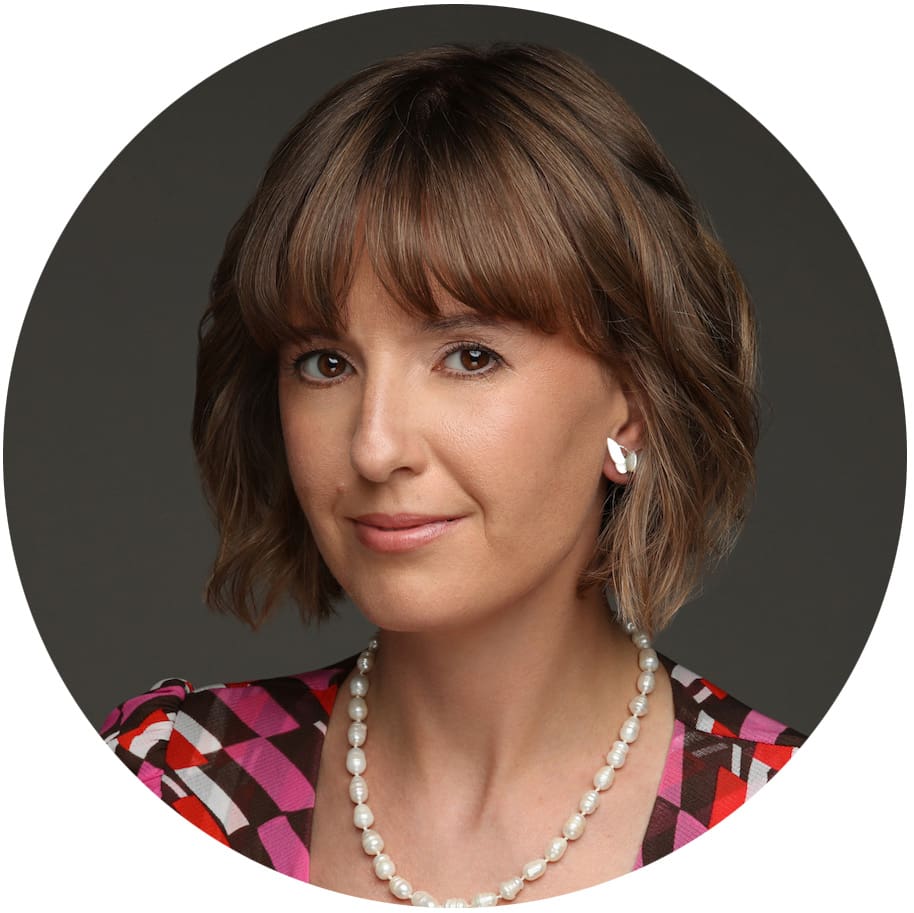 Vera Cherepanova