No Result
View All Result
SUBSCRIBE | NO FEES, NO PAYWALLS
MANAGE MY SUBSCRIPTION
NEWSLETTER
Corporate Compliance Insights
  • About
    • About CCI
    • Writing for CCI
    • NEW: CCI Press – Book Publishing
    • Advertise With Us
  • Explore Topics
    • See All Articles
    • Compliance
    • Ethics
    • Risk
    • Artificial Intelligence (AI)
    • FCPA
    • Governance
    • Fraud
    • Internal Audit
    • HR Compliance
    • Cybersecurity
    • Data Privacy
    • Financial Services
    • Well-Being at Work
    • Leadership and Career
    • Opinion
  • Vendor News
  • Downloads
    • Download Whitepapers & Reports
    • Download eBooks
  • Research
  • Books
    • CCI Press
    • New: Bribery Beyond Borders: The Story of the Foreign Corrupt Practices Act by Severin Wirz
    • CCI Press & Compliance Bookshelf
    • The Seven Elements Book Club
  • Podcasts
  • Webinars
  • Videos
  • Subscribe
Jump to a Section
  • At the Office
    • Ethics
    • HR Compliance
    • Leadership & Career
    • Well-Being at Work
  • Compliance & Risk
    • Compliance
    • FCPA
    • Fraud
    • Risk
  • Finserv & Audit
    • Financial Services
    • Internal Audit
  • Governance
    • ESG
    • Getting Governance Right
  • Infosec
    • Cybersecurity
    • Data Privacy
  • Opinion
    • Adam Balfour
    • Jim DeLoach
    • Mary Shirley
    • Yan Tougas
No Result
View All Result
Corporate Compliance Insights
Home Compliance

AI Regulations Are Coming; How Should Companies Prepare?

As regulators try to keep up with technology, companies should get serious about their policies

by King & Spalding
November 14, 2023
in Compliance
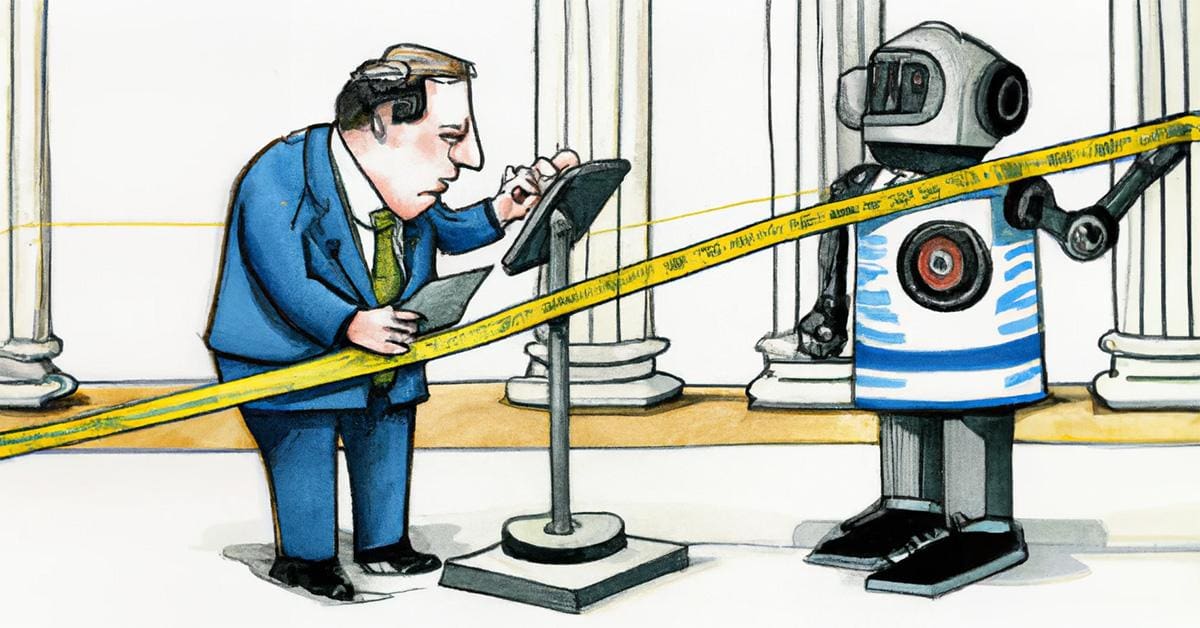
ai generated drawing of legislator examining robot

Image created using OpenAI

Federal regulators have indicated they won’t make the same under-regulation mistake with AI that they made with data privacy regulation, which still doesn’t exist on the federal level. A group of experts from King & Spalding explore what companies need to know to get ahead of coming regulations.

Generative AI has captured the world’s attention, and regulators are no exception. Indeed, the FTC and other regulators are increasingly active on multiple fronts — from large scale antitrust enforcement efforts, to issues as small as online subscriptions and customer reviews. When it comes to generative AI, recent developments suggest that these same regulators are intent on pushing for strict regulation sooner rather than later to guard against what they perceive to be a threat to competition and consumer protection.

The Biden Administration has also acted, issuing an executive order seeking to curb some of the risks of this rapidly spreading technology. (Read more about the order.) 

Regulators keen to avoid ‘grave mistakes’ of under-regulation

In written remarks at the BBB’s National Advertising Division annual conference in September, the FTC’s Bureau of Consumer Protection Director Samuel Levine stated that the FTC would take “a comprehensive and proactive approach” on generative AI legislation. Levine contrasted this approach with the “grave mistakes” on policy choices regarding privacy regulation, where the FTC waited on Congress to enact legislation, which decades later, still does not exist. 

And in early October, the FTC conducted a virtual roundtable on AI and content creation. In her opening remarks, FTC Chairwoman Lina Khan noted that there is no “AI exemption” and that the FTC intends to leverage all available current laws to address potentially unfair or deceptive business practices. She expressed specific concern that generative AI could “incentivize the endless surveillance of our personal data” and “turbocharge fraud.”

cubist style art of robot holding a pencil
Leadership and Career

Want to Be Part of the Generative AI Revolution? Start With Treating It Like an Assistant.

by Dave Cumberland
October 31, 2023

Integrating AI into internal communications can streamline how teams talk to each other

Read moreDetails

How should companies plan for, and react to, potential generative AI regulation?

Companies using — or contemplating using — generative AI should involve internal compliance and legal teams early and often to minimize potential data privacy risks that may be quickly evolving as the FTC attempts to keep up with generative AI technology. In-house legal teams can assist by identifying relevant stakeholders, company policies and changing data privacy or other relevant laws and regulations.

In the event a company determines an internal or government investigation is necessary, keep the following in mind as the scope and scale of the investigation is evaluated:

  • Identify company policies that may be relevant to the investigation process, as these should be carefully considered and any deviations documented before the investigation is launched. Bear in mind that as rulemaking emerges, there may be some lag time between the implementation of those changes and making necessary updates to policies and procedures. In that case, be sure your policies and procedures have appropriately flagged places where the business should check-in with legal and compliance about the latest state of the law and rules.
  • Determine scope and purpose. As much as possible, relevant time periods, business units, employees and goals for the investigation should be determined at the outset. While the scope often expands or changes based on the facts identified, it may be counterproductive and unduly burdensome on the company for the investigation to take on an unnecessarily broad scope, which may impede the efficient and timely resolution of the critical issues.
  • Preserve data and consider the challenges with AI-related data, especially any underlying training data used in building the AI-model. Whether the investigation stems from a subpoena or other legal process, steps should be taken immediately to preserve all potentially relevant data and documents. Engage stakeholders early to understand the scope of what data may be in play (e.g., how data was sourced, model evaluation metrics, training and evaluation scripts). Recommended steps often include implementing back-end holds on emails and other electronically stored documents, communicating preservation obligations to employees and relevant parties (e.g., board members) and suspending routine document retention and/or deletion policies. Given the prevalence of communicating by text message or other messaging applications, as well as the recent focus by regulators on obligations to preserve and produce such communications, consideration of whether to collect data from employees’ mobile devices also may be necessary.
  • Define roles and structure. Decisions about who should be directing, conducting and/or receiving updates about investigation findings are critical for any matter. This includes identifying whether key stakeholders may be witnesses to relevant facts, whether the independence and integrity of the investigation will receive scrutiny (and, relatedly, whether outside counsel should be retained), whether the internal investigation will be conducted at the direction of counsel under attorney-client privilege and what company personnel will need to assist with fact gathering. When it comes to generative AI, given the specialization and engineering involved in some programs, special consideration should be given to subject matter experts within the company that can assist with understanding how the technology operates in the specific environment at issue.
Emily Apte, counsel in King & Spalding’s Austin office, advises and defends clients in complex white-collar criminal and regulatory matters involving federal government, state government and internal investigations, as well as provides crisis management counseling. 
A partner in King & Spalding’s Austin office, Grant Nichols focuses on government investigations, independent investigations and complex white-collar criminal defense matters. 
Luke Roniger, a senior associate in the firm’s trial and global disputes group in Austin, focuses his practice on complex civil litigation and international arbitration. 
Nicholas “Nick” Maietta, an associate in King & Spalding’s data, privacy and security practice in Washington, D.C., focuses on artificial intelligence, privacy and security compliance. 
Tags: Artificial Intelligence (AI)Machine Learning
Previous Post

New OIG Guidance: Let Compliance Officers Stay in Their Lane

Next Post

AI & the Human Touch: Embracing a Symbiotic Future

King & Spalding

King & Spalding

King & Spalding is an international law firm headquartered in Atlanta, where the firm has been based since its founding in 1885. The firm currently boasts 1,200 lawyers in 23 offices around the world, including in North America, the Middle East and Europe.

Related Posts

news roundup data grungy

As Costs Rise & ROI Remains Elusive, Majority of Execs Say AI Agents Are Worth the Risks

by Staff and Wire Reports
July 23, 2026

30% of UK managers get specially trained on sexual harassment; Gartner IDs 5 big changes for legal functions

us flags on wall street

A Field Guide to Privacy Law for Companies Entering the US Market

by Kevin Coy and Erin Doyle
July 20, 2026

Businesses wanting to operate in the US have a variety of laws and regulations to consider

news roundup data grungy

43% of GRC Professionals Say AI Makes Their Jobs Harder

by Staff and Wire Reports
July 16, 2026

Plus: AI’s place in signing M&A deals; leaders use shadow AI more than employees

CCI Getting Governance Right 2026

Getting Governance Right 2026

by Corporate Compliance Insights
July 15, 2026

Boards today face a governance landscape that is broader, faster-moving and less forgiving than ever before. This collection of 14...

Next Post
human and robot finger touching

AI & the Human Touch: Embracing a Symbiotic Future

GGR sq
No Result
View All Result

Privacy Policy | AI Policy

Founded in 2010, CCI is the web’s premier global independent news source for compliance, ethics, risk and information security. 

Got a news tip? Get in touch. Want a weekly round-up in your inbox? Sign up for free. No subscription fees, no paywalls. 

Follow Us

Browse Topics:

  • CCI Press
  • Compliance
  • Compliance Podcasts
  • Cybersecurity
  • Data Privacy
  • eBooks Published by CCI
  • Ethics
  • FCPA
  • Featured
  • Financial Services
  • Fraud
  • Governance
  • GRC Vendor News
  • HR Compliance
  • Internal Audit
  • Leadership and Career
  • On Demand Webinars
  • Opinion
  • Research
  • Resource Library
  • Risk
  • Uncategorized
  • Videos
  • Webinars
  • Well-Being
  • Whitepapers

© 2026 Corporate Compliance Insights

No Result
View All Result
  • About
    • About CCI
    • Writing for CCI
    • NEW: CCI Press – Book Publishing
    • Advertise With Us
  • Explore Topics
    • See All Articles
    • Compliance
    • Ethics
    • Risk
    • Artificial Intelligence (AI)
    • FCPA
    • Governance
    • Fraud
    • Internal Audit
    • HR Compliance
    • Cybersecurity
    • Data Privacy
    • Financial Services
    • Well-Being at Work
    • Leadership and Career
    • Opinion
  • Vendor News
  • Downloads
    • Download Whitepapers & Reports
    • Download eBooks
  • Research
  • Books
    • CCI Press
    • New: Bribery Beyond Borders: The Story of the Foreign Corrupt Practices Act by Severin Wirz
    • CCI Press & Compliance Bookshelf
    • The Seven Elements Book Club
  • Podcasts
  • Webinars
  • Videos
  • Subscribe

© 2026 Corporate Compliance Insights