The EU’s new anti-greenwashing rules turn sustainability claims into a matter of legal exposure, governance and corporate reputation. Compliance leaders should ensure that environment-related communications can be substantiated before they reach the market, writes Andreas Pyrcek of EY Germany.
For years, the European sustainability debate has centered primarily on reporting. Companies have focused on what they must disclose, which data they must collect and how evolving requirements may affect their ESG reporting obligations. The EU’s Empowering Consumers for the Green Transition Directive, commonly referred to as EmpCo or sometimes ECGT, takes a different approach. Rather than determining what companies must report, it regulates what businesses may say to consumers about the environmental and social characteristics of their products, services and operations.
EmpCo amends the EU Unfair Commercial Practices Directive and the Consumer Rights Directive. Its provisions are intended to address misleading environmental claims, unreliable sustainability labels and other practices that may prevent consumers from making informed purchasing decisions. EU member states were required to transpose the directive by March 27, 2026, and must apply their national implementing rules from Sept. 27, 2026.
This makes EmpCo a landmark in European sustainability regulation, introduces explicit anti-greenwashing rules into EU consumer law and identifies specific sustainability practices that may either be prohibited outright or assessed as misleading based on their context.
Greenwashing has become more than a reputational concern; it is now a defined legal and compliance risk in the European Union.
What the new rules require
EmpCo does not impose one general obligation to obtain advance approval for every environmental statement. Instead, it combines specific prohibitions with broader rules governing misleading commercial practices.
Some practices will be added to the EU’s “blacklist” of commercial practices considered unfair in all circumstances. Other claims will be assessed case-by-case, including whether they contain false information, deceive the average consumer or materially influence a purchasing decision.
One of the most significant changes concerns generic environmental claims. Broad expressions like “environmentally friendly,” “eco-friendly,” “green,” “climate-friendly,” “sustainable” or “responsible” may no longer be used merely because a company can point to some positive environmental activity. A generic environmental claim must be supported by recognized excellent environmental performance that is relevant to the claim. Alternatively, the company must clearly and prominently specify the claim on the same medium, such as the packaging, advertisement or online sales interface.
This distinction is important. A statement like “climate-friendly packaging” may be regarded as a generic environmental claim. A more specific statement explaining that all energy used to produce the packaging comes from renewable sources may fall outside that particular prohibition, although it must still be accurate and must comply with the general rules against misleading practices.
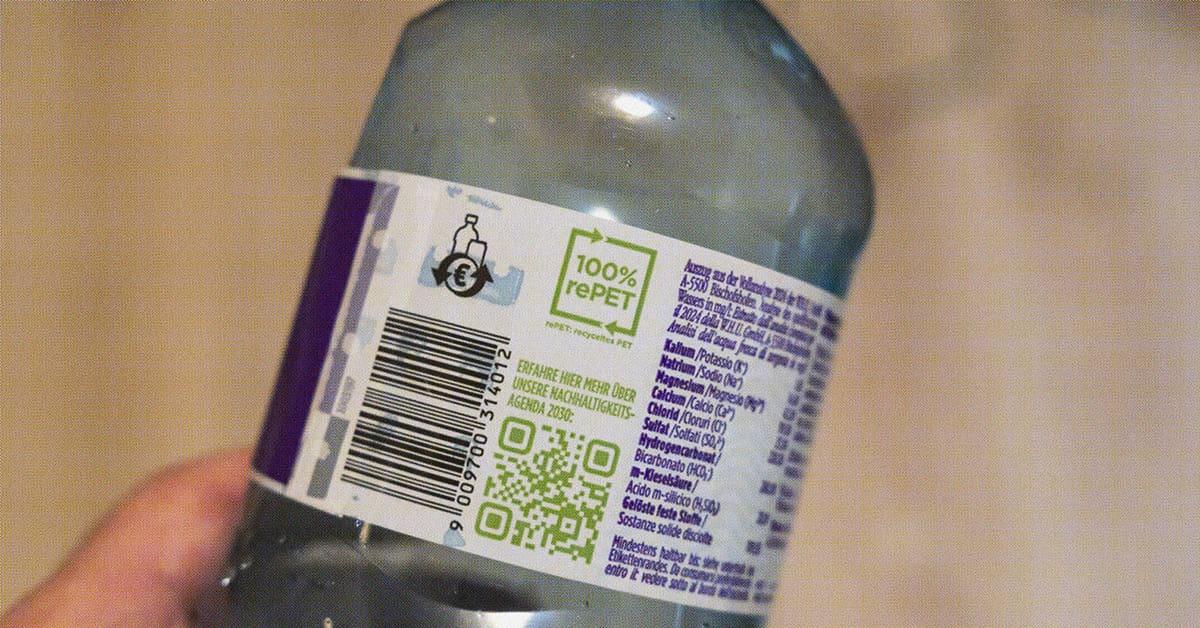
EmpCo also prohibits companies from presenting an environmental benefit relating to only one aspect of a product as though it applied to the entire product or business. A company should not, for example, create the impression that a whole product consists of recycled material if only its packaging does. Similarly, an isolated sustainability initiative cannot be used to imply that the company’s overall operations meet the same environmental standard.
Further, under the directive, companies may not claim that a product has a neutral, reduced or positive impact on the environment in terms of greenhouse-gas emissions when that claim is based on offsetting. The EU legislature considers such statements misleading because they can create the impression that the product itself, or its production and supply, does not have an adverse climate impact.
Companies may continue to communicate investments in environmental initiatives or carbon-credit projects, provided that the information is presented in a way that is not misleading. The critical requirement is that those investments must not be used to make a prohibited product-level neutrality claim.
And where companies compare products based on environmental or social characteristics, durability, repairability or recyclability, consumers must be given information about the comparison method, the products and suppliers included and the measures used to keep the comparison current.
The objective is to ensure that comparisons are based on products serving the same function, use a common methodology and address material and verifiable characteristics.
This means that claims like “greener,” “more sustainable” or “better for the environment” require more than an internal assessment. Companies must understand what is being compared, whether the methodology is consistent and whether the comparison remains accurate over time.
These requirements are all meaningful for compliance teams. A statement does not need to be entirely false to create legal risk. A factually correct statement may still be misleading if its presentation, scope or context creates an inaccurate overall impression. And the rules around climate neutrality create a significant review obligation for businesses that have integrated neutrality language into packaging, product descriptions, websites or advertising campaigns. Compliance teams will need to distinguish carefully between communications about corporate climate initiatives and claims about the environmental impact of a specific product.

The Greenwashing Reckoning Isn’t About Marketing
A bold public target and a cautious financial model can contradict each other inside the same annual report
Read moreDetailsFuture promises & sustainability labeling
EmpCo also addresses forward-looking claims, including commitments to achieve climate neutrality, net zero or another environmental objective by a future date.
Such claims may be considered misleading if they are not supported by clear, objective, publicly available and verifiable commitments and targets. A company must have a detailed and realistic implementation plan showing how the targets will be achieved, including the allocation of resources. Progress must also be verified regularly by an independent third-party expert whose findings are made available to consumers.
This requirement has implications well beyond marketing. An environmental promise may depend on investment decisions, technological developments, operational transformation and emissions reductions across several business units. Examine not only the wording of the claim but also whether the organization has a sufficiently credible plan, ownership structure, resources and monitoring process to support it. A corporate ambition should not be presented to the market as an achievable commitment if the underlying organization has not established a realistic route to delivery.
EmpCo also tightens the rules governing sustainability labels. Companies will generally be prohibited from displaying a sustainability label unless it is based on a certification scheme or has been established by a public authority.
A qualifying certification scheme must satisfy minimum standards of transparency and credibility. This includes objective monitoring by a competent third party that is independent of both the scheme owner and the company using the label. The relevant conditions of the scheme must also be publicly available.
This provision is particularly relevant to proprietary green labels and self-created environmental symbols. A company cannot establish its own sustainability mark and use it to imply independent environmental quality if the mark is not supported by a qualifying certification framework.
Review not only the wording of written sustainability claims but also seals, icons, logos, color schemes and other visual devices that may communicate an environmental message.
Legal consequences extend beyond regulatory fines
The consequences of noncompliance arise through the consumer-protection and unfair-commercial-practices regimes into which EmpCo is integrated. The precise procedures and sanctions depend on national implementing law, but companies can face orders to stop using a claim, removal or amendment of advertisements and packaging, claims brought by competitors or consumer organizations, consumer redress and financial penalties.
For widespread infringements with an EU cross-border dimension, the existing European consumer-law enforcement framework requires member states to provide for maximum fines of at least 4% of the trader’s annual turnover in the member states concerned. Where turnover information is unavailable, national law must provide for a maximum fine of at least €2 million. The application of sanctions in an individual case remains subject to the relevant national implementation and enforcement process.
The economic exposure may extend well beyond a fine. A prohibited claim may require a company to stop a campaign, revise websites and sales materials, change product packaging or defend litigation across several jurisdictions. Misleading claims may also create disputes with customers and business partners and increase scrutiny of related sustainability disclosures.
Reputational consequences can be even more severe. Greenwashing allegations directly challenge the credibility of the organization. If a company cannot support a public sustainability promise, stakeholders may question not only the claim itself but also the reliability of management, the effectiveness of internal controls and the integrity of the broader sustainability strategy.
Why EmpCo belongs on the compliance agenda
Sustainability communications are often developed across marketing, corporate affairs, product management, legal and sustainability teams. Without a common governance framework, no single function may have a complete view of the claims being made, the evidence supporting them or the assumptions on which they depend.
That is where compliance can add value.
Compliance does not need to become the technical owner of every environmental data point. It should, however, help establish the governance through which claims are identified, risk-assessed, substantiated, approved and monitored. The relevant control framework should cover statements on packaging, websites, advertising, social media, investor-facing materials and other consumer communications.
Before publication, the organization should be able to demonstrate what evidence supports a claim, whether the wording accurately reflects the scope of that evidence, who has approved it and how changes in data or business performance will be monitored. Higher-risk claims, particularly climate-neutrality statements, future targets, generic environmental language and comparative claims, should receive enhanced scrutiny.
This is not merely a documentation exercise. It is a question of whether the company can defend the claim if it is challenged by a regulator, consumer organization, competitor or court.
EmpCo marks an important development for compliance and ethics leaders. It brings sustainability communication firmly into the legal accountability framework. Environmental claims can no longer be treated as aspirational messaging that sits outside the company’s compliance management system.
The central question is no longer simply whether a sustainability statement is attractive or broadly consistent with corporate ambitions. The question is whether it is legally permissible, factually supportable and capable of withstanding external scrutiny.

 Andreas Pyrcek is a partner in EY Germany’s risk consulting-regulatory compliance & ethics practice. Seasoned in accounting fraud, bribery, corruption and other fraudulent employee behavior, he has conducted investigations across the globe during criminal proceedings. He is EY’s senior leader in designing and assessing global compliance programs.