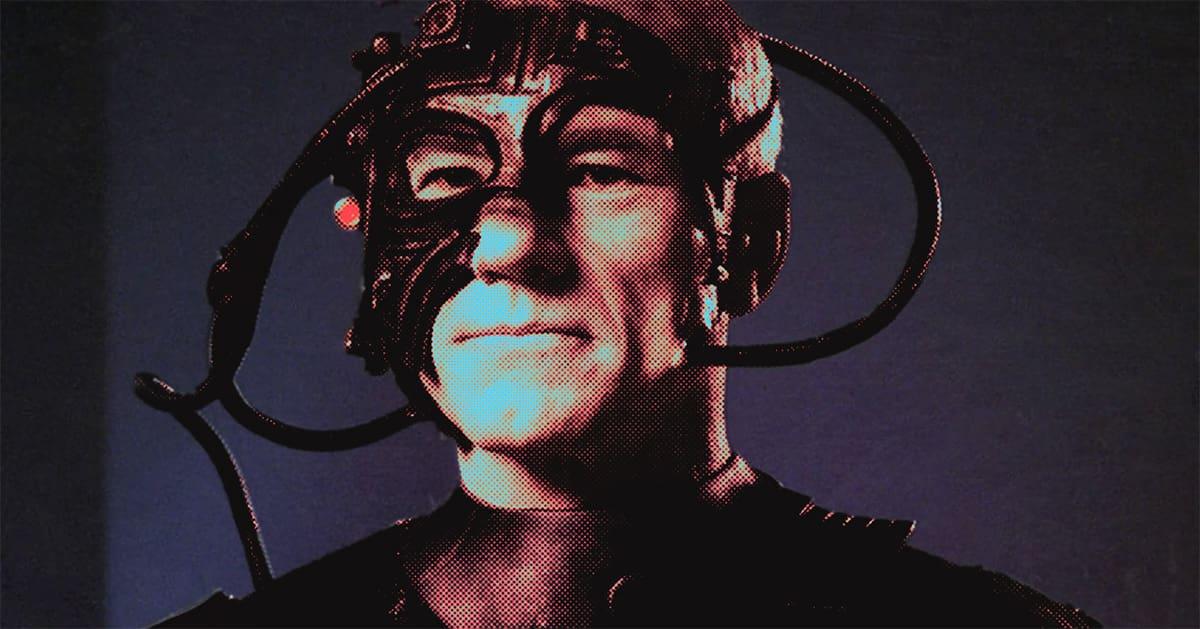
As increasing numbers of Americans push back on data center projects being proposed across the country, those actually using AI in their jobs are regularly confronted by its limitations. CCI editorial director Jennifer L. Gaskin asks one very simple question with those facts in mind: How exactly is the AI takeover inevitable?
At this point, AI is to the corporate world what Stanley cups were to suburban moms circa 2024. No doubt, many are still using theirs, but I’d wager that many of those sold in your area are gracing the shelves of your local thrift shop at this moment.
Let’s extend this metaphor a little further. Stanley cups were basically a new delivery system for something humans have needed since we crawled out of the primordial ooze: water. In that way, AI is perhaps best understood as a new delivery system for computer science. Whether we need computer science is debatable, but there are many ways in which it has made human life better. An example, CCI, the website you are reading, exists and employs me, the person whose fingers typed out the words on the screen. An even better example and one of my faves: landing humans on the moon in 1969.
Nobody in 2024 was saying Stanley cups were inevitable, except maybe for the Stanley Corp. You didn’t hear shouts of, “How else will you consume liquids?” or, “Get one or die of thirst!” But very loud and persistent voices (they sound sort of like this) are telling us AI is inevitable, so we’d better get on board.
It’s a lie.
I’ll grant that much like ChatGPT or Claude, my newsfeeds are trained to show me things they think I’ll like, but here’s what I’m seeing lately:
- Multiple college commencement addresses have been interrupted by graduates lustily booing speakers’ attempts to talk positively about AI. Another graduation was utterly fumbled by a malfunctioning AI that mixed up the names of many grads, who never got to hear their names read while they collected their diplomas.
- A growing agreement among many on the left and right that AI data center projects are bad for local communities. Efforts to enact energy-related restrictions are underway in more than two dozen states. Meanwhile, a Gallup poll in May found that 70% of Americans would oppose a project to bring a data center to their community; only 7% would “strongly favor” such projects.
- After leaning into their AI avarice, many companies are now realizing the tens of millions of tokens used to run AI prompts weren’t free, and agentic AI will only compound the issue.
- Pope Leo XIV issued the first encyclical of his papacy, warning that AI threatens to “sacrifice human dignity for efficiency.”
If anything feels inevitable at this moment, it’s that people are winning the argument that their lives are being increasingly messed-with and maybe messed-up by AI and that the costs may not be justified by the actual product.
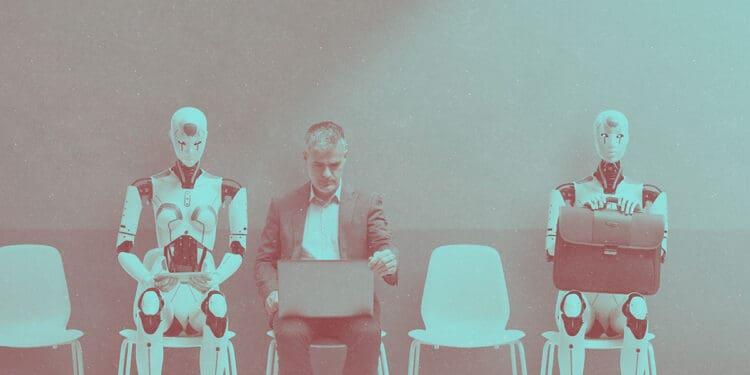



A load-bearing bubble?
Another fact is worth considering here: AI is generating enormous financial investment. Gartner expects total AI spending to exceed $2.5 trillion in 2026. To lean on a hoary old trope, that’s more than the national GDP of Switzerland and Saudi Arabia combined.
A St. Louis Federal Reserve analysis, seeking to determine how important AI is to the American economy, compared how AI-related investments influenced US GDP growth to a similar question posed in the bygone era of Pets.com and AltaVista. Their answer: AI’s contribution today is bigger than that of IT components during the dot-com boom, which was followed, as we all know, by the aptly named dot-com bust.
For those who believe AI is inevitable, is it because of the economically sexy investment AI commands or because it can actually do all of the things the people selling it say it can (whether now or at some unknown date)? There’s no right answer, of course, since we are talking about the future, a thing that definitionally has not happened yet. But neither of those answers feels good if you are on the side of human beings.
If AI is inevitable because it’s economically important, what happens when the rug is pulled out, which maybe is already happening (see companies being shocked to learn there’s no such thing as a free lunch)? Before its IPO this month, Anthropic had produced exactly zero profitable quarters. Its rival, OpenAI, is not expected to become cash flow-positive until 2030.
That brings us to the other option: AI is inevitable because it’s just so damned good, which is an entirely false assertion. Another word for that is lie. AI is not good enough to justify it being set upon virtually every corporate task like a pumper truck to a Dumpster fire.
When I use AI for work or personal tasks, I prefer Claude, which is Anthropic’s offering. I find it gets me usable output without as much explanation as OpenAI’s ChatGPT requires. And I prefer the aesthetics of the interface — the typeface, the colors, even the stupid blobby logo. You see, even I, an avowed AI skeptic, find myself falling victim to its allure. Em-dashes everywhere, sometimes used correctly, sometimes not. No typos or misspelled words. Lightning-quick speed. Use of the rule of three.
When it veers into slop territory, I can course-correct, provided I have time and am in the right mood. My training as a copy editor means that I approach the written word as if there is an error in every single sentence, maybe a factual one, maybe grammar, maybe just poor phrasing. But there’s a problem with the copy, and it’s my job to find it. If I find nothing, that makes me nervous because nobody does perfect work. And that extends to generative AI. Its output might have the veneer of perfection, but it’s precisely that: a veneer. And just as a cheap wood veneer can be picked off by someone persistent, taking even a moment’s credulous look at the output reveals the cracks.
But most people who are being forced to use AI do not have the time to pick off the veneer to reveal the absolutely rotted structure beneath it. Your mileage probably varies, but for me, AI can do a very small number of tasks — one or two — reliably well enough and enough of the time for me to continue using it. Those use cases are few, and the more I use it, the more use cases I am able to eliminate — not add.
And I’m not alone there.
A Quinnipiac poll in March found that only 27% of Americans had never used AI tools, a decrease of six percentage points from 2025. At the same time, a combined 76% do not believe the output of AI is trustworthy. But if we’re using it more, why aren’t we happier about it? Why aren’t we dying to have some company poison our water in exchange for a handful of shitty jobs?
The quiet part
I started covering AI and compliance just after the splashy launch of ChatGPT a few years ago. You may remember that event because it scared the shit out of almost every knowledge worker and creative professional you know. The bots were coming, we feared, and they can do in 10 seconds what I might be able to do in 10 hours. They don’t sleep, they don’t take vacations.
And we’ve spent the intervening years hearing nothing but dire predictions about the future of employment and, indeed, thousands or perhaps millions have already lost their jobs (though some are, hilariously, being asked to come back).
This brings me to my ultimate reason why I have to believe that the supposed inevitability of AI is mostly made-up and that’s because if there really is a job-pocalypse coming, we are well and truly screwed. If we learned anything from Covid, it’s that our national leaders, when faced with a trolley problem, will only ever ask one question: how will this affect the shareholders?

 Jennifer L. Gaskin is editorial director of Corporate Compliance Insights. A newsroom-forged journalist, she began her career in community newspapers. Her first assignment was covering a county council meeting where the main agenda item was whether the clerk's office needed a new printer (it did). Starting with her early days at small local papers, Jennifer has worked as a reporter, photographer, copy editor, page designer, manager and more. She joined the staff of Corporate Compliance Insights in 2021 and also hosts the CCI-produced podcast "Queering Compliance."