
The SEC packed months’ worth of major developments into just a few weeks — and compliance teams are sorting through what it all means. CCI editorial director Jennifer L. Gaskin breaks down what’s changed, what hasn’t and where your attention should go.
In the space of less than a month, the SEC updated its enforcement manual for the first time in nearly 10 years, said an abrupt goodbye to its enforcement chief and signed a memorandum of understanding with the CFTC. And next month, according to news reports, it will propose a rule change that would permit listed companies to report their earnings twice a year instead of quarterly.
For corporate integrity professionals, it’s instinctual to closely track every development from an agency like the SEC, but the reality is not every item on that list carries the same weight for the regulated community. And sorting the operationally meaningful from the merely headline-grabbing may be the most useful thing a compliance professional can do right now.
Rest assured, though, there’s plenty to do, experts told CCI. For starters, you should read the enforcement manual, particularly its section on Wells process changes and references to document retention policies for messaging platforms like WhatsApp, Signal and iMessage. You should also revisit your internal investigation and voluntary disclosure protocols against the manual’s tightened self-reporting credit standard. While no formal rule-change proposal has been released, get your arms around the questions that would need to be answered to decide the quarterly vs. semi-annual earnings reports debate.


And take advantage of the opportunity to engage with the commission, Rebecca Fike, a partner in the regulatory and enforcement group at firm Reed Smith and a former attorney in the SEC’s Enforcement Division, told CCI in a written Q&A.
“The 2026 version [of the enforcement manual] adds the word ‘engagement’ to the ‘values integral to the mission’ of the Division of Enforcement, joining integrity, fairness, commitment and teamwork,” Fike said. “Based on this change to the manual, and many of the recent speeches by the SEC chair and other commissioners, there is no doubt this SEC wants to hear from market participants and hopes to evolve to better serve them as a whole.”
As for the seemingly rapid rate of change at the commission, the real-world impact will depend on whether companies are facing active SEC investigations, said Jay Dubow, partner and co-lead of Troutman Pepper Locke’s securities investigations and enforcement practice group and former branch chief of the Enforcement Division.
“[The updated enforcement manual] sort of gives you an idea of how [an investigation is] going to proceed and what’s likely going to happen in terms of process during the course of such investigations,” Dubow said.
And while the audience for it is SEC staff and not the SEC-registered community, its expectation-setting may be useful for corporate leaders.
“I think over the course of a number of years, in terms of, say, access to information that the staff developed, it was up to the staff members involved,” Dubow told CCI. “If I was involved in a case, some staff members would provide information to me during a Wells process and others wouldn’t. And now it’s supposed to be the same throughout the division.”
From a practical perspective, this information-sharing could benefit investigators and the investigated, depending on the situation, Dubow said.
“If the staff hides the ball on certain information, it doesn’t allow the potential defendants or respondents to an enforcement action to address that. And they may have a very good response to something,” Dubow said. “Sometimes for clients involved in SEC investigations, they may think that there isn’t a cause of action, and there could be evidence that’s unknown to them … that would help make the case that there’s more of a case than they thought.”
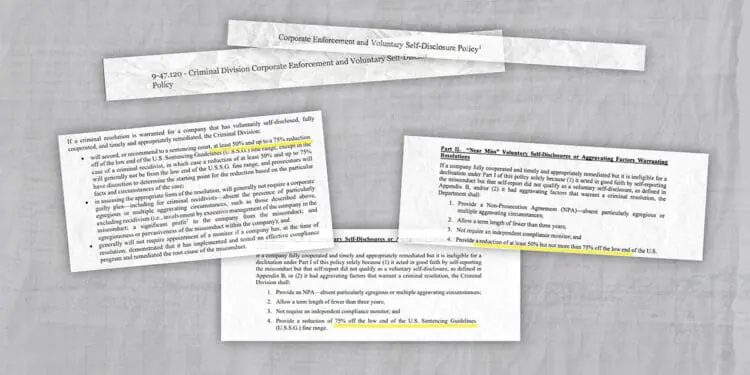
For a deeper look at what the manual changes mean in practice — and what compliance and legal teams should prioritize — CCI conducted a written Q&A with Fike, whose experience on both sides of SEC enforcement informs her read of what’s genuinely new and what’s more incremental than it appears.
CCI: The 2026 manual codifies specific timelines for the Wells process — four weeks for submissions, four weeks for a post-submission meeting — and guarantees that meeting will include someone at the associate director level or above. How much did the absence of those standards in practice create problems, and do you expect their codification to materially change outcomes?
Rebecca Fike: As your readers likely know, the Wells process is a practice created in the Division of Enforcement that lets potential defendants know when the staff is ready to recommend charges, what those charges are and what factual evidence supports them. The potential defendant then has the opportunity to submit a Wells response to effectively plead their case to the staff to convince them not to recommend charges at all.
The 2026 manual updates codify my general experience with the Wells process, both when I was at the SEC and now in private practice. I have never attended a Wells meeting without someone at least at the associate director level or above present, and I always granted extensions when I was on staff and have largely received the same courtesy as a defense attorney. I did once have a request for an extension beyond the original two weeks denied by the staff handling the investigation, but a quick email one level up on the enforcement staff ladder earned my client the four weeks they would now have guaranteed under the updated manual.
Overall, I think it is good that all counsel and potential defendants will work from the same expectations of time and attention to the Wells process, but I don’t expect it to materially change outcomes.
CCI: The new manual shifts the language around a Wells recipient’s ability to review the investigative file from discretionary to affirmative — staff should now be “forthcoming” and make “reasonable efforts” to allow access. For a compliance officer or GC trying to understand what the SEC actually has on their company, how significant is that change?
RF: Again, this really depends on your personal experience with the SEC staff. Some offices have always been fairly open about allowing counsel to review the investigative file, but this certainly sets a new baseline and helps to make it available to everyone. And just as importantly, these changes convey that same expectation and permission to the SEC staff to allow that access. There will still be some evidence protected, such as information received from a whistleblower, but access to the investigative file will definitely help counsel better understand what they are facing if the staff recommends charges. Additionally, access to the investigative file means counsel can make a better response, hitting at any weak areas in the government’s case or deciding to settle with the staff, allowing for charges to be adjusted or downgraded where appropriate, which is more efficient for the client and the government.
CCI: The commission restored simultaneous consideration of settlement offers and waiver requests in September 2025, and the manual now specifies a five-business-day decision window if the SEC accepts a settlement but rejects a waiver. For regulated entities facing automatic disqualifications, what does that change about when and how boards need to be engaged in settlement decisions?
RF: For regulated entities, this is one of the more impact changes in the updated manual. Until now the process for waiver consideration changed under different SEC chairs and the current approach was not always visible to the public unless or until you were facing a potential settlement yourself. For entities that could face automatic disqualifications, the board of directors should be involved as soon as the entity receives a Wells notice or when the staff has made clear they do intend to recommend charges but are open to settlement discussions if the party prefers not to go through the formal Wells process. This allows the board to be ready to quickly assess and re-consider the company’s offer to settle if a waiver application is rejected.
CCI: The cooperation framework in the 2026 manual is largely identical to the 2017 version — same Seaboard Report foundation, same four-part structure for individuals. Given everything else that has changed in SEC enforcement over the past nine years, does that continuity surprise you, and what does it tell compliance officers about where the safe harbors actually are?
RF: The continuity is not surprising — the SEC has long refused to go into clear detail on what exactly constitutes cooperation and how exactly a defendant stands to benefit. This is largely a product of two things: (1) investigations are non-public and remain that way when they are closed due to cooperation, muzzling the staff’s ability to share the reason for closure with the market; (2) cooperation is enormously fact-specific and depends on the parties, counsel, resources, wrongdoing, harm caused and more, and is thus very hard to put into any kind of rubric; and (3) how much cooperation matters depends almost entirely on the enforcement priorities of the current SEC chair and how he or she views the Division of Enforcement’s role in the broader market. Under some administrations cooperation means a lower fine or certain charges dropped while others remain, while under others it means that a case might not be brought at all.
So overall while the continuity does not surprise me, I think it’s more because compliance officers may not ever be able to rely on certain safe harbors to avoid SEC enforcement rather than this version of the manual bringing them closer to clarity.
CCI: The manual now ties the criminal referral framework to an executive order and expands the referral factors, while explicitly stating that strict liability conduct generally won’t be referred criminally. For your clients in heavily regulated industries where technical violations are a real exposure, does that carve-out change the calculus around voluntary disclosure or internal investigation decisions?
RF: Potentially, though strict-liability conduct has never been preferred by the DOJ and is thus not often referred by the SEC. The DOJ focuses on fraud, particularly fraud that can be easily understood by a potential jury, where harm was caused to investors that justifies the time and resources of the federal government being utilized in a criminal capacity. Strict liability violations, such as missed filing deadlines or failures in controls that do not result in fraud, are generally victimless. I always counsel towards internal investigations — a good investigation can help a company understand errors, create better processes and controls and prevent future violations. Voluntary disclosure is a more fact-dependent analysis, but the manual updates don’t change it much for me.
CCI: This manual is one of the only public windows into how the Enforcement Division actually operates. For a compliance officer or GC who hasn’t read it — should they? And if so, what’s the single most important thing the 2026 version tells them about how to engage with the SEC that the 2017 version didn’t?
RF: They should absolutely read the enforcement manual. As you note, it really is one of the only public windows into the Division of Enforcement and it helps an outsider understand the internal language, processes, staffing, and workings of the division. Anyone who interacts with the SEC should read it, and now that the division has stated they will review the manual every year for potential revisions, my hope is that it becomes even more specific and useful over time.
The most important thing the 2026 version tells readers about how to engage with the SEC is exactly that — to engage. The 2026 version adds the word “engagement” to the “values integral to the mission” of the Division of Enforcement, joining integrity, fairness, commitment and teamwork. Based on this change to the manual, and many of the recent speeches by the SEC chair and other commissioners, there is no doubt this SEC wants to hear from market participants and hopes to evolve to better serve them as a whole.

 Jennifer L. Gaskin is editorial director of Corporate Compliance Insights. A newsroom-forged journalist, she began her career in community newspapers. Her first assignment was covering a county council meeting where the main agenda item was whether the clerk's office needed a new printer (it did). Starting with her early days at small local papers, Jennifer has worked as a reporter, photographer, copy editor, page designer, manager and more. She joined the staff of Corporate Compliance Insights in 2021 and also hosts the CCI-produced podcast "Queering Compliance."