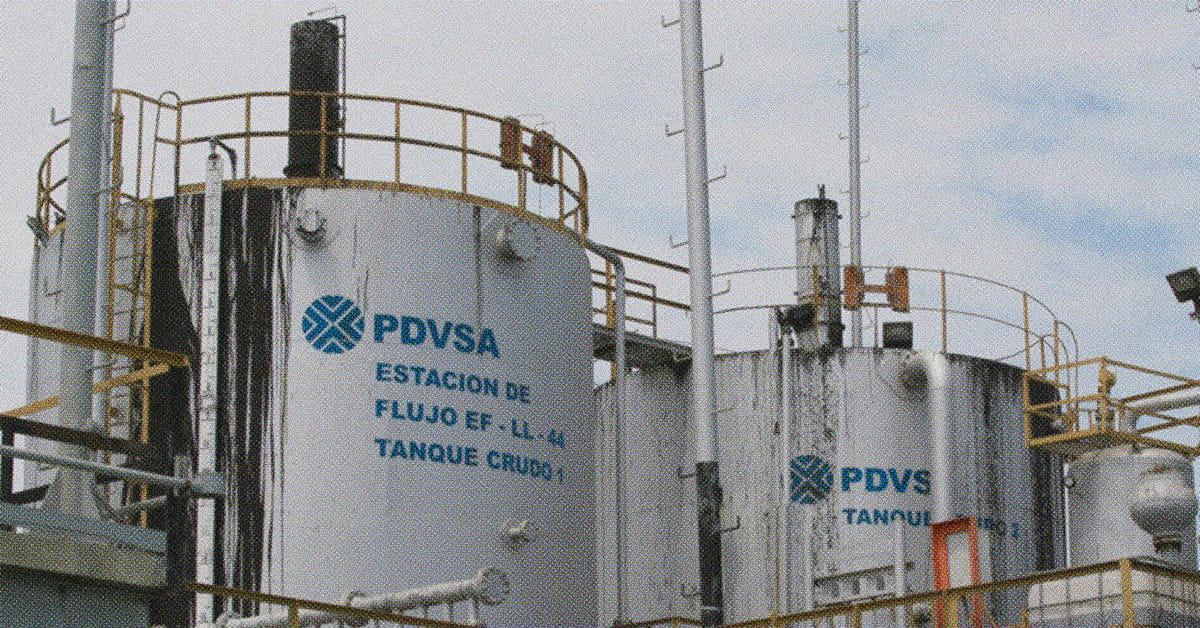
Boards and C-suites are considering whether to incorporate previously “uninvestable” Venezuela into their plans. Matteson Ellis and Collmann Griffin of Miller & Chevalier offer a potential course around the undeniable hazards.
Something has happened over the past few weeks. The initial chill around energy sector investment in post-Maduro Venezuela, summed up in ExxonMobil CEO’s remark at the White House that the country is “uninvestable,” seems to be giving way to a bullish interest in investment, at least among some. Certain boards and C-suites are directing their teams to begin to explore the opportunity. There is a sense that energy sector players don’t want to be left in the dust.
A three-step roadmap for initial investment is emerging — ensuring a plan for economic sanctions compliance; developing a security and compliance protocol for market entry; and launching operational exploratory work. These steps should play out at least through 2026.
Step 1: US sanctions compliance
The US Department of Treasury’s Office of Foreign Assets Control (OFAC) recently issued general licenses authorizing certain transactions otherwise prohibited by current US sanctions against the Venezuelan government and energy giant, Petróleos de Venezuela (PDVSA). The general licenses authorize transactions “ordinarily incident and necessary” to several categories of transactions, including: purchase and export of Venezuela-origin “oil” (defined broadly to include crude oil and a range of other petroleum products); the sale of US-origin diluents to Venezuela; the provision of goods and services for oil and gas exploration and production in Venezuela; and negotiation of contracts, contingent on further OFAC approval, for new investment in oil or gas sector operations in Venezuela.
Another general license authorizes “all transactions” that are related to oil and gas operations of certain energy companies with major pre-sanctions projects in Venezuela, including BP, Chevron, Eni, Maurel & Prom, Repsol and Shell.
Like all general licenses, the Venezuela general licenses are self-executing, meaning that parties can act on them without the need for additional authorization from OFAC, provided they comply with all the terms and conditions of the general licenses. However, all of the Venezuela general licenses impose terms and conditions, some of which differ from the scope of OFAC’s general licenses in other contexts. Following them can be complex and companies will need to be careful when assessing their own eligibility and how to comply. For example:
- The general license for purchases of Venezuela-origin oil requires that at least one party be an “established US entity” — a new term in OFAC’s guidance — organized under US or state law for at least one year before the issuance of the general license. Companies that fall outside this definition (think of all the service companies in neighboring Colombia poised to support the Venezuelan redevelopment effort) can also benefit from this license but only when providing activities and “ancillary” services ordinarily incident and necessary to the established US entity’s transactions.
- Several of the general licenses require regular reporting to the US Department of Energy and the US Department of State.
- Several of the general licenses require that payments owed to PDVSA (except certain taxes and fees) be made to a US Treasury account located outside the United States, presumably to shield the funds from PDVSA’s many creditors; the US government will then reportedly distribute funds back to Venezuela based on budgeting requests from the Venezuelan government. Venezuelans should be thrilled that funds will be flowing into the country, albeit with the US government controlling the purse strings. The model resembles the United Nations Oil for Food Program in Iraq, which ended in massive corruption scandals. Those participating should be wary.
- Several of the general licenses also prohibit payment terms that are “not commercially reasonable” and list several of the unorthodox methods PDVSA has sought to use to make payment in recent years, including “debt swaps,” payments in gold or payments in crypto. The prohibition on “debt swaps” refers to PDVSA’s past practice of agreeing to provide oil and gas to its creditors in exchange for reducing its massive debt; thus far, this is the first regulatory change we have seen that addresses the major issue of PDVSA debt under the new scheme.
For transactions that fall outside of these general licenses, parties can pursue specific licenses through the OFAC application processes. This may be possible if an applicant can show that the license requests align with US policy objectives. The US is keen on not missing a beat in the ramp-up of the sector, and US officials recognize that the sector will need all the help it can get — that is, as long as the help does not come from Russia or China. At the same time, OFAC is likely facing many similar license applications and inquiries coming in, so companies will need to act swiftly and deftly.
The US Department of Energy is playing an active role in policy planning. It has stationed an attaché in Caracas whose mandate includes working as a facilitator between interested companies and PDVSA to put US companies in touch with the correct PDVSA offices, educate PDVSA on the current sanctions prohibitions and conduct that is permitted and work to iron out inevitable cross-border bureaucratic hurdles.

When a Cartel Head Falls, the Money Keeps Moving
Shell companies, real estate purchases and structured trade transactions don't vanish when the cartel head is eliminated — they continue to function
Read moreDetailsStep 2: Security & compliance planning
A security plan is key. Employees must be kept safe. Asset integrity is also paramount in an environment where theft is a constant threat. Companies are leaning on consultant firms with security services on the ground for this planning. Even the US secretary of energy on his recent visit to Venezuela relied on the security apparatus of an oil and gas major with systems already in place on the ground.
Companies must also develop compliance protocols. This is an environment where local government officials working for years in an under-resourced environment could seek every opportunity to line their pockets. Adding to that, it is possible that third-party providers of services could be owned by sanctioned parties. Companies should anticipate that bribery, money laundering, cartel and antiterrorism threats and sanctions risks will be pronounced, and they should plan accordingly.
There is a viewpoint that Trump Administration officials might be less inclined to pursue companies for US Foreign Corrupt Practices Act, anti-money laundering, foreign terrorist organization or OFAC violations. After all, the administration’s entire Venezuela policy rests on energy companies leading the effort to redevelop infrastructure and get the oil flowing. But ignoring US criminal and administrative law carries big risks. And companies should also remember that future US administrations might not have the same orientation. Questionable conduct that occurs now could generate corporate liability for years to come.
The best compliance strategy — one that is not always a recommended path in other countries — might be the “hug the US government” approach. If companies establish consistent lines of communication with officials at OFAC, the State Department, Department of Energy and other agencies, escalate risks they are seeing and seek regular guidance, this could go a long way to mitigating future US enforcement risks. US authorities might be positioned to help companies address compliance roadblocks. If nothing else, this approach shows that the US company is proceeding in good faith and not with corrupt intent. No one is fooling themselves about the complexities of the business environment that awaits.
Step 3: Operational exploratory work
Once OFAC compliance is established and security and other compliance protocols are in place, companies are ready to advance with operational logistics planning. This means numerous site visits over the next year to enable information gathering that informs longer term planning.
Timelines for planning can be complex. Many US companies think that investment planning must assume a 10-year horizon for the significant upfront investment to pay off. There are also short-term considerations. Will the Trump Administration’s current focus on supporting the Venezuela transition be sustained, especially with new challenges in Iran and a coming crisis in Cuba? What happens if US policy changes in a post-Trump Administration? Could the Venezuelan government return to an anti-US, pro-Maduro stance? The current pro-US business environment could turn on a dime.
Logistics planning itself will also be incredibly complex. How will employees get visas when Venezuela’s visa issuance system is antiquated and hasn’t had to consider an explosion of US and international requests? Processes for local permitting might need to be updated to address a wave of new investment. Companies will be competing for the limited universes of qualified and vetted local service providers.
Significant challenges remain. But, yes, the interest now seems to be there.

 Matteson Ellis
 Collmann Griffin