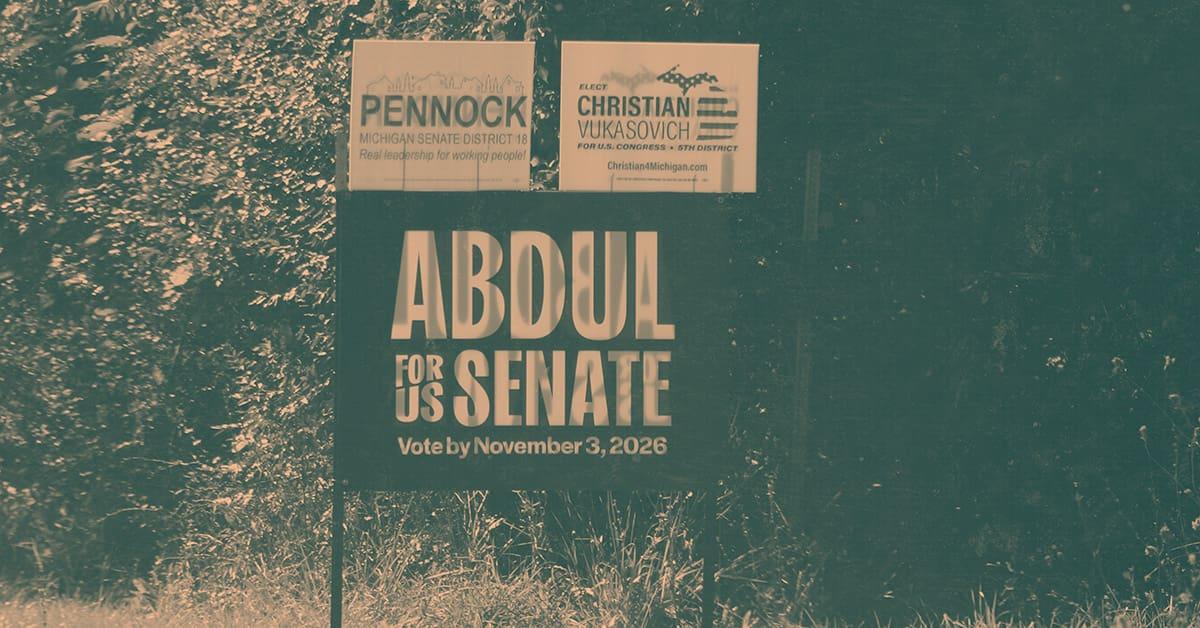
A new Cleary Gottlieb analysis of the approaching midterm elections sees little chance of major legislation under any outcome, regardless of whether Democrats manage to gain control of one or both chambers of Congress. But one thing is expected: If control of either the House or Senate flips, firms and their leaders should expect heightened scrutiny. CCI’s Jennifer L. Gaskin asked partners at the firm what their assessment means for compliance teams.
Polling suggests Democrats have a better-than-even chance of seizing control of at least one chamber of Congress next month, and a new report by law firm Cleary Gottlieb says if the gavel switches hands, companies and their leaders may find themselves subjected to unwanted and uncomfortable attention.
If both chambers flip, Cleary’s analysis says, congressional probes of private-sector companies are likely to “rise substantially,” and firms should also prepare for scrutiny of enforcement resolutions. Leaders need not wait until the new Congress is seated to act, Cleary partner Chris Kavanaugh told CCI in a written Q&A.
“Companies should do a privileged review now of their agency interactions and political engagement, check their document-retention policies and be ready to show that each resolution reflects the facts rather than access to the administration.”
Where scrutiny could start
Democrats have spent much of this Congress questioning how the Trump Administration has handled corporate matters in several areas, including consumer finance cases that were closed out early, crypto cases the SEC dismissed and antitrust settlements like the DOJ’s deals with Hewlett Packard Enterprise and Live Nation-Ticketmaster.
Lawmakers have not framed their concerns as mere policy disputes, suggesting “potentially corrupt political considerations” and the appearance of “pay-to-play” dealings, while some have sought details and records of communications between enforcers and the companies involved.
Statements like these offer a preview of what a new majority could pursue, Kavanaugh said.
“Committees usually build on a public record that already exists,” Kavanaugh said. “The clearest warning sign is a letter from a ranking member, because it can become a committee request or a subpoena if party control changes.”
Companies should also watch members’ news releases, letters and staff reports, he said, which preview where inquiries are heading.
A split Congress would bring its own complications. A Republican Senate tends to step up its own oversight when Democrats control the House, Kavanaugh said, and companies could face opposing subpoenas on the same subject. Handling that takes a single coordinated plan across both committees, he said, with an accurate factual account, a common set of documents produced and consistent assertions of privilege.

$375M Meta Verdict Shows States Don’t Need to Make a Federal Case to Have an Impact
State AGs are elected officials with constituents to answer to; that shapes which consumer protection cases they pursue and how hard they push
Read moreDetailsState AGs & federal settlements
Washington isn’t the only source of scrutiny. Cleary’s report expects state enforcers to matter more in two of its three scenarios. If only one chamber flips, the firm predicts state enforcement will intensify, “often coordinated with congressional investigations.” If Republicans keep both chambers, the report sees “dormant federal agencies” staying inactive and enforcement shifting to state authorities.
Companies accustomed to dealing with federal regulators shouldn’t expect state AGs to behave the same way, Kavanaugh said. Their tools are often limited compared to the federal government’s, and the laws they enforce vary widely from state to state. But they routinely form coalitions, often bipartisan ones, to pursue investigations.
Of course, states don’t always need partners, and Meta has recently been on the losing end of both approaches this year alone. New Mexico’s attorney general won $375 million in civil penalties in March and $567 million in damages in August in a case accusing Meta of misleading consumers about platform safety and endangering children. Also in August, Meta reached a multistate settlement that has drawn comparisons to the landmark tobacco agreement of the 1990s. And just this week, a New Mexico judge ordered Meta to pay $25 billion in a separate case over its data privacy practices after the Cambridge Analytica scandal, a penalty Meta has said it will appeal.
A common misjudgment, Kavanaugh warned, is assuming a federal settlement ends the matter.
“That was more likely a decade ago, but today, that is simply not realistic,” he said, noting that some state investigations have been sparked by the press release announcing a federal settlement.
AI & child safety
Cleary’s report takes a dim view of the chances of comprehensive federal AI safety legislation regardless of what happens in November, “absent a major triggering incident.” Instead, it expects the election’s outcome to shape how much scrutiny AI developers face and where.
If both chambers flip, the report says, AI developers could face increased scrutiny, and targeted measures in areas where consensus already exists become more plausible: protecting children, cybersecurity and already-regulated sectors, such as health and financial services. The executive branch, meanwhile, would likely continue relying on agency action and alignment with industry leaders rather than new legislation. A partial flip could shift the emphasis to hearings and investigations. If Republicans maintain control, the report expects “little-to-no federal response” to industry calls for action.
States will keep legislating in every scenario, the report says, as Illinois did this summer with a new law requiring audits and incident reporting from frontier AI developers.
Of the consensus areas the report identifies, child and teen safety is the most likely to produce binding federal obligations, said Daniel Ilan, a Cleary partner who leads the firm’s global intellectual property, technology and data group. He pointed to the heightened focus on young people’s mental health, social media litigation over youth addiction and harm and the growing number of state laws in the area.
Federal enforcers already have tools there. The FTC has brought several recent actions under the Children’s Online Privacy Protection Act, the law at the center of many privacy claims against tech companies.
“This will likely happen through enforcement actions, though legislation is also possible,” Ilan said.
Executive pay
The SEC’s proposed overhaul of executive compensation disclosure is advancing but “remains vulnerable to political dynamics,” Cleary’s report says. If Republicans maintain both chambers, the firm sees the rules as most likely to be finalized substantially as proposed. That could exempt more than 75% of public companies from compensation discussion and analysis (CD&A), say-on-pay, pay ratio and pay-vs.-performance disclosure by the 2027-28 proxy season. Investors have pushed back on losing say-on-pay votes in particular.
A change in control could slow or reshape those reforms, the report says. If both chambers flip, a new majority could use oversight and its influence over appropriations. It could also conduct hearings on the fiscal effects of the One Big Beautiful Bill Act, including pressure to tighten Section 162(m) further. A split Congress complicates matters. A flipped House would give Democrats on the financial services committee oversight and subpoena authority over the SEC, while a flipped Senate would shape who is confirmed as future commissioners.
Whatever the outcome, one change is already set. Section 162(m) limits the deduction a public company can take for compensation above $1 million paid to certain employees, and an expanded definition of who counts takes effect in 2027. The report advises companies to evaluate now whether to settle 2026 compensation before then.
Compensation committees should be identifying who the “additional five” highest-compensated employees are likely to be, said Cleary partner Julia Petty. That group isn’t limited to executive officers, she said, and may include employees at subsidiaries or elsewhere in the company’s affiliated group. Committees should also consider whether payments scheduled for 2027 or later, such as bonuses, equity vesting or deferred compensation, could be made or settled before year-end to preserve deductibility. They also need to weigh whether speeding up payments for tax reasons fits the plan’s underlying performance design.
That decision carries its own risk, Petty said.
“Any decision to adjust timing to capture a 2026 deduction should be grounded in a documented, independent business rationale rather than tax considerations alone, since the committee remains accountable for the integrity of its pay decisions,” she said. Companies should also be ready to explain any resulting shift in year-over-year pay figures in the CD&A, she said, “since unusual timing changes tend to draw scrutiny from investors and proxy advisers.”

 Jennifer L. Gaskin is editorial director of Corporate Compliance Insights. A newsroom-forged journalist, she began her career in community newspapers. Her first assignment was covering a county council meeting where the main agenda item was whether the clerk's office needed a new printer (it did). Starting with her early days at small local papers, Jennifer has worked as a reporter, photographer, copy editor, page designer, manager and more. She joined the staff of Corporate Compliance Insights in 2021 and also hosts the CCI-produced podcast "Queering Compliance."