Sectoral sanctions with no US nexus, a purge of long-standing general licenses, new Strait of Hormuz risk and a campaign against Iran’s banking lifelines add up to the most consequential sanctions development of the year to date. Compliance expert and attorney Michael Volkov breaks down what the compliance community needs to know.
Three months ago, Washington and Tehran looked close to a deal. Today, the US Treasury Department is running a whole-of-government campaign to close every remaining financial channel available to the Iranian regime and the Islamic Revolutionary Guard Corps.
In June 2026, the US and Iran signed a memorandum of understanding contemplating the termination of sanctions and the release of restricted Iranian assets, a genuine diplomatic opening. That window lapsed without a deal. In July, Treasury’s Office of Foreign Assets Control (OFAC) revoked the general license that had implemented the MOU’s initial oil-sector relief and ordered an immediate wind-down. Operation Economic Outcast, launched in late August, is the follow-through, and third countries have been told directly that they face a choice: cooperate with US policy or face isolation alongside Iran. Qatari-mediated shuttle diplomacy continues, but no deal has been reached.
The centerpiece is OFAC’s determination expanding Executive Order 13902 to five new sectors of the Iranian economy: aviation, digital assets, gold, shipping and technology. They join financial services, petroleum, petrochemicals, construction, mining, manufacturing and textiles. Iran’s economy now has remarkably few corners left untouched by this authority.
The order lets OFAC designate any person, anywhere in the world, who operates in a covered sector or knowingly engages in a significant transaction connected to it. Foreign financial institutions that knowingly facilitate such transactions risk losing US correspondent banking access entirely. And none of it requires a US touchpoint: no US person, no US-origin goods, no dollar clearing. A company operating entirely outside the United States can face full designation on that basis alone.
For compliance officers, the message is blunt. Anyone who began relaxing Iran-related screening in anticipation of détente needs to reverse that posture. Companies in the five new sectors, and the banks serving them, need an immediate reassessment of Iran-connected counterparty exposure, including exposure cascading through several layers of ownership or intermediaries. A technology company two steps removed from an Iran-connected transaction can still be caught if it knowingly facilitated the underlying transfer.
The general license purge hits unlikely targets
The second piece of the campaign is less dramatic in headline terms but arguably more disruptive in practice. OFAC indefinitely suspended five general licenses covering certain educational activities by US persons in third countries, noncommercial personal remittances, conference-related services and sports and academic exchange programs.
The Treasury Department tied the move to Iran’s disruption of energy markets, attacks on regional partners, reconstitution of its weapons programs, efforts to monetize the Strait of Hormuz and continued support for terrorist proxies. But the institutions that relied on these licenses were universities, testing organizations, conference organizers and athletic federations, organizations with little to no history of building sanctions compliance infrastructure.
The disruption showed up within days. A major US testing organization paused test administration inside Iran. An online language-testing platform went dark for Iranian candidates. A law school admissions organization reportedly suspended accounts of Iranian nationals, including some dual US-Canadian citizens. These are not evasion targets; they are ordinary institutions whose workflows, some more than a decade old, disappeared with no transition period.
Aviation took its own hit. In early September, OFAC suspended long-standing aviation-related general licenses, including the authorization for temporary reexportation of US-jurisdiction civil aircraft into Iran for maintenance and similar purposes. Aircraft subject to US export controls are now barred from flying into Iran outside a narrow wind-down authorization, and major international carriers announced route suspensions within days.
Don’t expect a replacement. OFAC has adopted a presumption of denial for specific license requests involving Iran, granting them only where required by law or in exceptional and urgent circumstances such as risk to life, limb or environmental safety. The old fallback of applying for a specific license is effectively gone. Organizations that depended on a suspended license should treat that activity as ended, not pending relicensing, and build real wind-down plans for enrollment, contracts and payments now.

The State of OFAC Sanctions Enforcement in 2025-26
OFAC issued 14 enforcement actions in 2025, but the more important signal may be who got dinged
Read moreDetailsHormuz: Sanctions risk without a payment
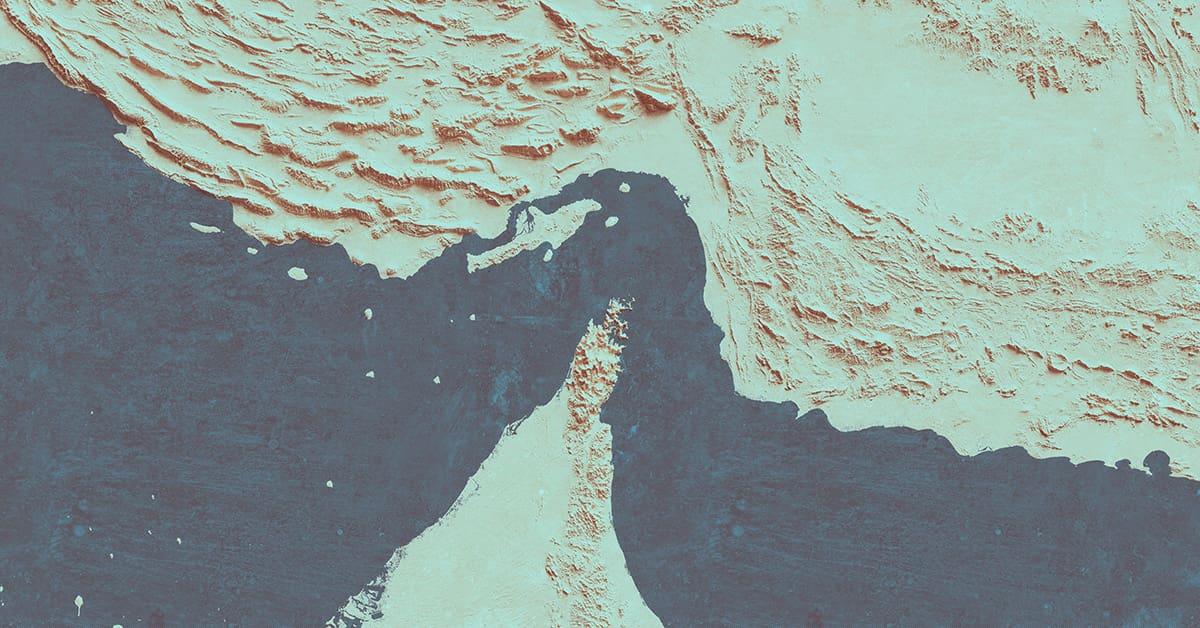
Roughly a fifth of the world’s oil and a substantial share of global liquid natural gas (LNG) moves through the Strait of Hormuz. Over recent months, Iran has attempted to build a toll-and-clearance regime for transiting vessels, and OFAC has been steadily designating the entities involved.
New OFAC guidance on that regime breaks from how sanctions exposure normally works. Ordinarily, risk analysis starts with a transaction: did money, goods or services change hands with a designated party? Under the Hormuz guidance, exposure can arise even when no payment or exchange of value occurs.
Simply interacting with a designated toll-collecting entity, accepting insurance or other services connected to it or responding to its demands for safe-passage information or guarantees can itself create exposure. This is risk triggered by the interaction, not by a completed financial transaction.
The payment side is harder to see, too. OFAC warned that tolls may be extracted through digital asset transfers, barter or swap arrangements, government-to-government accommodations or payments disguised as charitable donations. Each channel is designed to slip past monitoring screens built around wire transfers and correspondent banking.
OFAC’s answer is a specific, affirmative due diligence question for shipowners, charterers, maritime service providers and marine insurers: did this vessel, or any party connected to the voyage, pay a safe-passage fee to Iran or accept any service from an Iranian-connected entity in connection with Hormuz transit?
Squeezing the banks & what comes next
The most aggressive front of Operation Economic Outcast targets the specific banks that have kept Iran connected to the global financial system. Three recent actions show both the breadth of the strategy and the department’s willingness to go after major institutions.
FinCEN proposed a rule naming a UAE-based bank a primary money laundering concern under Section 311, citing an estimated $1.8 billion processed for more than a hundred companies with potential ties to Iranian shadow banking networks. Once finalized, it will functionally sever the bank’s access to US correspondent banking. OFAC also designated a Turkish bank for allegedly moving funds from China to Turkey for the benefit of the IRGC, tied to Iranian oil sales. The sanctions took effect immediately, and Turkey’s own banking regulator then took control of the institution, a sign foreign regulators are increasingly unwilling to contest OFAC’s findings.
The biggest move, by a wide margin, was OFAC’s re-designation of Russia’s second-largest bank under the Iran sectoral authority. OFAC alleges the bank opened offices inside Iran and built correspondent relationships with sanctioned Iranian institutions, including the central bank, to move billions through a ruble-to-rial channel that bypasses dollar clearing. The bank was already under US, UK and EU sanctions for Russia-related conduct. Layering Iran authority on top is a deliberate signal, especially to banks in China and India still processing Russia-related trade finance, that the two programs are increasingly treated as one overlapping enforcement effort.
Read together, the three actions describe a coordinated strategy: find the financial choke points Iran depends on, in the Gulf, in Turkey or through Russia and eliminate them one at a time with whatever authority fits. For institutions with correspondent relationships in these geographies, relationship longevity is no protection. Enhanced due diligence, with attention to Iran-adjacent trade finance and ruble-denominated settlement, needs to move from periodic review to active monitoring.
The Treasury Department has been explicit that the campaign is ongoing, not a single wave. Indeed, just this week, OFAC designated 13 more individuals and entities in Russia, China, Hong Kong and Pakistan for Iran-related weapons procurement. Compliance, risk and governance teams across aviation, digital assets, gold, shipping, technology, maritime services and correspondent banking should treat Iran as an active, evolving risk category that requires continuous monitoring, not a one-time update to a sanctions matrix.
This article was adapted with permission from a two-part series published on the Volkov Law Blog (part I & part II).

 Michael Volkov is the CEO of The Volkov Law Group LLC, where he provides compliance, internal investigation and white collar defense services. He can be reached at