FCPA
What is the FCPA? The abbreviation stands for the Foreign Corrupt Practices Act. The FCPA is a 1977 US amendment that focuses on provisions related to anti-bribery and transparency through corporate accounting transactions. The following FCPA articles are written by and for compliance and legal professionals and cover FCPA news, events, whitepapers, podcasts, and webinars and more.

DOJ & SEC Raising the Stakes on Third-Party Risk Management
Many companies these days are implementing automated due diligence systems, and it’s no wonder why: the government’s expectations in terms of third-party risk management are on the rise. Unresolved red flags will be a problem, as will questionable data. The best way to avoid a DOJ or SEC enforcement action: a robust due diligence program.

DOJ Announces First Declinations After Implementing FCPA Pilot Program
Companies who conduct business in foreign markets and face concerns of foreign corruption may want to give more substantial consideration to the relative pros and cons of self-reporting a budding FCPA issue in an internal investigation. Two declinations and NPAs have been awarded to companies charged with bribery of Chinese officials. Read on for the details.
Rethinking FCPA Due Diligence in a Hyper-Transparent Environment
Stakeholders and customers are increasingly calling for transparency from corporations in how and with whom they’re doing business. As a result, third-party due diligence is increasingly critical. But the traditional tools for managing third-party risk no longer cut the mustard. Alison Taylor, Director of Advisory Services at BSR, is championing a more robust process for gauging corruption risk.
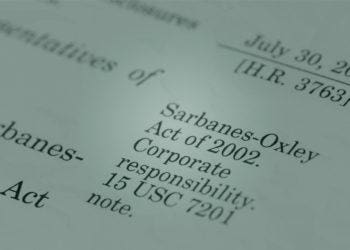
The FCPA and SOX & Internal Controls – Twin Sons of a Different Mother?
Both pieces of legislation aim to minimize wrongdoing – one to prevent corruption abroad, the other to minimize financial fraud. Both focus on robust internal controls as part of the solution. The FCPA lays the burden of managing internal controls on the organization as a whole, but under SOX, the duties clearly fall to the executive officers.

Why Your Company Should Have Zero Tolerance for Zero Tolerance
Zero-tolerance policies may sound good on paper, but there are endless examples of how zero-tolerance policies have been applied to absolutely absurd effect. Robert Zafft offers an alternative approach for corporate compliance programs – one that takes the focus off of severe penalties and instead stresses continuous improvement in processes and corporate culture.

The Importance of Understanding Corrupt Intent
When faced with an allegation of corruption and a related investigation, your organization will be better protected by a strong compliance program – and one that requires staff to document their actions, reasoning and good faith effort to act in keeping with the law and the program. Proving corrupt intent can come down to inferences, and it’s best not to...

What the Olympus Corporate Integrity Agreement Can Teach Us
Olympus, the world’s largest manufacturer of optics products, has demonstrated that its culture of corruption is endemic. Having violated the FCPA, the anti-kickback statute and the False Claims Act in a bribery and kickback scandal stretching back several years, the corporation has entered into a strict corporate integrity agreement aimed at ensuring Olympus has an effective anti-corruption compliance program going...

Lessons From Qualcomm
Having violated the accounting provisions of the FCPA on several occasions, Qualcomm has been the target of an SEC investigation for some time. Last week the regulatory body concluded its enforcement action against Qualcomm, and there are some key lessons to be learned for the compliance practitioner.

New Pemex Corruption Risks
Organizations doing business with Pemex have long faced FCPA risks, as the company is controlled by the Mexican government and thus considered an “instrumentality” thereof. As a result of recent energy reforms, however, Pemex is now one of many actors in the oil and gas industry, and other companies operating in Mexico may face new risks in their interactions with...

Asia-Pacific Anti-Corruption Rankings for 2015
The annual Corruption Perceptions Index is out, and Asia-Pacific showed little improvement overall in 2015. Only a fraction of the 27 countries in the region “passed” in Transparency International’s scoring system, and while several nations did show slight increases in their scores and rankings, others took a tumble.

The Dangers of Letting Bribery Go Undetected
The cost of FCPA violations can really pile up, from penalties levied by enforcement agencies to reputational damage when wrongdoing is made public to prison time for perpetrators. Companies must remain vigilant to recognize the signs of bribery. Guilty parties tend to hide the evidence after all. (Or try, at least.) Do you know where to look and what to...
CSR Programs and Charitable Donations: FCPA Compliance Challenges
Maintaining compliance with global anti-bribery and anti-corruption legislation is no easy undertaking. Laws vary from one jurisdiction to another, implementing a corporate social responsibility program can complicate matters, and putting in place a charitable giving program can give rise to compliance issues. Fortunately, there’s a wealth of guidance available.