
The roller coaster journey of the SEC’s rules on public company reporting of climate-related risk has reached another valley, though experts tell CCI’s Jennifer L. Gaskin that the ride isn’t over yet.
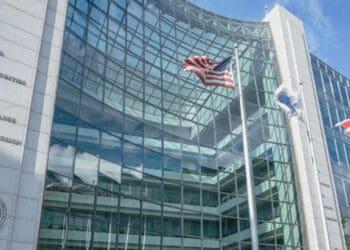
As many had expected since Donald Trump’s return to the White House and Paul Atkins’ return to the SEC, the commission formally announced May 29 that it had begun the process to rescind rules on certain climate-related reporting by public companies. A 60-day public comment period began June 3 and will end Aug. 3.
The climate rule, proposed in 2022 before a scaled-back version was formally adopted in 2024, would have required all SEC registrants to report certain material climate-related risks in annual reports and registration statements. It also required disclosure of greenhouse gas (GHG) emissions data by a smaller number of registrants.
Immediate court challenges followed, and the commission stayed the effectiveness of the rule just a month after issuing it. In 2025, just before Atkins began his chairmanship, the Trump Administration stopped defending the rule in court, presumably rendering it moot for the remainder of Trump’s second stay in the White House before moving to formally rescind it.
The US Chamber of Commerce was among the first to challenge the rules in court, and it issued a quick statement praising the commission’s move: “The SEC’s climate disclosure rule would have far-reaching negative effects on the US economy and further disincentivize companies from going public in the United States.”
Indeed, the SEC’s move to rescind its climate rule seems to be of a piece with Atkins’ desire to return to the salad days of the 1990s when Atkins was a commissioner and more than 7,800 companies were listed on US exchanges.
That the specter of SEC climate rule compliance is now gone is a positive development for many companies, Charles D. Riely, a partner at Jenner & Block, told CCI.
“The debate reflected both the SEC’s decision to mandate disclosure of specific subject matter and the significant compliance burdens involved,” Riely said. “Although companies will still have to grapple with how to handle ESG-related disclosure, the fact that no version of this rule will go into effect is welcome news at many public companies.”
But not being required to report risks or GHG metrics on certain SEC forms does not absolve all companies of similar requirements, said Lance C. Dial of K&L Gates. And the lack of a blanket rule in the US could make matters more complex rather than making things simpler.
“Across the globe, governments and regulators have adopted several versions of climate risk reporting requirements, and the state of California has its own regime,” Dial told CCI. “So, companies, especially larger ones, still have climate risk disclosure compliance obligations, even without the SEC rules. In fact, to the extent the SEC rules could have served as a standard for US issuers, their rescission may make this global reporting more inconsistent and complex.”
California’s climate reporting rules, while not applying to every single firm to which the SEC’s rules would have, in many ways are more expansive than the commission’s. They require public and private US companies in scope, a qualification based on size and doing business in California, to report climate risks and GHG emissions. Notably, they also require reporting of Scope 3 emissions, or indirect upstream and downstream emissions, which are estimated to account for as much as 95% of companies’ carbon impact. Those rules, too, are subject to court challenge, and some aspects are on hold pending the outcome of litigation. Other states are also considering their own climate reporting regimes.
Rules in the European Union also require much more extensive disclosure than the SEC’s rules, extending to ESG policies, energy consumption, emissions, labor practices, diversity and energy consumption. Those rules are expected to apply to about 3,000 non-EU entities, many of them in the US. In addition, EU rules also require companies not just to report certain metrics but to mitigate their negative effects on people and the planet.
The SEC’s rules could have been viewed as an attempt to shame companies into mitigating or reducing their climate impact, Dial said, but the rules also would have given investors a window into corporate decision-making that’s now voluntary rather than federally mandated.
“Climate risk reporting rules are generally focused on disclosure alone,” Dial said. “In fact, it would be clearly outside the jurisdiction of the SEC to impose specific climate risk or emissions requirements on issuers. That said, by requiring disclosure, these frameworks are also effectively requiring governance and allowing the investing public to understand who has effective climate risk management.”
The rules finalized in 2024 and up for rescission now were not the only disclosure obligation that could capture climate risk, Abbey Raish of BCLP told CCI: “Back in 2010, the SEC published guidance acknowledging that factors such as climate-related regulations, business trends and the physical effects of climate change could have a material effect on a registrant’s business and operations, and where that materiality threshold has been met, companies are required to make climate change disclosures under Regulation S-K — e.g., in the description of the business, discussion of legal proceedings, risk factors and/or management’s discussion and analysis.”
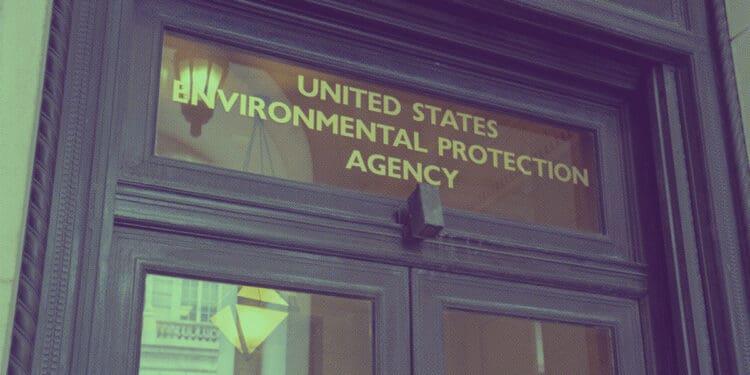
The EPA’s Retreat on Emissions Threatens to Make ESG Reporting More Complicated — Not Less
Agency rescinds determination that serves as foundation for most federal emissions regulation
Read moreDetailsThe latest turn but not the last one
Dial said he expects the SEC’s rescission move to be challenged in court by those who supported the original reporting requirement, and for companies that already were reporting some of this data — nearly 90% of the S&P 500 disclose Scope 1 and Scope 2 GHG emissions — there’s little reason for them to stop. Dial pointed out that the SEC used investor demand and companies’ voluntary reporting as a reason for rescinding the rule to begin with, suggesting the commission is letting the market decide.
And a future SEC could bring a version of the rules back, Dial said, and rescission itself is not yet a done deal.
“One important thing to consider is that the story here is not complete. The SEC made clear that it has concerns about the scope of its authority throughout the proposed rescission, but those comments are not binding law,” Dial said. “A later SEC could repropose the same or different climate risk disclosure rules. In other words, this proposal may withdraw the SEC climate rules for now, but it is unlikely to end the broader debate over climate disclosure.”
Companies also aren’t off the hook regarding climate and the SEC, Riely said. That’s because their climate-related statements could trigger anti-fraud investigations. And shareholders can have their say, too.
“The SEC — under this administration or the next — could still bring an enforcement action if it alleges that a company’s statement about climate issues was wrong or omitted material information,” Riely said. “So could shareholders. What matters is that there is no new obligation, and no new set of disclosures, that public companies are required to make.”
Absent regulatory mandates, the decision about whether to publicly disclose ESG-related metrics is a complicated one, said Riely, who agreed the removal of the SEC’s mandate doesn’t eliminate enforcement risk.
“I’ve been watching this rule since the SEC first proposed it in 2022. The enforcement risk around climate and ESG disclosures was never purely about the rule itself,” Riely said. “Companies making voluntary ESG disclosures to satisfy investors or foreign regulators are still making statements the SEC can scrutinize.”
Potential reputation risk will be primary among the drivers keeping companies reporting their ESG-related metrics, Raish said. In other words, once they start, it’s hard to stop.
“[Halting] this disclosure altogether once you’ve set the market expectation can pose real reputational risk as it may raise questions about consistency, credibility and what may be changing behind the scenes,” she said. “Once disclosure becomes standard practice, silence stands out more than absence ever did.”
Further, the infrastructure many companies have built have embedded ESG reporting into corporate systems and culture, Raish said.
“Governance and controls are now a baseline expectation for climate and ESG information. Audit committees, boards and management teams have already elevated oversight of climate and ESG disclosures,” she said. “Most are unlikely to unwind that, given ongoing scrutiny from investors and other stakeholders. [If] the SEC climate rule is rescinded, we haven’t seen the end of climate disclosure requirements, it’s just a pivot to a more fragmented and less predictable environment. For compliance and risk leaders, the focus should shift from ‘whether to comply’ to how to manage across multiple regimes while maintaining credible, decision-useful disclosure.”

 Jennifer L. Gaskin is editorial director of Corporate Compliance Insights. A newsroom-forged journalist, she began her career in community newspapers. Her first assignment was covering a county council meeting where the main agenda item was whether the clerk's office needed a new printer (it did). Starting with her early days at small local papers, Jennifer has worked as a reporter, photographer, copy editor, page designer, manager and more. She joined the staff of Corporate Compliance Insights in 2021 and also hosts the CCI-produced podcast "Queering Compliance."