Making quarterly earnings reports optional sounds straightforward — until you read the fine print. CCI editorial director Jennifer L. Gaskin breaks down what experts are saying about the SEC’s actual proposal, why some practitioners are skeptical the change will save companies as much as advertised and what corporate leaders need to consider.
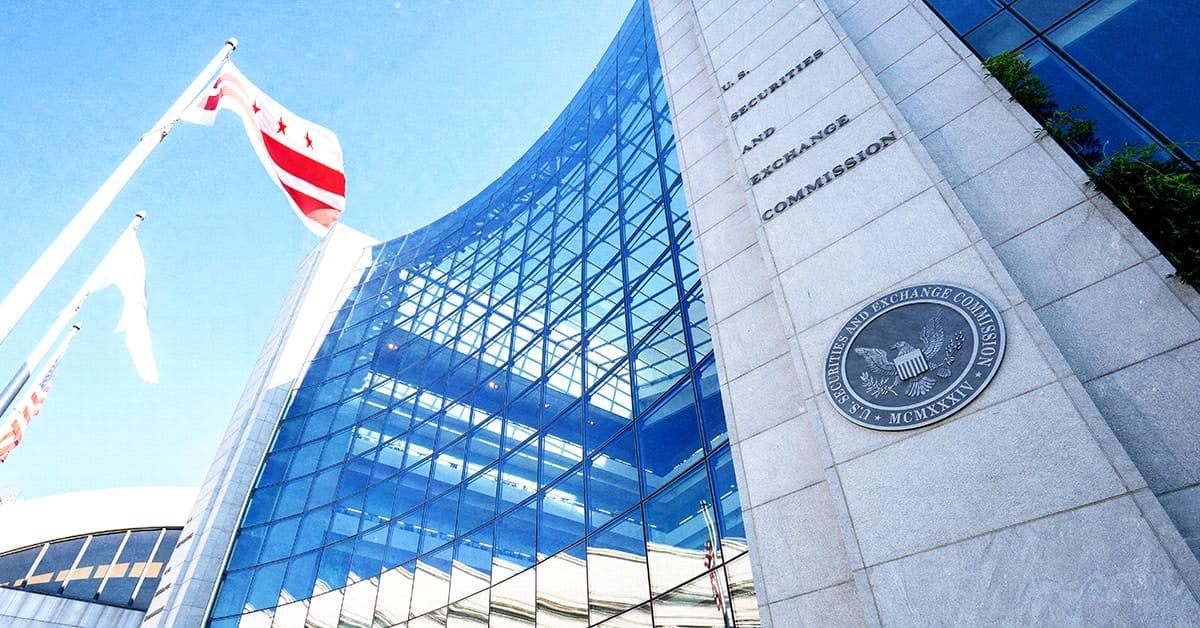
In a move that had been expected for several weeks, the SEC on Tuesday formally issued a proposed rule that would allow public companies to file earnings reports twice a year rather than quarterly, the most significant shift in US disclosure requirements for public companies since 1970.
The proposal, which the commission said cleared White House review last week, would make quarterly reporting voluntary for domestic public companies that currently file Form 10-Q. A 60-day-public comment is expected to open after the rule is published in the federal register, which means final approval, if it comes, would be months away.
Jay Dubow, a partner and co-lead of Troutman Pepper Locke’s securities investigations and enforcement practice group and a former branch chief of the SEC’s Enforcement Division, flagged one potential structural consequence of the voluntary approach: a fragmented disclosure landscape.
“The optional nature of the proposal could result in some companies switching to semi-annual reporting while others maintain the quarterly format,” he said. “Unusual to have two different disclosure calendars.”
Supporters of the change argue that the quarterly earnings report cycle is costly to companies and pushes management to fixate on short-term results at the expense of longer-term strategy. In a Fortune op-ed published shortly after the proposed rule was announced by the SEC, Morningstar CEO Kunal Kapoor suggested the status quo — quarterly reporting — is a barrier to public-markets participation.
“The cost of doing all this four times per year instead of twice is real,” he wrote, “and it falls hardest on the smaller, younger companies shaping the economy’s future.”
Critics see things differently, often citing shareholder interests.
“Boards fire CEOs when investors get mad, and that often happens around quarterly filings and earnings calls,” Tyler Gellasch, a former SEC official who leads the institutional investor advocacy group Healthy Markets Association, told Politico in March. “Reducing the opportunities for that type of accountability may sound good to executives, but it’s a bad deal for most investors.”
What the proposal actually does
Under the proposal, companies that choose to report semiannually would opt in by checking a box on the cover page of their annual Form 10-K, and that election would last for the following fiscal year, meaning companies would need to re-select the option annually. Companies that don’t check the box would continue filing quarterly reports on Form 10-Q, as they do today.
Companies selecting semiannual reporting would file their interim report on a new Form 10-S, not the existing Form 10-Q. The commission is not proposing to lighten the content requirements; Form 10-S would require the same narrative disclosures and financial information as Form 10-Q, just covering a six-month period rather than a single quarter. That means the same independent auditor review, the same Sarbanes-Oxley certifications from the CEO and CFO attesting to controls and disclosures, the same legal review of MD&A and risk factor language and the same audit committee involvement.
Much else would remain the same: Form 8-K filing obligations, Regulation FD requirements and earnings release practices would all be unaffected. Companies switching to semiannual reporting would still be required to disclose material events within four business days, and Regulation FD would continue to govern selective disclosure of material non-public information.
The commission also proposes to simplify the “age of financial statements” rules governing registration statements, a change Troy Harder, a corporate and securities partner at Bracewell, called a welcome surprise. The existing rules, he said, are “notoriously complex.”
The timing of the annual election creates a potential unintended consequence, said Barry Fischer, a partner at Thompson Coburn: Because the Form 10-K can be filed as few as 40 days before the first quarterly report would be due, a company could theoretically elect semiannual reporting to avoid disclosing poor first-quarter results.
“If the market equates the election to change to semiannual reporting with an attempt to avoid disclosing bad financial news,” Fischer said, “the issuer’s stock price is likely to decline on the making of the election, which could dis-incent companies from making the election.”
The US had a semiannual interim reporting system from 1955 to 1970, when the SEC required companies to file on a Form 9-K. That form was more limited than the modern Form 10-Q, capturing basic income statement items but not requiring a balance sheet, statement of cash flows or narrative disclosures. The current proposal’s Form 10-S would be substantively more robust than its historical predecessor.
Internationally, the EU and UK both tried quarterly reporting requirements before moving to semiannual systems — the EU from 2004-13 and the UK from 2007-14. The UK experience is perhaps the most instructive predictor of what US companies may choose to do in the near term if the rule change becomes official. When quarterly reporting became optional there in 2014, a study found that fewer than one in 10 UK companies stopped issuing quarterly reports by the end of the following year.
Who is this really for?
The SEC’s proposed rule is available to all domestic public companies that currently file Form 10-Q, but the commission’s release singles out emerging growth companies and smaller reporting companies by name, suggesting the rule’s practical appeal may be narrower than its formal scope.
Emerging companies without a long reporting history will face fewer external pressures to retain quarterly reporting, and investors have fewer concerns about the financial performance of companies not yet turning a profit, making those companies natural early adopters, Fischer said. Harder agreed that costs are relatively greater for smaller companies and the transition easier for those without an established quarterly reporting history.
Larger companies could elect semiannual reporting as well, both Harder and Dubow noted. For smaller filers specifically, Dubow flagged a risk that cuts against the cost-savings argument: companies with less rigorous control environments could find that problems grow larger before they surface than would be the case under a quarterly filing schedule.
The burden of quarterly reporting is not primarily in collecting financial data; most companies are already doing that continuously, increasingly with the help of automated and AI-assisted tools. The cost is in the formal compliance process that attaches to each filing: independent auditor reviews, SOX certifications, legal review of disclosures, disclosure committee meetings and board sign-off. Cutting from three Form 10-Qs to one Form 10-S eliminates two full cycles of that process.
But if companies are still expected to issue quarterly earnings releases to satisfy investor expectations, and if lenders require quarterly financials under credit agreements, they may find themselves doing most of the substantive work anyway — without the SEC filing attached.
“If companies are expected to continue to report earnings on a quarterly basis and to have their external accountants review their quarterly financial statements, how much would they really save?” Harder said.
The foreign private issuer angle adds another potential category of early adopters that has received little attention in the broader debate, said Leland Benton, a partner at Morgan Lewis and former SEC attorney. Companies that currently hold foreign private issuer (FPI) status are not subject to quarterly reporting requirements, and if the SEC’s 2025 concept release on revising the FPI definition results in some of those companies losing that status, they may find semiannual reporting an attractive middle ground, a way to comply with domestic reporting requirements without taking on the full quarterly cadence, rather than deregistering their securities and exiting the SEC’s reporting regime entirely.
The shareholder question
The SEC’s position is that the existing disclosure infrastructure — primarily Form 8-K and Regulation FD — is robust enough to fill the gap between semiannual reports. Some practitioners who spoke to CCI are not fully convinced.
Companies routinely disclose information in quarterly filings that would not trigger a mandatory 8-K — leaving a gap the 8-K framework does not address, Dubow said. Companies that elect semiannual reporting will also face more frequent analyst inquiries, particularly if peers continue reporting quarterly, creating pressure around Regulation FD’s selective disclosure rules.
“There really is no substitute for the provision of periodic financial reports that is reviewed by outside accountants,” said Michele Kloeppel, a partner at Thompson Coburn, adding that reduced formal disclosure could lead to market speculation based on inaccurate alternative indicators.
Research from the UK transition adds context: The same study that tracked how many companies stopped quarterly reporting also found that mandatory quarterly reporting had been associated with increased analyst coverage and improved accuracy of analyst earnings forecasts, benefits that eroded for companies that switched.
What companies should be doing now
A final rule is likely months away, but there is work to do now.
Companies interested in semiannual reporting should first review their financing agreements — credit facilities, indentures and other debt instruments — to determine whether they are even permitted to stop reporting quarterly, Harder said. Many credit agreements include financial reporting covenants tied to the quarterly cadence, and switching without addressing those covenants could create a technical default.
Companies should also be sounding out peers, large shareholders and analysts before committing to any change, Dubow said. Trading windows will need attention as well: Companies that tie permissible insider trading periods to quarterly earnings announcements will need to rethink how those windows are structured under a semiannual calendar.
Companies should assess whether a switch to semiannual reporting makes sense given their competitive position, capital needs, governance costs and obligations to lenders and counterparties, and they should get input from their various stakeholders, Fischer said.
The decision involves more variables than potential cost savings alone, Kloeppel said: “Whether that change makes sense for a company will depend on a host of factors, including investor pressures, peer elections, insider trading considerations, potential cost savings in financial reporting, potential litigation exposure due to delayed disclosures of bad news and the impact on various public company programs.”

 Jennifer L. Gaskin is editorial director of Corporate Compliance Insights. A newsroom-forged journalist, she began her career in community newspapers. Her first assignment was covering a county council meeting where the main agenda item was whether the clerk's office needed a new printer (it did). Starting with her early days at small local papers, Jennifer has worked as a reporter, photographer, copy editor, page designer, manager and more. She joined the staff of Corporate Compliance Insights in 2021 and also hosts the CCI-produced podcast "Queering Compliance."