Consumer product and food companies are well-acquainted with California’s Prop. 65 and its aggressive enforcement by a cottage legal industry. Certain changes taking effect in 2028 should be welcomed by these companies, and they should prepare now, Paul Jacobson of Spencer Fane writes.
California’s Proposition 65 law is well-known nationwide to many consumer product and food companies for its product warning requirements and aggressive enforcement by private parties. Starting with products manufactured or labeled on or after Jan. 1, 2028, Prop. 65 will require revised warning language.
Companies must make key strategic decisions in responding to the new requirements.
Refresher on Proposition 65
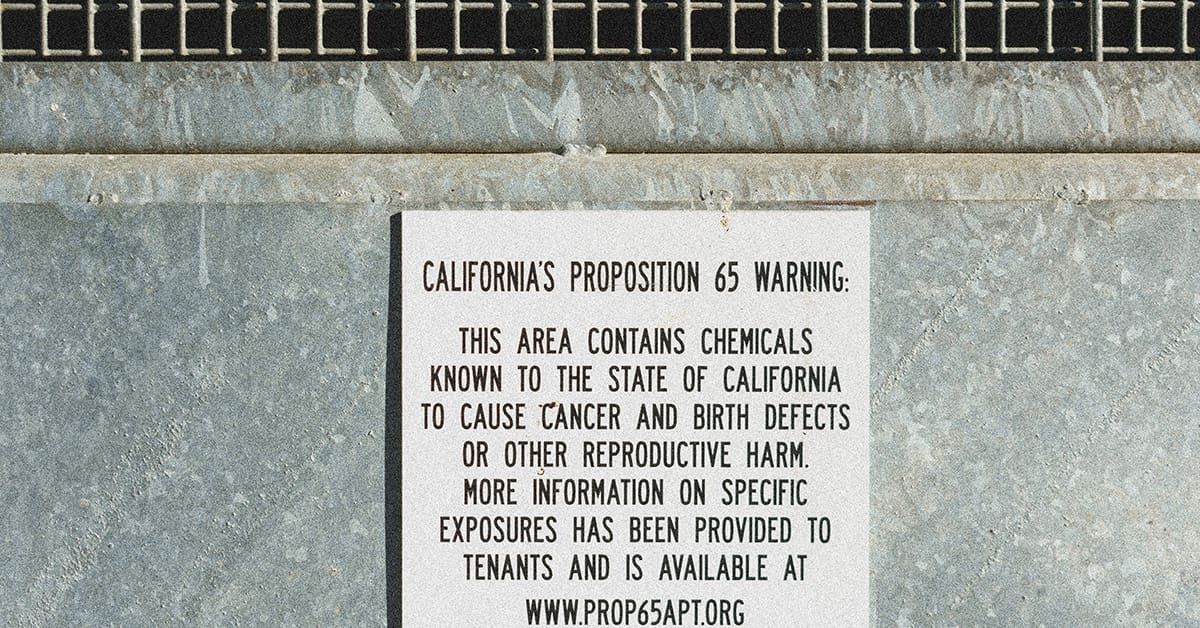
Prop. 65 is the reason California parking lots have signs warning that they are carcinogenic. It requires carcinogen and reproductive toxicant warnings on a wide variety of consumer products and in various exposure scenarios. Prop. 65 broadly affects companies nationwide and beyond. Even small companies with fewer than 10 employees are impacted by Prop. 65 despite an explicit carveout for such organizations.
Although the text of the law might suggest warnings are required only in limited situations, warnings are practically necessary in far broader situations because of the way the law is enforced. Private parties are authorized to enforce Prop. 65, and a cottage industry of plaintiff’s attorneys has resulted, with thousands of settlements, often in the range of $25,000 to $50,000, finalized each year. Some small companies have even stopped selling into California due to the risks and economics of Prop. 65.
Recent amendments
In 2024, California adopted amendments to the regulations covering Prop. 65. The amendments went into effect in 2025, but they provide a three-year phase-in period, such that the key changes are first required for products manufactured or labeled on or after Jan. 1, 2028. The amendments mostly ratchet up the requirements on businesses but do ease select requirements.
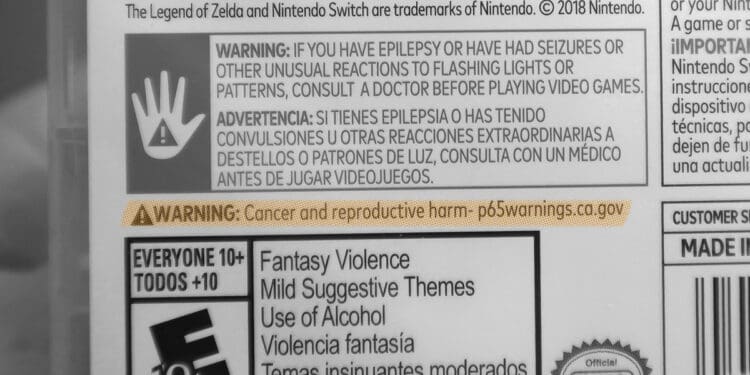
The most notable change addresses the wording of the on-product short-form warning, which has long been viewed by business as preferable to the long-form warning due to its brevity and lack of chemical identification. Those benefits are now largely removed because the revised short-form warning language must identify at least one specific chemical giving rise to the risk of cancer or reproductive harm. This new requirement forces regulated businesses to consider strategy questions regarding:
- Identifying listed chemicals in products, possibly including testing, which presents heightened challenges for large and diverse SKU portfolios
- Evaluating chemical presence in relation to Prop. 65’s safe harbor levels
- Selecting which chemicals to disclose to inform consumers and satisfy Prop. 65 while minimizing impacts on sales
In addition to the revised short-form warning identifying a certain chemical, its wording is made more explicit. For example, two of the new acceptable warning statements are:
- “Risk of cancer and reproductive harm from exposure to [chemical name]. See www.P65Warnings.ca.gov.”
- “Can expose you to [chemical name], a carcinogen and reproductive toxicant. See www.P65Warnings.ca.gov.”
Both of those options must be preceded by the warning triangle and language. Companies should consider how those different formats may impact sales.
Tracking California’s Proposition 65 Effects Across Industries
Parts suppliers, online retailers & distributors can expect outsized impact from labeling changes
Read moreDetailsOne welcome change for businesses is that, after the triangle symbol, companies may now use “CA WARNING” or “CALIFORNIA WARNING,” instead of just “WARNING.” This optionality applies to both the short-form and long-form warnings. These alternatives are likely to have differing effects on product sales especially outside of California.
Another welcome change for businesses is the removal of the requirement that the warning language be at least as large as the largest type used for other on-product consumer information. This change provides relief to companies that print consumer information on their products in very large type; however, the new standard calls for the Prop. 65 warning to be “prominently displayed,” which presents ambiguity and necessitates strategic decision-making.
The 2024 amendments ushered in select additional changes, such as addressing the mechanics of internet and catalog warnings, specific warning language for motor vehicle and marine vessel parts and more.
Key date
The new short-form warning is required for products manufactured or labeled on or after Jan. 1, 2028, and companies are free to start using the new warning now if they desire. This compliance date implicates questions of risk tolerance and how to establish manufacture and label date to ward off enforcement. Meeting the date will require significant work in advance to select and implement appropriate warnings, properly notify downstream distributors and retailers and prepare for the next wave of Prop. 65 enforcement.
This article was first published by Spencer Fane; it is adapted here with permission.

 Paul Jacobson is a partner in the Kansas City office of Spencer Fane. He guides clients through their environmental and workplace safety challenges involving the EPA, OSHA, state environmental and workplace safety agencies and private parties.