The first year of the second Trump Administration delivered perhaps the most consequential transformation in employment eligibility verification in the past 40 years. Equifax Workforce Solutions’ John Fay traces how overlapping pressures — from mass worksite raids to the False Claims Act emerging as a risk for federal contractors — created operational instability where HR teams often couldn’t rely on the most recent guidance because court activity outpaced agency communications.
A year defined by I-9 whiplash
When 2025 began, the writing was on the wall for an I-9 compliance overhaul under the second Trump Administration. Yet, while the direction of the shift — heavier enforcement, stricter authorization rules and expanded E-Verify — was anticipated, the sheer velocity of execution caught many employers off-guard. What was predicted to be a year of transition quickly became a year of operational shock.
HR and compliance teams navigated a landscape marked by enforcement escalation, policy turbulence and unprecedented uncertainty in work authorization. Much of this disruption was driven by a sharp resurgence in immigration-related worksite enforcement from Immigration and Customs Enforcement (ICE). Investigations and audits surged on a scale not seen in years, supported by multi-agency activity, more frequent I-9 inspections and a heightened focus on identity theft and fraudulent documentation.
At the same time, rapid changes in temporary protected status (TPS) and humanitarian parole coincided with new rules that reshaped employment authorization document (EAD) validity practices. As a result, many employers faced sudden reverification spikes, changing federal guidance and more complex questions from employees navigating the changing environment.
For many organizations, these overlapping pressures created I-9 whiplash, a rapid series of disruptions affecting onboarding, reverification, recordkeeping and overall workforce stability. In 2026, employers should consider how these developments took shape and how to prepare for an I-9 landscape that continues to evolve at an accelerated pace.
Worksite enforcement intensifies
Last year marked a decisive return to robust ICE immigration-related worksite enforcement. After a comparatively quiet first quarter, enforcement activity accelerated across construction, agriculture, meatpacking, hospitality and manufacturing, among other sectors, driven by explicit directives from the White House to apprehend suspected unauthorized workers. This surge mirrored the administration’s broader immigration enforcement priorities, which emphasized heightened arrests and removals of individuals without lawful status.
One of the year’s most high-profile operations occurred at a Hyundai-affiliated battery plant construction site in Ellabell, Georgia. Federal agents detained about 475 workers, making it one of the largest single-site enforcement actions in US history. While this case was unique, involving workers present on temporary visas rather than undocumented entrants, the sheer scale of the operation signaled a return to mass coordinated workplace enforcement.
ICE also made more strategic use of Form I-9 inspections, using them as evidence-gathering tools for broader criminal investigations. In several instances, agents issued notices of inspection and conducted arrests during the same visit, narrowing the gap between routine audits and enforcement actions. A notable example occurred in Washington, D.C., where about 200 workers were arrested over a four-day sweep as agents simultaneously delivered I-9 inspection notices to nearly 200 businesses.
Employers also experienced an increase in so-called “knock and talk” encounters, which involved unannounced visits where ICE agents arrived at a worksite to interview employees or management, typically without a warrant. Although less dramatic than a formal raid, these encounters created operational challenges for frontline staff unprepared to respond to federal agents and, in some cases, served as a precursor to more formal enforcement activity.
I-9 risks and emerging theories of exposure
Beyond high-visibility raids and inspections, 2025 exposed the silent liability accumulating in corporate I-9 records. While standard civil and criminal penalties for “knowing hire” violations remain a baseline threat, government prosecutors increasingly tested novel theories of exposure. Most notably, the False Claims Act (FCA) emerged as a potent tool against federal contractors, possibly transforming immigration violations into high-stakes settlements. Although not yet standard in routine audits, these cases signal that federal agencies might be looking beyond the Immigration and Nationality Act to possibly penalize I-9 and E-Verify noncompliance.
Identity theft as an enforcement catalyst
Identity theft also emerged as a central enforcement trigger in 2025. One of the clearest examples was the June worksite operation at Glenn Valley Foods in Omaha, where ICE alleged that more than 70 employees had used stolen identities, despite the employer’s participation in E-Verify. According to court filings, the enforcement action was initiated after a Homeland Security audit of the company’s Forms I-9 identified suspected document fraud. A separate, earlier DOJ prosecution underscored the same theme, involving a noncitizen who pleaded guilty to aggravated identity theft after using stolen credentials to help “defeat” the E-Verify system in the onboarding process.
These cases reflected a broader enforcement posture in which identity fraud, not just unauthorized employment, sometimes served as a catalyst for more intrusive and resource-intensive investigative activity. They also highlighted how identity theft schemes are becoming more sophisticated, setting the stage for even more complex challenges as AI-generated documentation continues to evolve.

I-9 Compliance Checklist for Businesses Engaged in M&A
Failing to fully assess employment eligibility can derail deals
Read moreDetailsAI-enabled document fraud and emerging verification risks
Employers are required by regulation to accept documents that “reasonably appear to be genuine,” but this standard has been strained by the growing availability of generative-AI tools capable of producing highly realistic driver’s licenses, Social Security cards and other identity documents.
For employers, this new wave of fraud created a dual risk: inadvertently accepting forged documents or, conversely, becoming overly cautious and rejecting valid ones, which can potentially lead to unfair documentary practices under federal anti-discrimination rules. These challenges can be compounded by higher turnover in HR roles and limited formal training on document examination, particularly for teams responsible for reviewing unfamiliar documents issued by multiple states or jurisdictions.
The heightened visibility of identity-related fraud also helped shape governmental policy responses in 2025. This dynamic was evident in Iowa where the governor announced a new E-Verify requirement for state agencies shortly after news broke that a local school superintendent had allegedly obtained employment using a stolen Social Security number. Although the case did not involve large-scale employer misconduct, it illustrated how a single, high-profile incident can accelerate pressure for stricter employment verification measures.
Work authorization turbulence
Work authorization policy shifts introduced an additional layer of instability for HR and compliance teams, particularly as the Department of Homeland Security (DHS) sought to terminate or curtail several discretionary immigration programs. This volatility was particularly acute for temporary protected status (TPS), a statutory humanitarian designation that permits eligible nationals of designated countries to live and work in the US during periods when their home country is unsafe due to conflict or natural disaster.
This disruption was most pronounced for Venezuela and Haiti, whose nationals comprise nearly 70% of the total TPS beneficiary population. When DHS attempted to terminate these designations early in 2025, the move triggered immediate litigation and a cascade of emergency injunctions, partial stays and procedural orders. These rulings altered validity timelines with little notice, sometimes flipping guidance twice within the same week. The result was a compliance environment in which HR teams often could not rely on the most recent USCIS webpage updates — let alone provide clear answers to employees — because court activity frequently outpaced agency communications.
The unwinding of the CHNV humanitarian parole program added additional complexity. CHNV parole, a discretionary pathway that allowed certain nationals of Cuba, Haiti, Nicaragua and Venezuela to temporarily enter the US and receive employment authorization, became the subject of rapid policy reversals and emergency injunctions throughout the year. As DHS moved to terminate the program, litigation in multiple federal courts produced shifting timelines that created significant uncertainty for both affected workers and their employers. With nearly half a million individuals potentially affected, HR teams struggled to determine whether EADs tied to CHNV parole remained valid as court activity and agency guidance evolved.
Finally, one of the most consequential developments of the year occurred in October, when DHS ended automatic EAD extensions for renewal applications filed on or after Oct. 30, 2025. For years, these automatic extensions — initially granted for up to 180 days and more recently up to 540 days — had provided stability by allowing employees to continue working while their renewal applications were adjudicated.
Eliminating this safeguard shifts the risk back onto employers, requiring HR teams to update reverification practices, track far tighter timelines and prepare for more frequent loss-of-work-authorization scenarios. For industries that rely heavily on workers with TPS, asylum-based EADs or other discretionary statuses, these changes are expected to create significant operational strain and more workforce disruptions in early 2026.
E-Verify developments in 2025
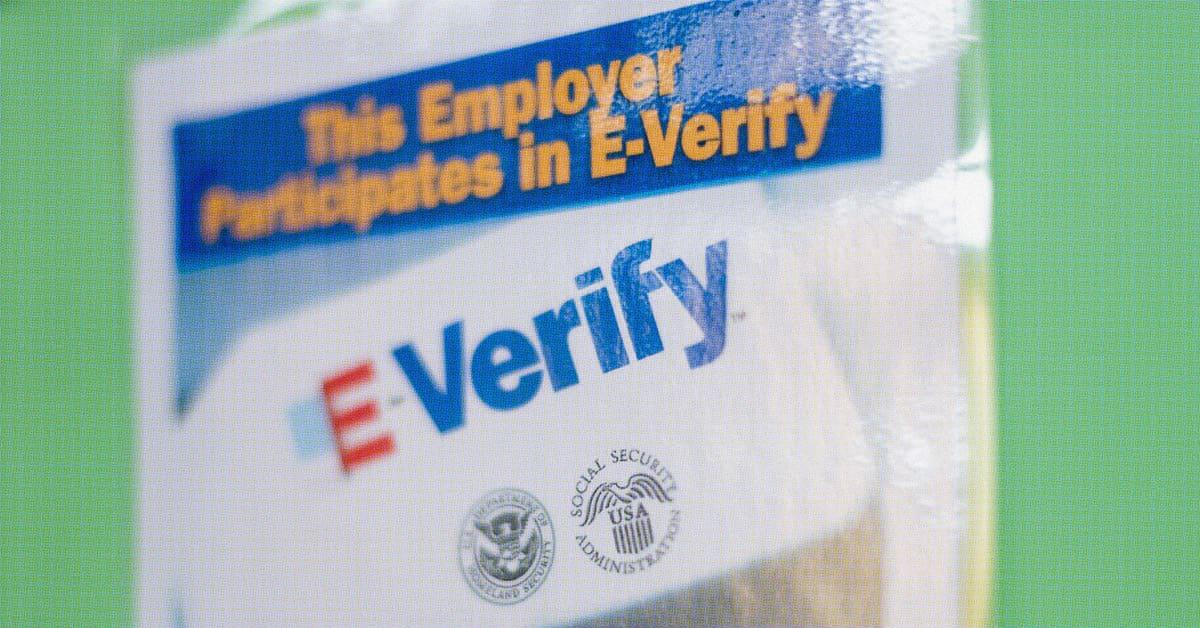
E-Verify also saw notable developments in 2025, particularly through increased use of monitoring tools. Employers reported a higher frequency of E-Verify desk reviews, a long-standing mechanism used by US Citizenship and Immigration Services (USCIS) to assess whether participating employers are following program rules. During these reviews, USCIS may request sample Forms I-9, associated case documentation and records demonstrating proper handling of tentative nonconfirmations (TNCs).
Although E-Verify desk reviews are not new, their role took on greater significance as USCIS began examining documentation patterns that could suggest potential identity-document issues — for instance, unusually high rates of List B and C documents presented by noncitizen employees. While the agency has not formally tied selection criteria to fraud indicators, employer reports suggest closer scrutiny of consistency, documentation practices and case-resolution workflows, creating yet another layer of additional oversight alongside expanding ICE enforcement activity.
In addition to desk reviews, E-Verify participants also faced new administrative responsibilities through USCIS’s status change report, introduced in June in response to the mass revocations of EADs linked to humanitarian parole programs. Participating employers were instructed to run the report regularly to identify previously verified employees whose employment authorization had been revoked, investigate the findings and reverify work authorization where appropriate. This added obligation reinforced the growing interplay between work-authorization policy shifts and employer duties.
Preparing for 2026: Best practices and strategic readiness
The rapid shifts in work authorization, enforcement activity and identity-fraud risks in 2025 prompted many employers to take a fresh look at their onboarding and verification processes. Several approaches from this past year may be useful to consider in 2026.
Conduct targeted self-audits
Some employers found value in reviewing their Forms I-9 and E-Verify activity to help identify potential gaps or inconsistencies. These assessments can help surface trends, such as documentation errors, inaccurate completions or E-Verify issues that may warrant closer attention or remediation. Employers who are electronically generating and storing I-9s should periodically verify that their recordkeeping practices remain aligned with DHS security and safeguarding expectations.
Strengthen reverification and tracking practices
With the end of automatic EAD extensions and continued fluctuations in TPS- and parole-based authorizations, many organizations are reevaluating how they manage reverification practices. Establishing clear internal workflows for tracking expiration dates, addressing employee questions and escalating complex cases can help support more consistent and timely reverification efforts. Maintaining documentation of these steps may also assist employers in demonstrating good-faith efforts if questions arise later.
Standardize document review protocols
As identity-related fraud becomes more sophisticated, employers are increasingly focusing on training as a way to support consistent document review. Regular instruction on recognizing common indicators of document irregularities and applying the “reasonably appears to be genuine” standard — without requesting more or different documents than allowed — may help reduce errors and support a fairer, more consistent onboarding.
Prepare for multi-agency scrutiny
With ICE worksite enforcement activity, E-Verify desk reviews and other agency initiatives operating simultaneously, some employers have found it helpful to establish clear internal protocols for responding to government inquiries or site visits. Clarifying who should be contacted, what information can be shared and how to document interactions can help minimize uncertainty if an inspection or review occurs. Ensuring that frontline managers understand these protocols may further reduce disruption during unexpected visits.
Monitor policy developments
Because administrative updates shaped many work-authorization outcomes in 2025, staying informed will likely remain important in 2026. Employers may wish to rely on authoritative government sources, such as USCIS I-9 Central or consult with immigration counsel when navigating questions related to TPS, humanitarian parole, EAD policies or evolving E-Verify obligations.
Conclusion
Last year demonstrated that I-9 compliance no longer operates as a discrete administrative task. It is increasingly shaped by shifts in immigration policy, rising document-fraud risks and evolving federal enforcement approaches. The pressures of 2025 revealed how quickly these forces can influence one another and how rapidly employers might feel the effects. In 2026, employers encounter a landscape where the ability to navigate change has become almost as essential as adherence to the I-9 rules themselves.

 John Fay is director of product strategy at Equifax Workforce Solutions. He is an attorney and technologist with a deep applied knowledge of business immigration, I-9 and E-Verify rules and procedures. During his 20-plus-year career, he has worked closely with corporations, educational institutions and government agencies on a variety of US immigration and I-9/E-Verify issues, often in connection with the use of software and case management technology.