In recent months, mega-retailer Target has found itself at the center of an object lesson in corporate governance — one that experts who spoke to CCI contributing writer Trevor Treharne suggest the company failed. The federal government’s surge of ICE agents to Minneapolis is reportedly drawing to a close, and while the budget for its parent agency, the Department of Homeland Security, is being debated in Congress, surges in other cities remain likely given previously authorized funding. How can compliance and ethics professionals push their organizations to close the gap between strictly legal behavior and the types of support workers might actually need from their employers when armed immigration agents show up?
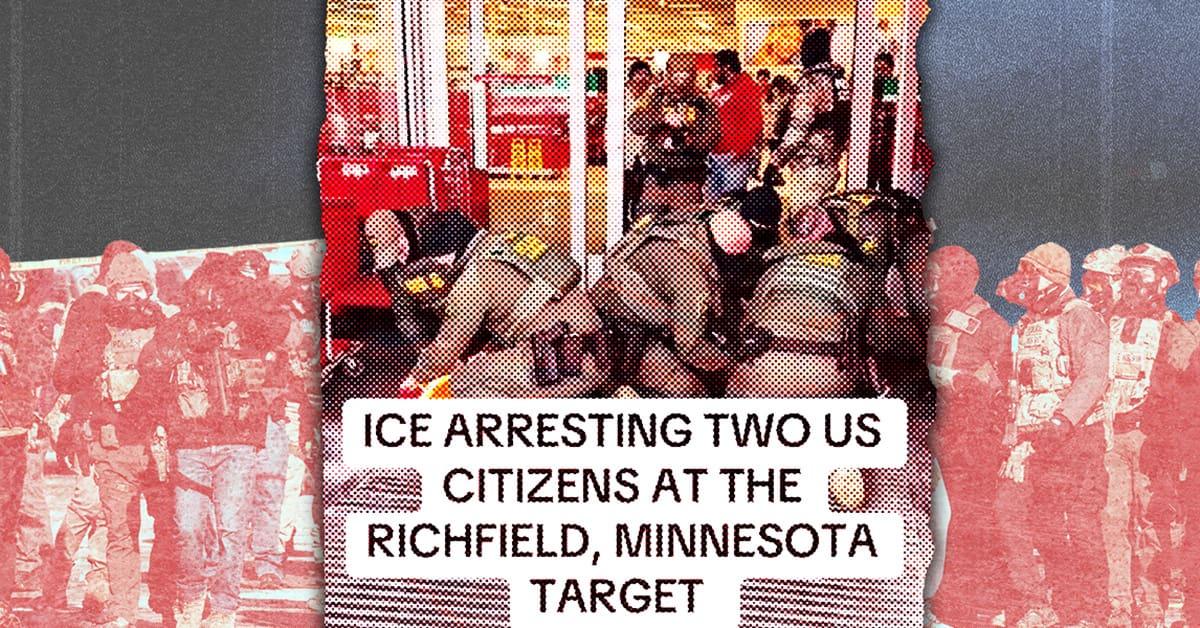
When federal agents entered a Target store in Richfield, Minn., in January and forcibly arrested two employees during their shift, both of whom turned out to be US citizens, it exposed something deeper than a single law enforcement action gone wrong. It laid bare the gap between what companies are legally required to do and what their workers actually need from them.
“Psychological safety is highly sensitive to perceived threat, especially when that threat feels unpredictable or personal,” said Stephen Sokoler, founder and CEO of Journey, which provides mental health support to organizations. “When employees fear that they, or people they care about, could be impacted by external actions like law enforcement activity, the brain shifts into survival mode. In that state, focus narrows, trust drops and cognitive performance declines.”
Target’s initial response was an internal email from its chief human resources officer referring to the “events in our hometown” and stating the company was “following all laws and regulations.” No public statement followed. No guidance was issued to store employees about their rights. When staff wrote to Target’s corporate ethics team seeking direction, there is as of yet no public record of anything but silence. The fallout was swift: Nearly 275 employees signed a letter demanding action, absenteeism spiked, and protests disrupted operations. Minnesota State Rep. Michael Howard, a Democrat, said he was “communicating with Target about their responsibility to better protect their workers and customers.”
For compliance professionals, the incident is a case study in what happens when legal compliance is treated as the ceiling rather than the floor.
Legal compliance is necessary but may not be sufficient
The Occupational Safety and Health Administration’s general duty clause requires employers to provide a workplace “free from recognized hazards.” But what constitutes a recognized hazard when the disruption comes not from a malfunctioning machine but from armed federal agents?
“If the presence of law enforcement is creating a potentially dangerous situation, then employers should conduct an initial assessment to determine any immediate safety risks and implement the appropriate protective measures,” said Todd Logsdon, co-chair of the workplace safety and catastrophe practice group at labor and employment law firm Fisher Phillips’ Louisville office.
Logsdon recommends having a proactive plan in place with designated points of contact for all shifts, generally the managers on duty, to interact with law enforcement personnel and conduct an initial safety assessment.
“If it is determined that nearby enforcement activity or demonstrations pose a risk to employees, then the manager on duty should immediately contact their next line supervisor and consider implementing a shelter-in-place for employees, temporarily closing the location and locking all doors and restricting access to the facility,” Logsdon said.
Rachel L. Conn, partner and chair of the California practice of the OSHA/workplace safety practice group at law firm Conn Maciel Carey, said employers have an obligation to identify and assess whether external law enforcement actions at a workplace may expose employees to safety hazards.
“For example, is there a risk of workplace violence to employees? This may be particularly true if the workplace is open to the public and the public may become involved in law enforcement situations,” Conn said. She added that employers should ensure their emergency action plans cover such scenarios.
Conn noted that while there is no workplace violence prevention standard at the federal level, some states. including California and New York, have statutes in place. Federally, workplace violence can be covered by OSHA’s general duty clause if it constitutes a recognized hazard.

When the ethics function goes silent
As Target’s only visible response was the internal email citing legal compliance, this may have left a gap where ethical guidance should have been, observers told CCI.
“Legal compliance is necessary, but it is rarely sufficient to meet an organization’s ethical duty of care, and that gap becomes most visible during disruptions, including enforcement actions,” said Vera Cherepanova, executive director and board member at Boards of the Future, an organization focused on corporate governance. “Most leadership models treat ethics as a compliance problem, and this is precisely where they fall apart.” (Cherapanova also writes the Ask an Ethicist column for CCI.)
Crisis communications expert Samantha DiGennaro, founder and CEO of DiGennaro Communications, put it plainly in comments to Newsweek: “Companies don’t need to wade into contentious debates to be clear about commitments to employee safety, dignity and inclusion, but those commitments must be reinforced through visible actions.”
The consequences of silence extend beyond reputation.
“If employees perceive that their employer failed to uphold their duty to provide a reasonably safe workplace, then it could open the employer up to costly investigations, citations and even criminal charges,” Logsdon said. “When compliance functions fail during operational disruption, this can support negligence claims if employees are injured or endangered due to lack of guidance on safety protocols and procedures.”
Sokoler stressed that the window for effective response is narrow.
“Productivity, collaboration and decision-making can be disrupted within hours, not days. Left unaddressed, this fear can harden into disengagement, such as absenteeism or silence, where employees stop speaking up altogether,” he said.
Doing something in the direct aftermath of a law enforcement action or similar disruption may matter more than getting it exactly right.
“Speed and clarity matter more than perfection,” Sokoler said. “Employers should acknowledge what’s happening early, even if all the facts aren’t known. Silence is often interpreted as indifference or avoidance.”
He recommends a brief, human message that recognizes uncertainty, reinforces care for employees’ well-being and reminds people of available support.
“Leaders should encourage managers to check in one-on-one, create space for flexibility and avoid pushing ‘business as usual’ in the moment,” Sokoler said.
Redefining workplace safety at board level
The Target incident exposes what Cherepanova calls a structural blind spot in how boards define and oversee workplace safety, a definition she argues must be expanded.
“Boards have historically treated workplace safety as primarily physical safety and OSHA-style compliance. But many modern incidents create acute harm through psychological threat and moral distress,” Cherepanova said. “There is a wealth of research confirming that those effects directly influence performance, turnover and the risk of misconduct. If the board’s definition of safety includes only physical injury, it will systematically miss the risks that strongly influence culture and integrity outcomes.”
When ethics, risk and compliance perspectives are absent from board-level crisis decisions, the consequences compound, she said.
“Leaders tend to default to decisions that ensure legal defensibility and operational continuity, which are technically and tactically correct but strategically self-defeating,” Cherepanova said. “Those long-tail risks will eventually make their way into the financials and show up as costly second-order effects, but it will be too late.”
Cherepanova recommends boards take several concrete steps: incorporate psychological factors into definitions of worker safety, risk appetite statements and crisis protocols that assign clear accountability and communication expectations in the first 24 to 72 hours following a disruptive event. Boards should also invest in identifying their crisis team before a crisis hits and conduct structured post-mortems after disruptive events that require documented lessons learned and evidence of improvements made.
Even with the announced drawdown of ICE operations in Minneapolis, the broader law enforcement landscape is unlikely to simplify, though a fight is underway in Washington over funding for the agency in the wake of the January shootings of Renee Good and Alex Pretti by ICE agents. A recent Wired investigation suggests that ICE has massively expanded its administrative footprint by leasing dozens of new buildings or expanding existing office space from California to the Carolinas.
For compliance leaders, the lesson from Target’s actions (or non-actions) is that the general duty clause and an internal memo are not a governance strategy. Duty of care is not a legal abstraction, but rather it is what workers experience when the unexpected happens and they look to their employer for direction. Companies that have thought through these scenarios, trained their managers and empowered their ethics functions will be better positioned to weather the unexpected, experts warned, and the ones that default to silence will pay for it in trust, in talent and eventually in liability.

 Trevor Treharne is a contributing writer for Corporate Compliance Insights. He has also written for StrategicRISK and the Korea JoongAng Daily.