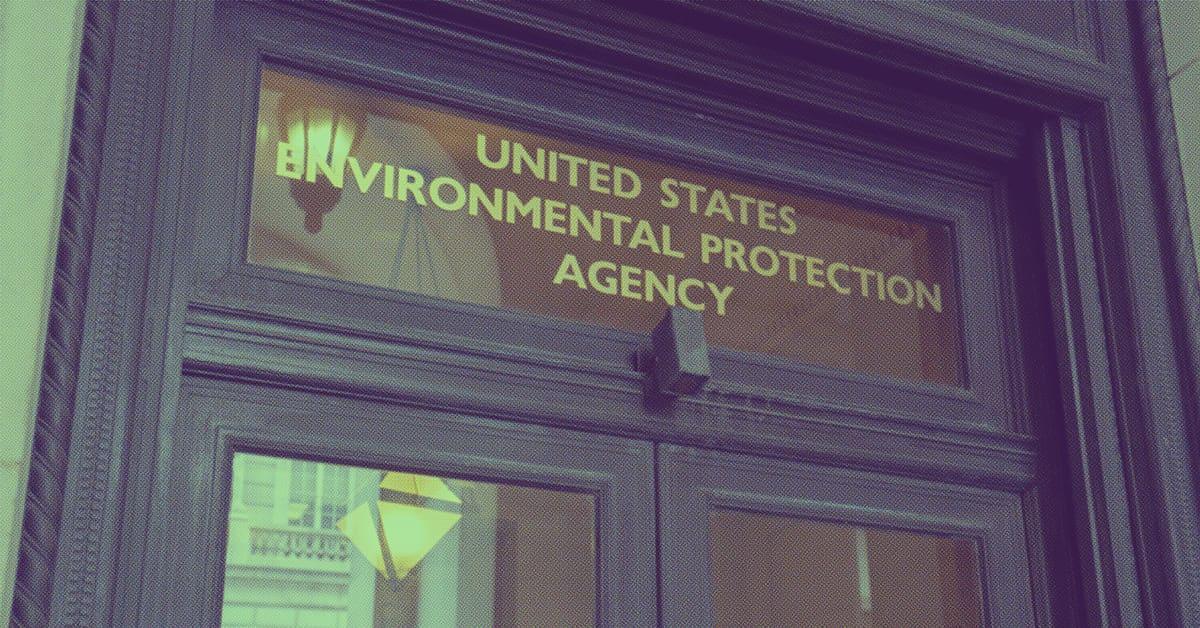
Since 2009, a scientific determination by the EPA has served as the foundation for virtually all federal climate regulation in the US. That finding — that carbon dioxide and other greenhouse gases endanger public health and welfare — has been the legal basis for vehicle emission standards, power plant regulations and other rules aimed at curbing planet-warming pollution. The Trump Administration is formally rescinding that determination, not by disputing the science, but by arguing the EPA never had the authority to act on it in the first place. Jennifer L. Gaskin, CCI’s editorial director, spoke with analysts and experts about what this means for corporate compliance and governance professionals. Their answer? Not much, at least not yet.
In what it labeled “the largest deregulatory action in American history,” the administration seeks to loosen the reins on Corporate America, suggesting the move will save businesses more than a trillion dollars in regulatory costs.
At a Feb. 12 White House event with President Donald Trump, EPA Administrator Lee Zeldin said all greenhouse gas emissions standards that followed the endangerment finding had been eliminated.
“No longer will automakers be pressured to shift their fleets towards electric vehicles,” Zeldin said.
But whether less federal climate-related regulation will ultimately benefit business remains to be seen, experts told CCI, both because the move will trigger a protracted legal fight and because the federal government is not the only regulator in town. For now, they say, corporate compliance, risk and governance functions, including emissions tracking and reporting, should stay the course.
“Until there is a definite decision, leadership should maintain the status quo and make sure to communicate that out to both compliance and operations teams internally,” John Peiserich, leader of J.S. Held’s environmental, health & safety practice, told CCI. “For investor and stakeholder communications, status quo is the way to go. Demonstrating stability in uncertain times is the best approach.”
The mechanics of recission
The endangerment finding traces back to a 1999 petition filed by more than a dozen environmental organizations who asked the federal government to regulate carbon dioxide emissions from motor vehicles. In a 2007 decision, Massachusetts v. EPA, the Supreme Court ruled that greenhouse gases (GHG), such as those produced by automobiles, are air pollutants under the Clean Air Act — but only if the EPA could prove they endangered public health and welfare. Two years later, the Obama Administration delivered that proof in a 200-page document marshaling scientific evidence that rising concentrations of greenhouse gases were fueling increasingly severe storms, heat waves, floods, wildfires and sea level rise.
In undoing the endangerment finding, the Trump Administration has moved with unusual speed. The EPA typically spends at least three years finalizing major regulatory changes; this repeal took just over a year from proposal to finalization. Legal experts say the pace suggests a deliberate strategy: get the case to the Supreme Court while Trump is still in office, where the conservative majority could use it to fundamentally reshape federal climate authority.
For compliance teams, the immediate question is what happens during the litigation.
“While EPA will withdraw the finding, it seems this is very likely to trigger legal challenges from NGOs,” Peiserich said. “In the near-term, whether a change has to be made by industry will be dictated by the courts. So we will wait and see how the litigation turns out and whether there is an injunction to maintain the status quo in the meantime.”
That legal limbo creates planning headaches. Vehicle emission standards, power plant pollution limits and industrial greenhouse gas regulations all remain on the books until courts decide otherwise. The administration projects consumers will save $1.3 trillion — mostly from reduced vehicle compliance costs averaging $2,400 per car — but realizing those savings depends on winning a legal fight that could stretch for years.
Notably, the Trump Administration isn’t challenging the underlying science. A September 2025 National Academies of Sciences report concluded the 2009 evidence “has stood the test of time, and is now reinforced by even stronger evidence.” Instead, the EPA seems to be making a narrower legal argument: that Congress never explicitly authorized the agency to regulate greenhouse gases under the Clean Air Act and that courts should reconsider that question under the Supreme Court’s 2024 Loper Bright ruling that eliminated the so-called Chevron doctrine, or judicial deference to agency interpretations of statutes.
“After Loper Bright, my Magic 8-ball says ask later,” Peiserich said. “It’s a complex issue that will be dependent on how the arguments are framed.”

Corporate impact
Corporate sustainability programs weren’t created because of the EPA’s 2009 finding — investors have long demanded carbon disclosures through frameworks like CDP, which launched in 2000 — but it helped transform climate and sustainability from reputational issues into compliance imperatives, prompting companies to build the tracking and reporting infrastructure that would later underpin broader ESG programs.
Despite the federal foundation crumbling, experts say those programs should stay intact, driven by forces the EPA can’t control.
“Many companies will continue to implement programs that already are in the works to reduce their emission of GHGs,” Tim Bergere, a partner in the environmental group at Armstrong Teasdale, told CCI. “This is because many already have made commitments to shareholders, or made investment decisions which would be difficult to reverse. Many companies pursuing GHG initiatives have overseas operations and are answerable to other regulatory regimes in the EU which have not similarly de-emphasized GHG controls.”
The EU has indeed pulled back from its peak climate ambition, but its requirements remain far more demanding than US federal standards even after recent simplification efforts. European sustainability reporting rules still mandate double materiality assessments and value chain emissions disclosure for large companies, while the EU’s carbon border adjustment mechanism (CBAM) entered its definitive phase in January, imposing carbon tariffs on imports from countries with weaker climate policies. Those regulations are expected to affect thousands of US-based companies.
States add another layer. California maintains its own greenhouse gas reporting and recordkeeping mandates, as do states across the Pacific coast, Mid-Atlantic and Northeast. While some states may pull back depending on political winds — Pennsylvania recently withdrew from a regional GHG initiative as part of a budget compromise — the patchwork of state programs creates its own compliance imperative.
“It is just messy,” Peiserich said. “Compliance with one doesn’t equate to compliance with the other. Plus, the rollback of the endangerment finding doesn’t really have anything to do with some of the climate change reporting in, for example, California. Those can be independent.”
Federal retreat doesn’t simplify compliance; it might actually make it more difficult, Bergere said.
“It is important to remember that many industries want to see the federal government occupy this space, because in the absence of uniform federal standards, complying with a patchwork of state standards can pose a wide variety of regulatory challenges,” Bergere said.
For now, the guidance is clear: maintain current programs.
“Scaling back creates its own risk around things like shareholder challenges, and, for multinationals, noncompliance with jurisdictions outside of the US,” Peiserich said. “The biggest mistake is to do too much too soon.”
Now what?
The endangerment finding repeal is part of a broader federal retreat from climate and environmental oversight, but the EPA, like many other federal agencies, has been hard-hit by deep staffing cuts that have affected normal operations. Companies in regulated sectors are feeling the pressure, Bergere said.
“Not only have enforcement actions been stayed, but important regulatory updates negotiated with industry have stalled,” Bergere said. “This creates uncertainty within the regulated community, which, in turn, makes financial planning a challenge (to upgrade or not?).”
For compliance officers navigating this moment, the calculus is familiar: balancing the costs of maintaining programs that may become legally optional against the risks — legal, reputational and financial — of dismantling infrastructure that took years to build and could be required again within a presidential term.
“Companies that dismantle their systems, data infrastructure and governance frameworks today will find themselves at a severe disadvantage tomorrow,” said Patricia Pina, chief research officer at sustainability platform provider Clarity AI. “Companies that anchor their approach in science, risk management and global market expectations, rather than short-term political cycles, will be better positioned to protect long-term value and maintain investor confidence.”
Leadership, including board members and senior executives, should take the long view, Stoel Rives partner Krista McIntyre said.
“The questions for boards are ‘How do directors and senior leadership value climate change risks and de-risking strategies?’ And ‘How will this company execute today to ensure durability and longevity in a world where external conditions are shape-shifting quickly, and consumer expectations refresh often?’”
It’s likely the legal battle over the endangerment finding will stretch well beyond 2026, and its outcome remains far from certain. In the meantime, companies face climate reporting obligations and expectations from investors, state regulators and international frameworks that are entirely independent of the EPA’s authority. Whether the Trump Administration’s move ultimately succeeds in court, the messy reality is that federal retreat hasn’t eliminated climate compliance — it’s just made it more complicated.

 Jennifer L. Gaskin is editorial director of Corporate Compliance Insights. A newsroom-forged journalist, she began her career in community newspapers. Her first assignment was covering a county council meeting where the main agenda item was whether the clerk's office needed a new printer (it did). Starting with her early days at small local papers, Jennifer has worked as a reporter, photographer, copy editor, page designer, manager and more. She joined the staff of Corporate Compliance Insights in 2021.