
Over three decades of internal investigations, Jonathan Aronie kept finding the same thing: Someone was almost always positioned to stop the misconduct before it happened and said nothing. The Sheppard Mullin partner and ABLE Project founder explains why reporting hotlines miss that moment entirely and what corporate compliance can borrow from drunken-driving campaigns, the airline cockpit and police training to capture it.
There we were, the general counsel of a Fortune 500 company (let’s call him Tom) and I having a drink in the now-shuttered Pegu Club in New York City. Together, we had just concluded a costly internal investigation into the actions of an employee who was, let’s just say, taking some liberties with his time-reporting obligations on a number of the company’s federal contracts. As Tom sipped his Manhattan, an exasperated look came over him.
“We spend millions of dollars on compliance programs,” he said, “including a top-of-the-line reporting hotline. How come not one of the 10 employees who knew this was happening said or did a [expletive deleted] thing?”
Tom’s question is one asked by many. The answer, interestingly, for Tom at least, had nothing to do with the quality of his existing compliance program. He had top-tier internal controls. The answer, rather, was an essential element of an effective compliance program that he (like most of his peers) did not have: A meaningful active bystandership component. Had Tom’s employees been trained in the strategies and tactics of intervening in another employee’s conduct, our Pegu Club drink would have had a far different vibe.
The glaring gap in speak-up
American businesses are subject to a host of rules — statutes, regulations, ordinances — that govern the way they conduct their business. While these rules were enacted over the years to protect customers, employees, investors, third parties and the government itself, complying with the current US regulatory framework is a costly endeavor. One 2023 study estimated that US companies spend approximately $3 trillion annually in federal regulatory compliance. Companies operating in highly regulated industries (federal contracting, healthcare, banking) have it even worse. Economists haven’t even tried to estimate those compliance costs.
Against this background, spending money on a corporate compliance program is a must. The harm to an organization from a failure to comply with such a complex regulatory framework can be quite high. In the federal contracting space, for example, last year alone, the government recovered more than $6.8 billion from federal contractors and grantees for allegedly violating their legal obligations. For some companies, noncompliance can be corporate-life-ending.
Two unassailable conclusions can be drawn from these facts: (a) the cost of corporate compliance is high; and (b) the cost of noncompliance is high.
To balance these two conclusions, organizations and institutions both large and small implement internal compliance programs that seek to balance effectiveness and fiscal responsibility. Such programs traditionally incorporate a range of internal controls, including policies, education, monitoring, technological protections, a reporting hotline and, of particular importance for our purposes here, a “speak up culture.”
A speak-up culture — or at least the appearance of one — has become a staple in most every functional large-organization compliance program in the US. According to the National Association of Corporate Directors, 82% of business organizations say they have a strong one. In my experience, however, (and I recognize this may be heresy to some), such programs have only marginal utility. While must-haves from a check-the-box perspective, most speak-up programs suffer from an inherent but curable flaw: The absence of a meaningful active bystandership component.
A traditional speak-up program generally has three elements: a reporting mechanism, an anti-retaliation policy and an investigation infrastructure. Organizations promoting a speak-up culture give their employees a host of channels through which to report their colleagues: Toll free numbers, email addresses, ethics officers, web portals and more. At their core, however, most speak-up programs suffer from two fundamental flaws:
- They focus on post-conduct reporting (e.g., the harm already has occurred).
- And they ask employees to do something most of us find very difficult: Tattle on someone.
A true active bystandership program, on the other hand, focuses on changing the trajectory of a situation before harm occurs. Active bystandership is not a reporting program, but rather an evidence-based initiative designed to educate and empower ordinary people (e.g., your employees) to intervene in a colleague’s behavior before harmful conduct takes place. Active bystandership does not replace a speak-up program, it supplements it. And, if implemented properly, it reduces the need to report misconduct because less misconduct will occur.
Opportunities for active bystandership abound
Thinking back to the hundreds of investigations I have conducted over the past three decades, I can count on one hand the number of situations not involving a bystander employee who had the opportunity to tap a colleague on the shoulder and stop the conduct that ultimately caused the harm. Indeed, some of my costly investigations (including Tom’s) could have been prevented if just one employee had the knowledge and ability (and the supporting culture) to simply say to a colleague, “Hey, let’s not do it that way.”
My personal experience is not unique. I’ve canvassed my Sheppard colleagues, and over the thousands of investigations in our admittedly informal sample, the result was the same. There almost always was someone who could have prevented the harm but didn’t take action. And to be clear, I’m not talking about blowing the corporate whistle. I recognize that is hard to do for many. I’m simply saying, in most cases there was one or more individuals who could have intervened in their colleague’s behavior but did not. In other words, they failed to be an active bystander.
These observations are not limited to corporations. A few years ago, Steven Hansen, the executive director of the Utah Local Government Trust (the largest insurance pool in Utah), and I studied a robust data set of insurance claims, and our findings were stark but not surprising.
For our study, we looked at five years of claims data from the Trust’s 227 customers. We analyzed the claims to identify situations where a second municipal employee, a “bystander,” was on the scene of the event that led to the claim and might have been in a position to prevent the liability-causing event. Our analysis identified 2,590 claims — 60% of the claims reviewed — that had bystander potential, resulting in a total loss to the insurance pool of $23.8 million over five years. The lost time for employees injured as a result of claims with bystandership potential was 52 lost (or under-performed) work years among Utah Trust members during the five-year review period.
I can’t say that a meaningful active bystandership program in Utah would have converted all those bystanders into active bystanders, or that, even if it did, their efforts always would have been successful. But it is highly likely that if those employees had been trained in the strategies and tactics of active bystandership, at least some of them would have acted to prevent the resulting harm.
Despite these widely shared observations — and countless general counsels and chief ethics and compliance officers across the country asking more often than they would like, “Why didn’t anyone just say, ‘don’t do that,’” few if any US companies have incorporated the principles of active bystandership into their compliance programs in any meaningful, holistic way.
The Most Radical Act a Compliance Officer Can Do? Delete a Pointless Control
Can AI help clean up the stench of sclerotic compliance?
Read moreDetailsThe science behind active bystandership
The science of active bystandership is not new, although it may feel that way to some. Social scientists have been studying when and under what conditions ordinary people are willing to intervene in another’s conduct to prevent harm since shortly after the Holocaust. The four grandfathers of active bystandership research arguably are John Darley, Bibb Latané, Stanley Milgram and Ervin Staub, all renowned social scientists. Since the late 1960s, their research has demonstrated that intervention is rarely just a matter of personal morality or courage; instead, it is shaped by social norms, group dynamics, hierarchy, diffusion of responsibility and whether individuals feel both empowered and supported to act. Their work helped explain why ordinary people so often remain passive in the face of risk but also how we all can learn to take action before something irreparable occurs.
It is unclear whether these social science giants recognized that their work would lead to so many real-world applications 60 years later. But it did. Their decades of active bystandership study now serves as the foundation of countless harm-prevention initiatives from which corporate America could learn.
Friends Don’t Let Friends
Let’s start with drunken driving. By the mid-1970s, alcohol was involved in about 60% of all traffic fatalities, and by 1982, more than 20,000 people were dying each year in alcohol-related crashes in the US. Traditional intervention approaches did little to curb this public health crisis.
That changed in 1983 due to a three-part national intervention strategy: new laws, new enforcement and, importantly for our purposes, a new approach to conveying the “stop drunk driving” message. Specifically, 1983 marked the arrival of “Friends Don’t Let Friends Drive Drunk,” an advertising and marketing campaign etched into the memories of most everyone of a certain age.
The advent of the Friends campaign was no small change in intervention approach. Indeed, it was a seismic shift. Whereas the pre-Friends anti-drunken-driving message was directed at the driver (“don’t drive drunk”), the post-1982 message was directed at the bystander (“don’t let your friend drive drunk”). The campaign did not relieve the driver of his responsibility (I use the masculine pronoun intentionally here because men are far more likely to be involved in alcohol-related crashes than women); it highlighted the opportunity (and responsibility) others have to step in when the judgement of the one primarily responsible for the conduct is, well, impaired.
The Friends campaign was an unquestionable success. Between 1982 and 1992, the number of alcohol-related traffic deaths in the US fell from more than 26,000 to just over 17,000, a decline of more than 30%.
The Friends campaign, of course, cannot claim sole credit for this drop; remember, there were legal and enforcement changes at the same time. But most observers recognize that the fundamental change in the audience for the message (from the perpetrator to the bystander) played a significant role in the success of the campaign.
The Tenerife Airport disaster
The Friends campaign was the first national experiment in the US in “active bystandership” aimed at ordinary people (that is, people like you and me). But it was not the first real-world application of active bystandership as a risk-reducing tool. Years before, NASA and other leading thinkers in the aviation industry demonstrated the power active bystandership can play in reducing airline fatalities. These efforts were driven by a number of tragic aircraft events, including, perhaps most notably, the crash of two 747s in the Canary Islands.
With a total of 583 fatalities, the Tenerife Airport disaster, as it is called, remains the deadliest accident in aviation history. All 248 passengers and crew aboard one flight were killed, and there were 335 fatalities and 61 survivors on the second flight. Of the several causes identified by the post-crash investigation, the following is notable for our purposes: Crew members did not “question the captain’s actions due to his senior position within the company.” In other words, active bystandership was not in their lexicon.
Following the Tenerife Airport disaster and other actual or near-tragedies the aviation industry began incorporating active bystandership as a core component of a new initiative called crew resource management, or CRM. CRM sought to reduce accidents caused by silence, deference and breakdowns in cockpit communication by empowering copilots and other crew members to challenge unsafe decisions before catastrophe occurred.
Doctors, nurses, students, soldiers & officers
More recently, active bystandership has found its way into a growing number of industries, institutions and social settings. Medical schools and nursing programs teach it to empower nurses, residents and other healthcare professionals to intervene before a significant medical error occurs. Colleges, universities and the military use active bystandership training to help prevent sexual assault. And law enforcement agencies increasingly incorporate active bystandership into both recruit and veteran officer training through programs, such as HEROES and the ABLE Project. In fact, at the time of this writing, more than 450 law enforcement agencies, employing tens of thousands of officers, have signed on to be a part of ABLE.
A missed opportunity
With such a wide range of active bystandership successes, why is corporate America so loath to fill this gap in their speak-up programs? I have a few theories.
- Present bias. Behavioral economists are aware of an interesting trick our minds play on us. Humans notoriously underweight the benefit or pain of future events. Consequently, to corporate decision-makers charged with the allocation of scarce resources, the present cost of implementing a new risk-reduction program seems high compared to the future benefit of avoiding a costly fine, penalty or lawsuit that may or may not materialize. (Interestingly, the same cognitive bias explains why gym memberships go up in January and are followed by a flood of cancellations in March; and why US consumers have amassed more than $1.28 trillion in credit card debt.)
- Misunderstanding. If you ask a roomful of C-suite executives whether their organizations incorporate active bystandership, many will nod in the affirmative. The truth, however, is that most are confusing a reporting program with an active bystandership program. For the reasons discussed above, the two initiatives are markedly different (and, I would argue, generate markedly different results). Relatedly, without proper communication, an active bystandership program can sound like just another culture change program. While it is not, the confusion is understandable.
- Training fatigue. Let’s be honest here. Employees are drowning in training, or at least they feel like they are. We have HR training, sensitivity training, cybersecurity training, focused regulatory compliance training; not to mention the substantive training we all need to perform at the high levels our customers and clients expect. Adding another training element into the mix, especially one where the payback is something that doesn’t happen, takes a very forward-thinking management team.
- Fear. When my NOPD colleagues and I first introduced active bystandership to law enforcement beyond New Orleans in 2017, the initial reaction of many police executives was resistance. The idea of a peer, let alone a subordinate, questioning their authority was a bit too much for some to bear. This is an unsurprising human response. The fear that encouraging employees to intervene in another’s actions could lead to slower decision-making, employee conflict and management discomfort are rational concerns. But they are not realistic concerns.
- Difficulty measuring ROI. We all know the adage, “we manage what we measure.” But it’s hard to measure something that does not happen. A good friend and mentor of mine in New Orleans, Ted Quant, puts it this way: “Active bystandership creates stories that will never be told because nothing happened.” Ted is right. But a difficulty measuring ROI does not mean there is no ROI.
- Time. A hotline is simple. Get a phone number, set up a mailbox, hire an answering service and you’re off to the self-reporting races. Standing up a meaningful active bystandership program, in contrast, takes time. It requires thought, coordination, communication and discipline. Since the payoff from this effort often is not immediate, many corporate leaders find it hard to justify the time it takes to do the job right.
Social scientists use the term “inhibitors” to describe the psychological roadblocks that prevent ordinary people from intervening in another’s conduct: fear of embarrassment, deference to authority, uncertainty, diffusion of responsibility and the hope that someone else will act instead. Organizations, as the foregoing list suggests, face their own inhibitors when deciding whether to implement a meaningful active bystandership program. These obstacles, however, are more perceived than real. The medical profession, the airline industry, colleges and universities, the military and law enforcement have been doing this for years. And none of those institutions have paid an insurmountable price for their open-mindedness.
Path forward
In my experience, active bystandership marks one of the greatest gaps in corporate compliance. It also presents one of the greatest opportunities. But it is an opportunity that, to be realized, must be implemented thoughtfully, holistically and deliberately. Here are the hallmarks (in my experience) of a meaningful active bystander program implementation:
Communication. Because active bystandership can easily be confused with a speak-up or reporting program, communication is key. Leaders should be engaged early, and employees should be acclimated to the program and philosophy before training begins.
- Policy. It is said that culture eats policy for lunch (or breakfast). But that doesn’t mean that policies are not an important tool to drive behavioral change. A robust active bystandership program will have a written policy that (i) explains what active bystandership is, (ii) when and how to use the skill and (iii) assurance that good-faith active bystanders will not be retaliated against whether or not their efforts prove successful.
- Training. Unlike many compliance initiatives, active bystandership is a skill more than a philosophy; an opportunity more than a requirement. It is a tool that, when wielded effectively, will prevent harm. But it also is a tool that requires training.
- No retaliation. While the strategies and tactics of active bystandership are not mastered overnight, a single instance of retaliation against a good-faith active bystander will spread like wildfire across an organization. Accordingly, a robust anti-retaliation policy and culture is critical to ensure would-be active bystanders are not inhibited from doing what they otherwise would be willing to do.
- Pageantry. When my law firm moved to a new document management system a few years ago, our IT department wrapped the roll-out in quite a bit of pomp and circumstance. There were “System XYZ 3.0 is coming!” messages. There were stickers on the computers of those who had been upgraded. There were even prizes for those who were trained first. There was purpose behind the noise. The manner of the roll-out helped highlight that this was not business as usual. For most organizations, active bystandership is not business as usual, and in my experience, organizations that promote it as something greater than what has come before will experience a quicker adoption rate than those that merely add it to an already long training list. Longtime CEO Bill McDermott calls this “leveraging the power of pageantry to inspire people.” A company-wide active bystandership program, when done right, warrants a little pageantry.
None of these steps is overly complicated or even overly expensive, but, collectively, they certainly require more effort than writing a code of conduct, reading a training PowerPoint or standing up a hotline. I have become convinced over my decade-plus studying active bystandership that the time, effort and cost will be repaid many times over.
Conclusion
I can recall precious few significant investigations I have handled over the years where a bystander (i.e., another employee) was not in a position to prevent (or at least mitigate) noncompliant conduct. How different things might have been for those companies if just one employee had the knowledge, skill and willingness to tap a colleague on the shoulder and simply say, “Hey, let’s try it a different way?” It certainly would have led to a different outcome for Tom. Had even one employee at his company done so, I suspect his Pegu Club Manhattan would have gone down a lot smoother.

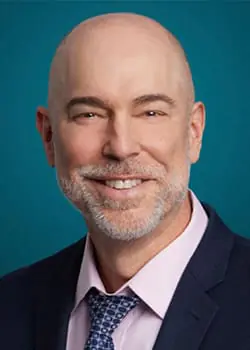 Jonathan Aronie is a partner at global law firm Sheppard, the former leader of the firm’s governmental practice, and the current leader of the firm’s organizational integrity group. A graduate of Duke University School of Law, Jonathan has conducted hundreds of internal investigations over his 30-plus years as an attorney. In 2013, as an outgrowth of his investigations practice, he was appointed as the monitor over the New Orleans Police Department consent decree by the US District Court in Louisiana, serving in that role through the decree’s successful conclusion in 2025. Jonathan also is the co-founder and pro bono chair of the ABLE Project at the Georgetown University Law Center.