Among the more common arguments against robust enforcement of the FCPA — or even against its very existence — is that it puts American corporations abroad on the bad foot. Martin J. Weinstein of Cadwalader believes just the opposite is true: playing by the rules gives US companies a better chance to compete on their own merits.
In a recent speech, the US attorney for the Southern District of New York criticized the premise of the Foreign Corrupt Practices Act (FCPA) and echoed a familiar complaint: Aggressive US anti-bribery enforcement puts American companies at a disadvantage overseas. That view gained traction after President Donald Trump’s February 2025 executive order directing the DOJ to pause FCPA prosecutions, and it has persisted even though enforcement has since resumed.
The problem is that this critique treats bribery as a workable competitive strategy, when, in practice, it is more often an unpredictable factor that inflates project costs, distorts competition and can turn a “cheap” deal into a significantly more expensive one over time. More fundamentally, it also misses the bigger point: The FCPA has often been good for American business, not despite its constraints but because of them, by rewarding companies that compete on quality and reliability, strengthening trust in US brands, protecting workers and shareholders from corruption-driven fallout and reinforcing a basic expectation that deals are won on merit rather than payoffs.
Globalization and the creation of the FCPA
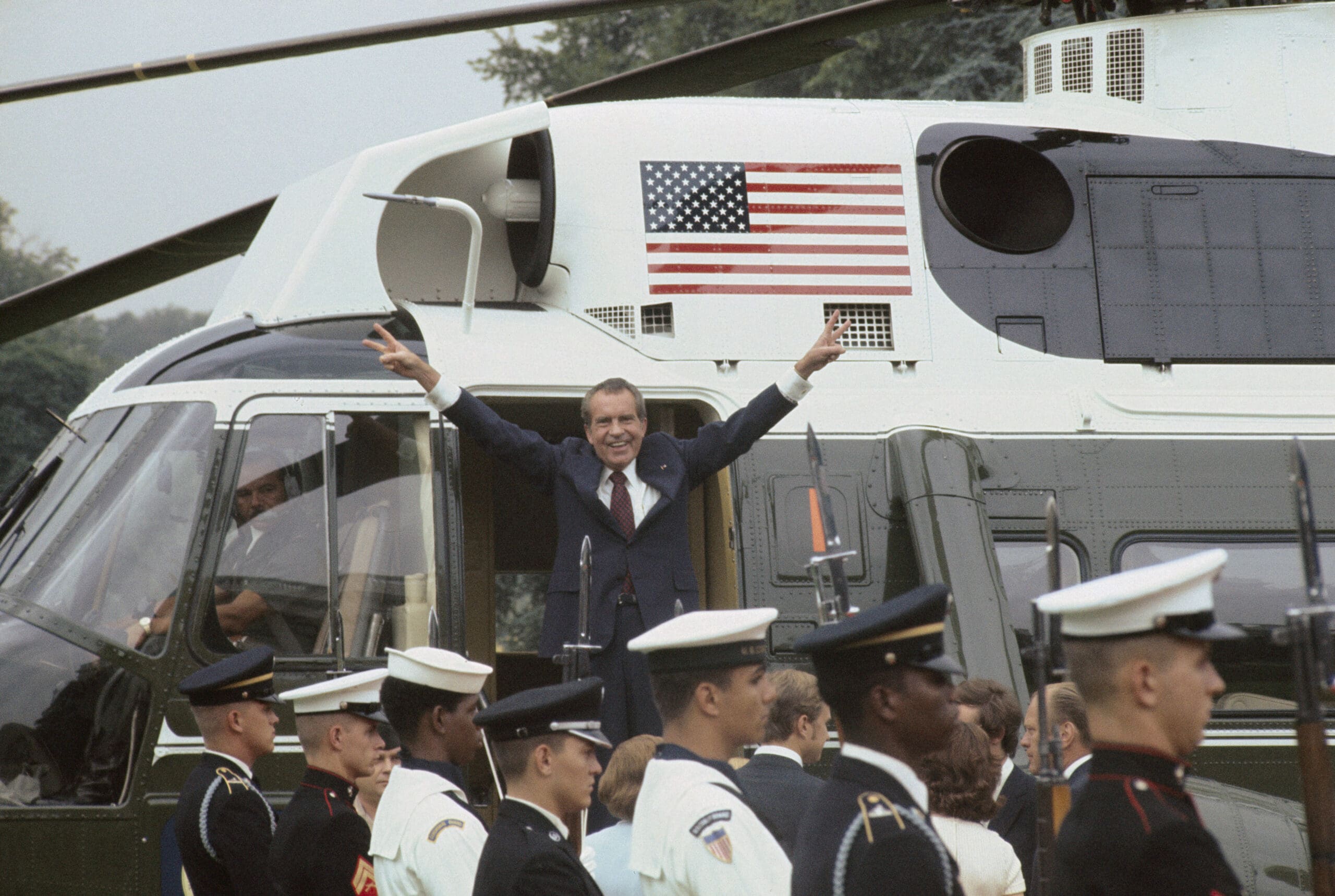
Congress enacted the FCPA in 1977 after a series of bribery scandals involving U.S. companies abroad came to light in the wake of Watergate. What started as an investigation into illegal domestic political contributions connected to President Richard Nixon’s reelection campaign quickly uncovered a broader corporate practice: slush funds and off-the-books accounts that companies used to move money without oversight. The SEC’s investigations revealed the scope of the problem — nearly 400 US companies had used these funds not only for questionable domestic political activity but also for foreign payments, including bribes to overseas officials.
At the time, bribery was not uncommon. In fact, in some countries, including Germany and France, companies were allowed to treat certain overseas bribes as tax-deductible expenses. But the main problem for Congress was not just that bribery was happening. It was that companies were hiding it by fixing their books, disguising payments through intermediaries and keeping investors in the dark. They worried this mix of corruption and concealment would undermine confidence in corporate disclosures and raise foreign-policy concerns.
After much debate, in response, Congress passed the FCPA and it was significant for two reasons. First, it became the first statute to prohibit bribing foreign officials to obtain or retain business. Second, it required accounting and internal-control requirements for public companies, forcing them to keep accurate books and maintain controls robust enough to prevent and detect illegal payments.
In many ways, the FCPA was a product of an increasingly global economy. By the 1970s, more American companies were operating abroad through agents, distributors and joint ventures, and supply chains were becoming longer and harder to monitor. As cross-border business expanded, so did the opportunities to hide improper payments through intermediaries and opaque transactions. That made bribery harder to prevent and detect and made its consequences more far-reaching: The risk was no longer limited to the company making the payment; it reached investors relying on accurate disclosures, employees working inside those systems and the public’s confidence that major US businesses were operating legitimately.
The law also reflected the moment in which it was passed. The FCPA emerged in the aftermath of Watergate, when Congress was not only responding to corruption itself but to a deeper crisis of trust in American institutions. It was shaped by concerns about corporate morality and the broader perception of American businesses and markets abroad. At a time when the United States was trying to project stability and leadership, Congress did not want US companies associated with bribery overseas. In that sense, the FCPA was also a statement about what kind of economic power the United States wanted to be.
This willingness to act first is part of why the FCPA became so influential globally. For years the FCPA was the only law of its kind, but what began as a domestic response to corporate bribery eventually helped set the standard for anti-corruption enforcement far beyond the United States, as other countries adopted similar laws and international frameworks followed. The FCPA has been controversial from the beginning, but its basic premise was powerful: If the United States wanted to lead in global markets, it needed rules that made American business look credible, disciplined, and worth trusting.
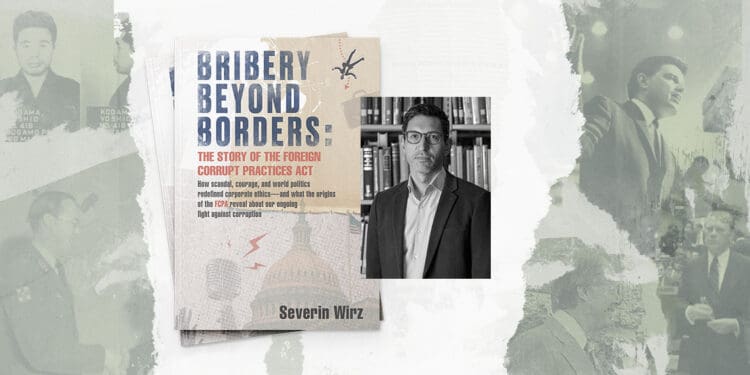
New Book ‘Bribery Beyond Borders’ Debuts at ACI’s 42nd FCPA Conference, Reframing the Statute for a New Era
Severin Wirz’s decade-long investigation uncovers forgotten origin story of the Foreign Corrupt Practices Act & and why it matters now
Read moreDetailsHidden costs of corruption
One of the biggest problems with the claim that the FCPA makes US companies less competitive is that it assumes bribery is an efficient and profitable way to do business. In reality, it is often the opposite. Corruption may help secure a contract in the beginning, but it also introduces extra costs down the line with delays, inflated pricing, weak oversight, poor-quality work, political exposure and, eventually, legal and reputational fallout. This is one of the reasons anti-corruption advocates consistently describe bribery as a drag on growth. The United Nations has estimated that the global cost of corruption drains more than $2.6 trillion annually, while bribes account for nearly $1 trillion — together amounting to roughly 5% of global GDP.
For companies, the message is clear: Corruption does not remove obstacles or lower costs; it usually just postpones them. A deal secured through improper payments often carries unpriced risk from the outset, as leadership changes, regulatory scrutiny and counterparties demanding more can quickly upend any arrangement. Even when a project moves forward, bribery distorts the market’s quality filter and allows contracts to go not to the most reliable bidder but to the party most willing to make improper payments. In the end, projects awarded on the basis of relationships rather than capability are more likely to underperform. What may look like a competitive advantage on paper can, therefore, become an expensive failure over time. In fact, corruption is estimated to increase the cost of doing business globally by as much as 10%.
China’s Belt and Road Initiative (BRI) is a useful example of what these hidden costs can look like in practice. Launched by President Xi Jinping in 2013, the BRI was framed as a massive development and connectivity project, backed by enormous volumes of Chinese lending and investment across Asia, Africa and Latin America. But over time, many of those projects have come to illustrate the downside of pursuing scale and speed without enough transparency or accountability. A significant number of BRI infrastructure projects have been linked to problems ranging from corruption concerns to labor violations.
One example is Ecuador’s Coca Codo Sinclair Dam. Built by the Chinese company Sinohydro and backed by billions of dollars in Chinese loans, the hydroelectric dam was supposed to help meet Ecuador’s energy needs. But within two years of its completion, thousands of cracks were reported, raising serious concerns about the dam’s structural integrity. The project was also followed by multiple bribery investigations involving officials tied to the deal, including the former anti-corruption official overseeing the project, who was reportedly caught on tape discussing Chinese bribes. The project illustrates the core point: Qhat may have seemed like a cheaper or faster deal at the outset ultimately produced poor workmanship and costs that resurfaced later in the form of expensive repairs.
How corruption harms local economies
Another thing this critique tends to miss is that the costs of corruption do not fall only on companies. In many cases, they fall even more heavily on the countries where these deals happen, especially resource-rich countries that may not have strong institutions or effective checks on abuse. That is part of what economists call the “resource curse” — a country can have valuable natural resources and still fail to see lasting economic benefits because so much value is lost to corruption and weak governance.
There is some evidence that foreign anti-bribery enforcement can help interrupt that pattern. One academic study found that after FCPA enforcement increased in the mid-2000s, economic activity rose near African extraction sites owned by firms subject to the FCPA, while local perceptions of corruption declined. The point here is not that the FCPA can fix weak governance abroad; it cannot. But it can make it harder for foreign companies to take part in the kinds of corrupt arrangements that leave countries worse off and markets more fragile. Over time, markets that are more stable and less driven by corruption are not just better for local communities but also better for companies that want to build business and stay there.
Why the critique persists and what it gets wrong
It is not hard to see why this criticism keeps resurfacing. In markets where corruption is common, the FCPA can look like a constraint because it removes one obvious shortcut. If a competitor is willing to pay, and a US company is not, the law can appear to create a short-term disadvantage. But that framing confuses a shortcut with a real competitive edge. The fact that bribery may help win a deal in the moment does not mean it produces better projects or more durable profits. In many cases, it does the opposite.
It also overlooks how the FCPA has operated in practice. The law has never applied only to American companies, and some of the largest FCPA resolutions have involved foreign corporations. In fact, nine out of 10 of the largest FCPA enforcement actions have been against foreign companies, and the average cost of resolving an FCPA enforcement action for foreign companies is $72 million, compared with $18 million for domestic companies. That means the statute has often functioned not just as a restraint on US firms but as a check on their overseas rivals as well. In that sense, the FCPA has helped push more foreign competitors into the same compliance universe rather than leaving US companies to bear the burden alone.
The broader economic context matters as well. The US has benefited enormously from participation in global markets overall. A study estimated that, in 2022, America’s cumulative gains from engagement with the world economy since 1950 increased the annual US GDP by about 10%, or roughly $2.6 trillion. If globalization has, on average, been a major source of American economic strength, then it makes little sense to treat one of the key rules governing how US companies compete in that system as inherently anti-business.
In the end, the strongest defense of the FCPA is not just moral, though morality is part of it. It is economic. The law has helped protect the kind of competition US companies are best positioned to win: competition based on quality, reliability and long-term value rather than payoffs and political favors. It has made it harder for rivals to buy their way to the front, harder for corruption to distort markets and easier for American companies to compete on the actual merits of what they build and sell. That is not harming US business, it is one of the reasons US business has remained worth trusting in the first place.

 Martin J. Weinstein is a partner in Cadwalader's global litigation group and leads the firm's global compliance, investigations and enforcement practice. His practice focuses on investigations, compliance and enforcement actions covering virtually every type of financial fraud in almost every industry, spanning more than 60 countries.