
No Result
View All Result
SUBSCRIBE | NO FEES, NO PAYWALLS
MANAGE MY SUBSCRIPTION
NEWSLETTER
Corporate Compliance Insights
  • About
    • About CCI
    • Writing for CCI
    • NEW: CCI Press – Book Publishing
    • Advertise With Us
  • Explore Topics
    • See All Articles
    • Compliance
    • Ethics
    • Risk
    • FCPA
    • Governance
    • Fraud
    • Internal Audit
    • HR Compliance
    • Cybersecurity
    • Data Privacy
    • Financial Services
    • Well-Being at Work
    • Leadership and Career
    • Opinion
  • Vendor News
  • Downloads
    • Download Whitepapers & Reports
    • Download eBooks
  • Books
    • CCI Press
    • New: Bribery Beyond Borders: The Story of the Foreign Corrupt Practices Act by Severin Wirz
    • CCI Press & Compliance Bookshelf
    • The Seven Elements Book Club
  • Podcasts
    • Great Women in Compliance
    • Unless: The Podcast (Hemma Lomax)
  • Research
  • Webinars
  • Events
  • Subscribe
Jump to a Section
  • At the Office
    • Ethics
    • HR Compliance
    • Leadership & Career
    • Well-Being at Work
  • Compliance & Risk
    • Compliance
    • FCPA
    • Fraud
    • Risk
  • Finserv & Audit
    • Financial Services
    • Internal Audit
  • Governance
    • ESG
    • Getting Governance Right
  • Infosec
    • Cybersecurity
    • Data Privacy
  • Opinion
    • Adam Balfour
    • Jim DeLoach
    • Mary Shirley
    • Yan Tougas
No Result
View All Result
Corporate Compliance Insights
Home Data Privacy

The Proliferation Everyone Expected Didn’t Happen: What Stalled State Data Privacy Laws in 2025

Many states may have decided it was not necessary to duplicate provisions businesses already implemented based on other state laws

by Tony Foley
January 26, 2026
in Data Privacy
us map in chalk on pavement

Between 2020 and 2024, 20 states enacted comprehensive data privacy laws, and many observers assumed 2025 would see continued proliferation. Surprisingly, that didn’t happen. Tony Foley, senior legal analyst at Wolters Kluwer Legal & Regulatory US, examines factors that led to the slowdown, from Washington’s proposal opposed by business interests to Georgia’s bill that received an F from EPIC, calling it “one of the worst bills in the nation.” 

Beginning with the advent of the California Consumer Privacy Act (CCPA) in 2020, privacy and data protection policy activity has largely been concentrated in the states, as several attempts in Congress to agree on a national privacy standard have fallen short of adoption. Between 2020 and 2024, 20 states enacted comprehensive privacy laws, fulfilling their oft-cited role as laboratories of democracy. Many observers assumed that 2025 would see a continued proliferation of state-level laws.

Surprisingly, that didn’t happen; while proposals were introduced in the legislatures of at least 13 states, none made it across the finish line. Let’s examine a few factors that likely led to the slowdown and look ahead to what to expect this year.

Political headwinds

The proposals floated in a number of states met with political opposition on both sides of the ideological spectrum. For example, in Washington, HB 1671, which would have enacted a comprehensive privacy regime, was vigorously opposed by business interests, primarily because it included a private right of action for consumers (a right unavailable in every current state privacy law except for a limited right of action in California). The Washington Retail Association branded the proposal “deeply flawed” and emphasized the burdens it would have placed on small businesses in particular. The bill never made it out of committee and was considered dead just a few weeks after its introduction.

Meanwhile, several states, including Georgia (SB 111) and Oklahoma (SB 546) introduced bills that were approved in their chamber of origin but ultimately failed, due at least in part to scathing reviews from consumer advocates like the Electronic Privacy Information Center (EPIC), which gave the Georgia proposal an F, calling it “one of the worst bills in the nation” with respect to protecting consumers’ data, and Consumer Reports, which joined EPIC in saying that the Oklahoma bill would do little to protect consumers’ personal information.

Other priorities

In several states, legislators shifted their focus away from comprehensive privacy legislation to more targeted initiatives, particularly in the area of children’s privacy. Many of these proposals targeted app store providers and developers, which builds on a trend that began last year. 

Louisiana enacted a law, effective Jan. 1, 2026, that requires app stores to verify the age of users and to obtain parental consent under specified conditions. In addition, several states have adopted age-appropriate design codes that require developers of apps aimed at children to take privacy and safety concerns into consideration when designing their products. 

Many of these laws have been challenged in court by business associations like NetChoice on constitutional grounds, but in the meantime, affected businesses will need to prepare for compliance with their provisions.
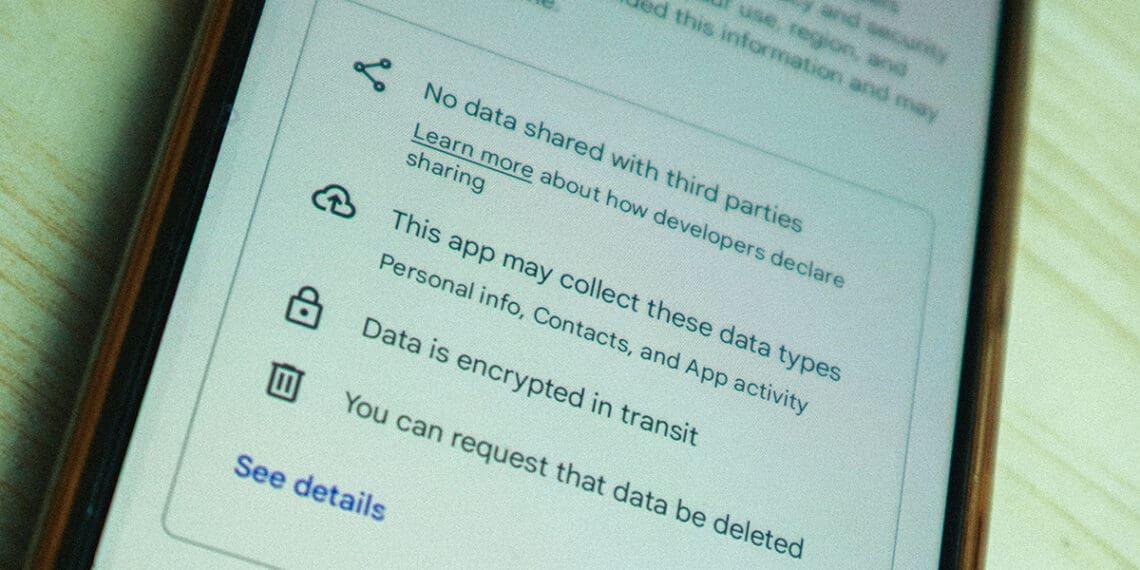
consumer data disclosure on smartphone
Data Privacy

What You Need to Know About Maryland’s New Data Privacy Law

by Karan Manohar and Gia Grimm
November 18, 2025

The law shifts focus from allowing unlimited data for company purposes to providing collection as a service benefiting consumers

Read moreDetails

AI emergence

State-level AI policy also took up a lot of attention for legislators. Every state, as well as DC, Puerto Rico and the Virgin Islands, introduced AI legislation in 2025, with several states imposing new restrictions on the use of AI, particularly in high-risk use cases, banning the creation of deepfakes and establishing transparency and disclosure requirements, among other items. 

An executive order from President Donald Trump on Dec. 11 is designed to require the issuance of a single regulatory framework for AI and to prohibit states from enacting any restrictions deviating from that framework. The order is certain to be challenged in court, but in the meantime, despite the urging of several consumer groups encouraging states to move forward with AI regulation, the order is likely to have a chilling effect on further state regulation in the area.

Privacy fatigue? 

Somewhat ironically, the enactment of 20 comprehensive privacy laws over the past four years was almost certainly a contributing factor in the lack of action in 2025. Businesses have been required to ramp up their compliance efforts to meet a variety of disparate requirements in these laws, with many taking a “lowest common denominator” approach, assuming that if they are in compliance with the more consumer-friendly laws (like California or Connecticut), they will pass muster with other, less restrictive states. As a result, many states may have simply decided that it was not necessary to duplicate provisions that many businesses already have implemented based on other state laws.

What to look for in 2026

Given that enactment of a preemptive federal law governing privacy and data protection is highly unlikely, state legislation and regulation remains the only game in town. Accordingly, businesses and practitioners need to continue tracking new proposals at the state level. Bills in several states that stalled in 2025 may carry over or be reintroduced to 2026 sessions. 

In addition, several states, most notably Connecticut and Colorado, made significant amendments in 2025 to existing privacy laws that businesses must incorporate into their compliance strategies. Finally, new regulations in California expanding on CCPA requirements related to automated decision-making tools, risk assessments and cybersecurity audits provide some clarity for businesses but also will require adjustments to compliance procedures to avoid costly enforcement activity.

We may never return to the days where a half-dozen or more states enact a privacy law in a single year, but that doesn’t mean that they will abandon the effort altogether. Businesses should exercise due diligence in tracking these potential changes to avoid any unpleasant surprises.


Tags: Artificial Intelligence (AI)California Consumer Privacy Act (CCPA)
Previous Post

Balancing Risk & Reward: A Perfect Dance to the Tune of Changing Times

Next Post

Decoding Duty of Care in the Agentic AI Era

Tony Foley

Tony Foley

Tony Foley is a senior legal analyst at Wolters Kluwer Legal & Regulatory US.
Related Posts

army of robots

Decoding Duty of Care in the Agentic AI Era

by Saumitra Das
January 26, 2026

By nature, autonomous agents look for the path of least resistance, which can mean finding ways around existing safeguards

illustration of people's feet while they dance

Balancing Risk & Reward: A Perfect Dance to the Tune of Changing Times

by Jim DeLoach
January 23, 2026

Despite uncertainty and global shifts, business leaders are prepared to innovate, form strategic partnerships and plan for long-term growth

banking chatbot featured

I Tested 24 AI Banking Chatbots; They Were All Exploitable

by Milton Leal
January 21, 2026

When a chatbot provides incorrect guidance or misleads a borrower about their dispute rights, regulators treat it as a compliance...

scales of justice statue on desk

AI Risk in 2026: 3 Critical Changes for the General Counsel

by Jenny Hamilton
January 20, 2026

The discipline legal ops brings — technology evaluation, vendor management, compliance monitoring — maps to capabilities required for AI governance

Next Post
army of robots

Decoding Duty of Care in the Agentic AI Era

reminder to speak up
No Result
View All Result

Privacy Policy | AI Policy

Founded in 2010, CCI is the web’s premier global independent news source for compliance, ethics, risk and information security. 

Got a news tip? Get in touch. Want a weekly round-up in your inbox? Sign up for free. No subscription fees, no paywalls. 

Follow Us

Browse Topics:

  • CCI Press
  • Compliance
  • Compliance Podcasts
  • Cybersecurity
  • Data Privacy
  • eBooks Published by CCI
  • Ethics
  • FCPA
  • Featured
  • Financial Services
  • Fraud
  • Governance
  • GRC Vendor News
  • HR Compliance
  • Internal Audit
  • Leadership and Career
  • On Demand Webinars
  • Opinion
  • Research
  • Resource Library
  • Risk
  • Uncategorized
  • Videos
  • Webinars
  • Well-Being
  • Whitepapers

© 2026 Corporate Compliance Insights

Welcome to CCI. This site uses cookies. Please click OK to accept. Privacy Policy
Cookie settingsACCEPT
Manage consent

Privacy Overview

This website uses cookies to improve your experience while you navigate through the website. Out of these, the cookies that are categorized as necessary are stored on your browser as they are essential for the working of basic functionalities of the website. We also use third-party cookies that help us analyze and understand how you use this website. These cookies will be stored in your browser only with your consent. You also have the option to opt-out of these cookies. But opting out of some of these cookies may affect your browsing experience.
Necessary
Always Enabled
Necessary cookies are absolutely essential for the website to function properly. These cookies ensure basic functionalities and security features of the website, anonymously.
CookieDurationDescription
cookielawinfo-checbox-analytics11 monthsThis cookie is set by GDPR Cookie Consent plugin. The cookie is used to store the user consent for the cookies in the category "Analytics".
cookielawinfo-checbox-functional11 monthsThe cookie is set by GDPR cookie consent to record the user consent for the cookies in the category "Functional".
cookielawinfo-checbox-others11 monthsThis cookie is set by GDPR Cookie Consent plugin. The cookie is used to store the user consent for the cookies in the category "Other.
cookielawinfo-checkbox-necessary11 monthsThis cookie is set by GDPR Cookie Consent plugin. The cookies is used to store the user consent for the cookies in the category "Necessary".
cookielawinfo-checkbox-performance11 monthsThis cookie is set by GDPR Cookie Consent plugin. The cookie is used to store the user consent for the cookies in the category "Performance".
viewed_cookie_policy11 monthsThe cookie is set by the GDPR Cookie Consent plugin and is used to store whether or not user has consented to the use of cookies. It does not store any personal data.
Functional
Functional cookies help to perform certain functionalities like sharing the content of the website on social media platforms, collect feedbacks, and other third-party features.
Performance
Performance cookies are used to understand and analyze the key performance indexes of the website which helps in delivering a better user experience for the visitors.
Analytics
Analytical cookies are used to understand how visitors interact with the website. These cookies help provide information on metrics the number of visitors, bounce rate, traffic source, etc.
Advertisement
Advertisement cookies are used to provide visitors with relevant ads and marketing campaigns. These cookies track visitors across websites and collect information to provide customized ads.
Others
Other uncategorized cookies are those that are being analyzed and have not been classified into a category as yet.
SAVE & ACCEPT
No Result
View All Result
  • About
    • About CCI
    • Writing for CCI
    • NEW: CCI Press – Book Publishing
    • Advertise With Us
  • Explore Topics
    • See All Articles
    • Compliance
    • Ethics
    • Risk
    • FCPA
    • Governance
    • Fraud
    • Internal Audit
    • HR Compliance
    • Cybersecurity
    • Data Privacy
    • Financial Services
    • Well-Being at Work
    • Leadership and Career
    • Opinion
  • Vendor News
  • Downloads
    • Download Whitepapers & Reports
    • Download eBooks
  • Books
    • CCI Press
    • New: Bribery Beyond Borders: The Story of the Foreign Corrupt Practices Act by Severin Wirz
    • CCI Press & Compliance Bookshelf
    • The Seven Elements Book Club
  • Podcasts
    • Great Women in Compliance
    • Unless: The Podcast (Hemma Lomax)
  • Research
  • Webinars
  • Events
  • Subscribe

© 2026 Corporate Compliance Insights