There is no single compliance model for handling minors’ data, but companies can take several steps now to mitigate the risks, attorneys Greg Szewczyk and Madison Etherington of Ballard Spahr explain.
For years, many companies treated youth’s privacy on their apps as a narrow compliance question: Is the app directed to users under 13 years old, or does the company have actual knowledge a user is younger than 13?
The federal Children’s Online Privacy Protection Act (COPPA) remains a cornerstone for children’s privacy compliance, but state laws are rapidly joining and expanding the scope of efforts to regulate how businesses collect, use and share young people’s personal information online. App store accountability measures add yet another layer by introducing new evaluation and notice requirements governing methods by which companies receive age-related information.
As a result, businesses are being forced to review the way they collect and process information of users.
COPPA applies to operators of websites and online services directed to youths under 13 as well as those that have actual knowledge that they collect personal information from someone under 13. Covered operators must provide notice and obtain verifiable parental consent before collecting, using or disclosing such data.
This baseline, however, is evolving. The FTC finalized COPPA Rule amendments in 2025 that, among other changes, require separate parental opt-in consent before certain disclosures of youths’ personal information to third parties for targeted advertising.
In general, businesses should continue to treat COPPA as a floor for compliance, generally disclosing that products or services are not directed at children and that information will not be collected from children without first obtaining verifiable parental consent. In the event a company becomes aware of the inadvertent collection of children’s information, it should be immediately remediated by deleting the information and ceasing all related processing.
However, while COPPA has been the baseline governing processing of children’s information for years, a growing number of state privacy laws are beginning to regulate data belonging to teenagers separately.
Teen data is becoming its own compliance category
Several states have begun to enact laws that require businesses to treat the data of individuals between 13 and 18 differently.
- New York’s Child Data Protection Act regulates personal data belonging to covered users under 18. For users 13-17 years old, certain processing must either be strictly necessary for specified activities or supported by informed consent. The law also limits some uses of personal data collected while a user was a minor after the user becomes an adult.
- Maryland’s Online Data Privacy Act prohibits targeted advertising and the sale of personal data involving consumers whom an organization knew or should have known were under 18.
- Arkansas’ Children and Teens’ Online Privacy Protection Act creates different obligations relating separately to children below 13 and teens ages 13-16 when a company has actual knowledge it collects their personal information.
- Colorado’s Privacy Act was recently amended to provide additional protections over the data of children under 18 when a controller has actual knowledge or willfully disregards information that establishes that a user is a minor, and the Department of Law has rulemaking authority. In the draft rules that have been published, the attorney general lists factors that should be considered when determining whether a controller has willfully disregarded whether a consumer is a minor. Those factors include if the user can provide their age, if the user can edit their age, if the user has a bio section of a profile, if there is indicia of age, such as grade level, and if the company categorizes them differently for marketing purposes. However, the draft rules expressly state that the list is not exhaustive, and the determination will be based on the totality of the circumstances.
Because of this breadth of legislation, companies face highly granular questions: When does it make sense — or become mandatory — to disable targeted advertising altogether? To limit third-party sharing? To restrict social features? In some situations, creating dedicated interfaces just for minors might offer the simplest path forward.
Along with the US, Canada’s approach is continuing to develop. In May 2026, the Office of the Privacy Commissioner of Canada released guidance advising organizations to assess whether age assurance is necessary, use methods proportionate to the risks involved and consider alternatives, such as limiting certain data practices or turning them off by default.
Canada’s Personal Information Protection and Electronic Documents Act requires meaningful consent before organizations collect, use or disclose any individual’s personal information. Canadian guidance says parental/guardian permission is needed below age 13, while older minors’ maturity level matters more than simple birthdate cutoff. Quebec goes further, barring collection directly from minors under 14 years old without parent or tutor permission unless the collection is clearly for the minor’s benefit.
Ultimately, companies should not assume that one national policy will satisfy every age threshold, consent standard or advertising restriction. All policies deserve careful review against each region’s definitions, age thresholds, consent requirements and restrictions on marketing, profiling and data transfers.

A Field Guide to Privacy Law for Companies Entering the US Market
Businesses wanting to operate in the US have a variety of laws and regulations to consider
Read moreDetailsApp-store age signals are an emerging compliance issue
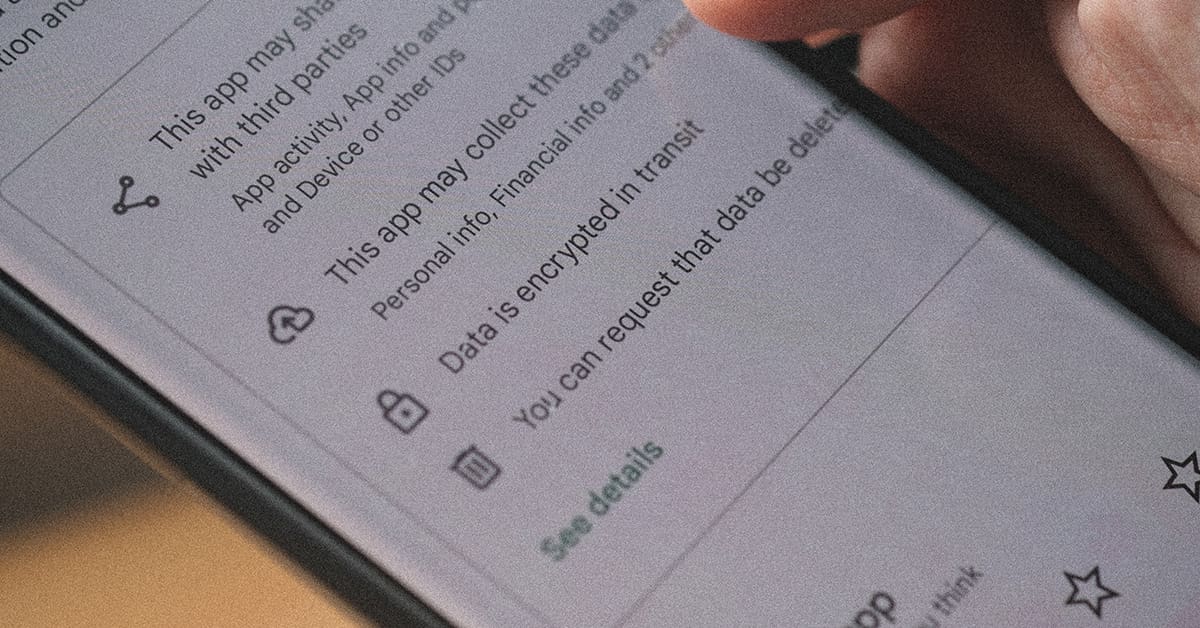
App-store accountability laws create another compliance layer. Rather than leaving every developer solely responsible for building a separate age gate, these laws allocate responsibilities among app stores, operating-system providers and app developers.
With multiple laws already passed — and several laws that have been proposed — we are likely to see a patchwork that adds to the confusion. Some of these laws will place the core age-verification and parental-consent obligations on app stores while requiring developers to provide age ratings and notifications. Others will be more developer-facing. And to make matters more complicated, legal challenges will impact the timing and scope of the laws.
For example, Texas S.B. 2420 took effect after the Fifth Circuit stayed a preliminary injunction blocking the law. The law requires covered app stores to verify users’ age categories, associate minor accounts with parent accounts and obtain parental consent in specified circumstances. App stores must also make age-category and consent information available to developers. Developers in turn must assign age ratings, respond to significant changes and use the information consistently with the law’s restrictions.
To make matters more complicated for app developers, app stores may have their own requirements.
Compliance requires more than a privacy-notice update
Companies should begin to mitigate risk in handling minors’ data by determining whether they are collecting any data within the scope of any of these laws, which may not be as simple as whether they are collecting just age data. Companies then need to assess the value of that data, what kinds of compliance obligations may need to be met and what kind of operational changes may need to be made. Vendor contracts, analytics tools and advertising technologies should also be reviewed to confirm that minors’ information is not transmitted in ways that conflict with the company’s policy or applicable law.

 Greg Szewczyk
  Madison Etherington