El Salvador’s story is often narrowed to headlines about Bitcoin becoming legal tender, but what really matters is what happened next. Miloš Jakovljević, deputy money laundering reporting officer at B2BINPAY, maps how the country treated shortcomings as a wake-up call and built one of the most structured digital-asset frameworks in the world, asking compliance teams: Are you mapping this new perimeter or still planning for a world that no longer exists?
Today, many cryptocurrency and blockchain observers focus on US enforcement actions, changing SEC signals and the political cycle that shapes digital-asset policy. But what if the most effective crypto regulation is now being built outside the US? That’s a question few people ask, and even fewer try to answer.
Yet the answer already exists, and it points to Latin America. The region handled nearly $1.5 trillion in crypto transactions between mid-2022 and mid-2025, and in many countries, stablecoins make up more than half of all exchange activity. That means digital assets in the region take a substantial share of people’s daily financial lives. And once adoption reaches that scale, regulators are forced to create transparent, workable rules.
Actually, they’ve already started to. Brazil is setting the pace with bank-level requirements for service providers, while its neighbors build their own tailored frameworks. Among them, the most notable case is El Salvador. A country once known for its audacious Bitcoin experiment is now building one of the most disciplined digital-asset regimes in the region.
When usage outruns policy, rules follow the money
Latin America’s regulatory progress shouldn’t be tied to ideology or political cycles. It’s actually a response to daily financial pressure. Traditional banking simply doesn’t work for a huge share of the region: More than 70% of people are still unbanked or underbanked. So for many households, opening an account, accessing dollars or sending money abroad is slow, costly or even heavily restricted.
When basic tools are unavailable, people seek alternatives. That’s why digital wallets and dollar-linked assets moved into the mainstream. They offered what local finance often couldn’t: fast transfers, stable value and low entry barriers. But despite the benefits, there are caveats. How do you protect people and resolve disputes when a transaction can’t be reversed and fraud can move across borders in seconds?
Regulators reacted quickly to that issue. Argentina’s strict currency controls drove families and businesses toward digital dollars, so supervisors tightened AML practices. Meanwhile, Colombia’s multi-year pilot with banks laid the foundation for custody and monitoring rules. And Brazil, the region’s most mature market, is already in a second phase with governance and asset-segregation requirements for virtual asset service providers (VASPs).
This is the example where regulation is catching up with how people actually move money, not the other way around — a healthier order than in many larger markets. It’s not perfect, but it’s far more aligned with real user behavior than the rulemaking cycles we see in Washington or Brussels.
So, as the region becomes one of the most active places for building robust rules around digital assets, one jurisdiction, as mentioned earlier, stands out more than anything else — El Salvador. What makes it unique?

DOJ, FinCEN Reach Resolutions With Virtual Asset Trading Platform Over AML Violations
Government documents say Paxful operated for years without a compliance officer, AML training or transaction monitoring controls
Read moreDetailsEl Salvador’s regulatory pivot
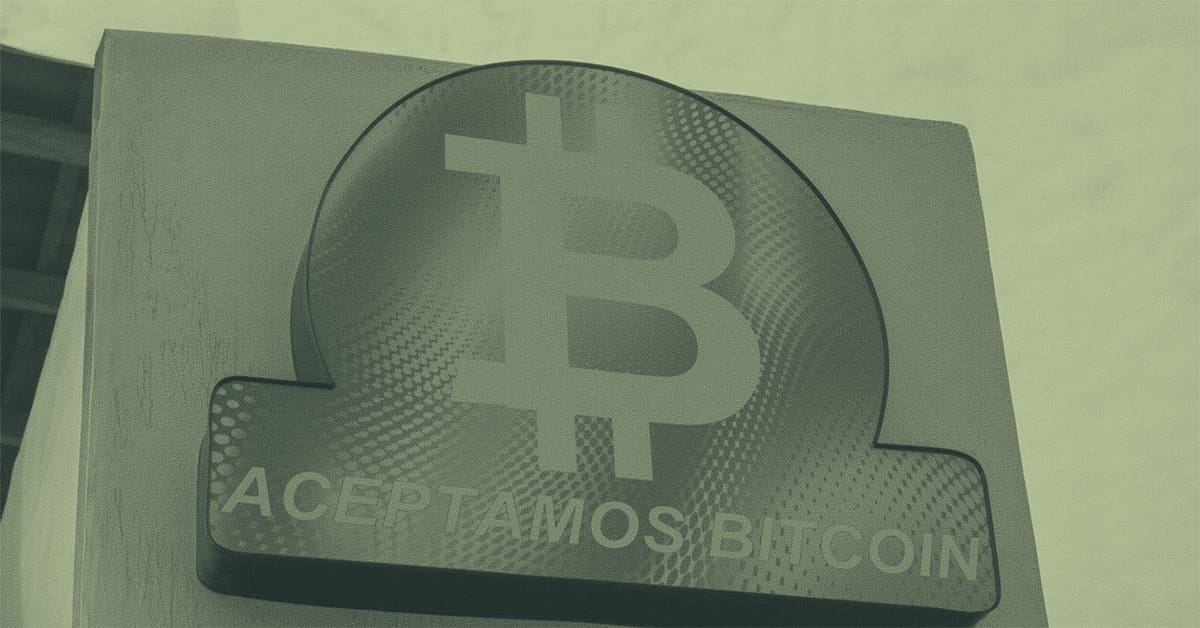
El Salvador’s story is often narrowed to the headlines about Bitcoin becoming legal tender. That experiment drew global attention because it was bold and genuinely new, but it never became the engine many hoped for. Retail usage stayed low, operational risks multiplied, and the country eventually faced pressure from international lenders to put everything back in place. Still, what really matters is what happened next.
Instead of defending that early hype, El Salvador treated the shortcomings as a wake-up call. It shifted from a symbolic experiment to a serious project, building a regulatory and supervisory system that could actually support digital-asset activity at scale. That’s how the Law on Digital Asset Issuance (LEAD) and the National Commission of Digital Assets (CNAD) came to life.
Together, they form a regulatory stack that many advanced markets still struggle to adopt. Licensing is mandatory, beneficial ownership must be disclosed, and AML controls, cybersecurity standards and governance rules are hard requirements. CNAD can suspend operators, freeze assets and sanction unlicensed activity — and it actually does.
I believe this is what real supervision looks like. The institutional layer matters just as much. Banks can apply to offer digital-asset services but only under strict capital and suitability thresholds. The regime even supports more complex instruments, such as gold-backed stablecoins, which few emerging markets can handle.
Overall, you may disagree with that early experiment with Bitcoin. But what it has grown into deserves real attention. The country now runs one of the most structured digital-asset frameworks in the world, and, arguably, the most ambitious in its region. That’s exactly the kind of environment global providers need to take seriously.
What this means for compliance teams
The most interesting regulatory work no longer happens in jurisdictions that talk the loudest. The real progress is coming from places that had to regulate because people were already using crypto to solve everyday problems. Latin America, and El Salvador in particular, is proof of that.
If you sit in a compliance or risk role today, it’s worth recognizing that licensing, onboarding and AML are shaped more and more by regimes that look much closer to LEAD and CNAD. So, are you mapping this new perimeter or still planning for a world that no longer exists? The debate is open.

 Miloš Jakovljević is an accomplished legal and compliance professional with notable experience in legal practice. In recent years, he has been specializing in the regulatory oversight of digital assets, anti-money laundering (AML) and corporate risk management. He currently serves as deputy money laundering reporting officer at B2BINPAY.