Risk
Risk refers to threats an organization faces -- loss of earnings, loss of reputation, or harm of any kind. These articles explore the challenges of preventing, identifying and mitigating risk.
Risk can come in many forms, including financial issues, legal liabilities, strategic or leadership errors, or accidents and natural disasters. Today, IT- and data-related risks are growing concerns.
The following articles about risk look at the issue from many angles, especially from that of compliance officers and risk managers.

Risk Management – Lessons from the Last 30 Years
Lots of change has taken place in risk management over the past three decades. The kinds of risks organizations are exposed to, the speed at which they must respond, the very way we approach enterprise risk management -- all look entirely different than they did in 1985. Jim DeLoach outlines where we've failed and what we can learn from those...
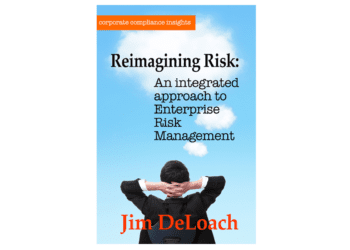
Free eBook download – Reimagining Risk: An Integrated Approach to Risk Management
Author Jim DeLoach explores four themes for implementing enterprise risk management (ERM), noting that executives often ask two questions about ERM: “Where do we start?” and “What do we do differently?” These two questions demand a pragmatic response, which DeLoach provides in this compilation of thought leadership articles.

Records & Information Management: 2015 Risk Perspective
Once upon a time, records and information management was a fairly straightforward concept. Things began to get quite complicated, however, as employees began using mobile devices (often their own) for business purposes. As the size and volume of the data we store has increased, so too have our options for storing it. So many options. So many challenges.

6 Steps to Reduce Business Travel Risks
There are some crises you can predict and plan for, and there are some you can't. Surprises such as an earthquake or a sudden medical emergency are stressful enough when you're in the comfort of your hometown -- even more so when you're traveling for business. Companies can prepare themselves for dealing with these crisis, however. Practice makes perfect!
Levi Strauss and Auditing of Third Parties
This year's Compliance Week conference was rife with excellent speeches from compliance experts. Tom Fox shares with us the highlights of one presentation from Baker Hughes' Marianne Ibrahim and Jennifer Ellison, whose address on planning for audits was truly illuminating. A must-read piece for any practitioners establishing or tweaking their audit protocols.

The Importance of Risk Culture
Risk culture - a reflection of a company's goals and values - evolves as the organization does. That's not to say that it can be ignored; on the contrary, it should be regularly evaluated and improved. Jim DeLoach outlines a myriad of ways executive management and the Board can make assessments and drive enhancements to risk culture.

Employee Fraud Collusion Puts Companies at High Risk
Half the battle in combating fraud is detecting it early on, and -- as with many white collar crimes -- fraud is rarely carried out by one wayward staff member acting alone. A huge percentage of cases, in fact, are perpetrated by two or more players collaborating together. In order to catch suspicious activity, then, it makes sense to watch...

The Board’s Role with Risk: 5 Considerations to Define a Healthy Balance Within ERM
Where does the board’s role begin and end regarding risk? A company's core objective is to create and increase wealth for its shareholders.

25 Reasons for Risk Management Failure
Here's a list of 25 reasons that risk management failure happens, based on experience assisting boards, including boards that have failed and boards that cannot afford to fail.

Adopting a Blended Learning Strategy Improves Ethics and Compliance Program Effectiveness
Advancing ethical corporate cultures starts with designing effective education programs that promote awareness, impart knowledge, and breed an organizational sense of ownership and responsibility around business conduct.

The Most Important Risk Management Task
While some may disagree with my point of view, I am confident most will agree that the potential for disruptive change in the marketplace makes the above task very important.
Think Holistically When Managing Risk
While the goal of thinking holistically is laudable, the question arises as to what it means from a practical standpoint. DeLoach offers insights - and ways to put the approach into practice.