ACA compliance failures rarely come from misunderstanding the law; they come from operational and data problems that surface only at filing: midyear rehires treated as new hires, stale wage figures, status changes that fall between HR, payroll and benefits. John Sansoucie of CogNet explains why ACA compliance is really a data-governance problem and how catching ordinary employee changes year-round turns filing season from a scramble into a formality.
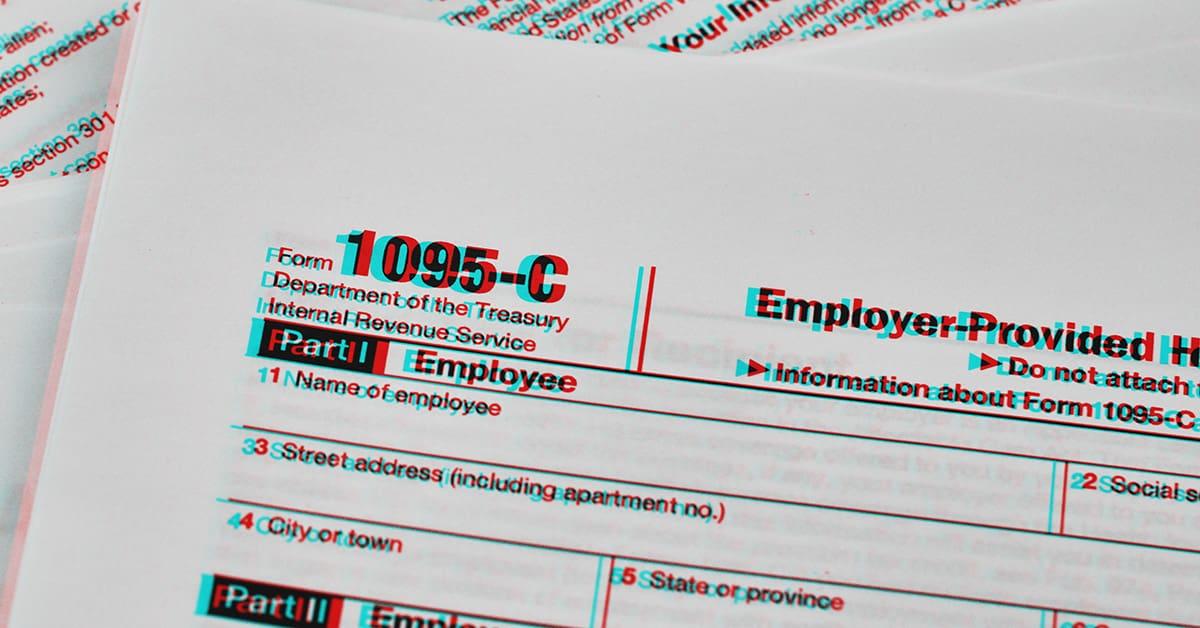
Every January, a particular pattern repeats: The year-end close wraps and within days, employers face IRS deadlines to furnish and file 1095-C forms tied to the Affordable Care Act (ACA). After two decades of running this process for HR outsourcing providers and staffing firms, one lesson has held consistently: ACA compliance failures rarely come from a misunderstanding of the law.
Full-time status rules, affordability safe harbors and employer shared responsibility calculations are well-documented, and most compliance teams understand them reasonably well in the abstract. The failures originate elsewhere: operational and data problems that surface only once the forms are being produced, at the exact moment there’s the least time left to fix them.
Status determination is where the trouble starts, but it doesn’t end there
The rules around measurement periods and look-back methods are well-documented and, on paper, straightforward. The problem is the data feeding the rule, not the rule itself.
Midyear rehires are often treated as new hires when they should carry forward prior service history. Employees who transfer between related entities can fall through the cracks of a look-back calculation built around a single employer ID. Workers reclassified from contractor to employee midyear frequently have partial-year records that don’t merge cleanly with the rest of their employment data.
It’s an ordinary employee lifecycle activity that most HR systems handle fine for payroll purposes but track poorly for ACA status purposes because the two have different requirements in mind: Payroll cares whether someone was paid correctly in a given period, while ACA status determination cares about continuous service history across a measurement period that may span more than a year.
A system optimized for one will probably get the other wrong unless someone checks it.
Further, employer shared responsibility calculations don’t fail gracefully. A handful of missed status changes or bad affordability inputs can cascade into penalty exposure across an entire employee population.
Affordability safe harbors are a common source. Calculations are often built on stale W-2 wage figures that weren’t updated after a midyear raise or on the wrong federal poverty line year entirely. For employers with a multi-state workforce, pay stub formats and reporting periods vary enough that a single affordability formula applied uniformly across the company will get most employees right, but the ones it gets wrong create problems.
Scale also makes this dangerous. A misclassified employee is a single correction. A flawed affordability formula applied to an entire population results in hundreds of corrections discovered at once, usually after forms have already gone out and after the deadline to fix them cleanly has passed. The stakes keep climbing, too: The IRS raised employer shared responsibility penalties for the 2026 tax year to $3,340 per full-time employee for a coverage-offer failure and $5,010 per employee for an affordability failure, both increases over 2025 levels.

Pay Day: What States, Job Seekers & Workers Expect on Salary Transparency
Pay transparency laws continue to proliferate nationwide, creating a complex landscape of pay disclosure requirements, particularly for multistate employers. Rayner Mangum of Constangy, Brooks, Smith & Prophete background and considerations for compliance, as well as practical recommendations for building a compliance framework.
Read moreDetailsDeadline compression makes all of it worse
None of these problems would be as damaging if they surfaced in June. But they surface in January, right after year-end close, when HR and payroll teams are already stretched thin.
An error caught midyear is corrected through the normal process where status is updated, the affordability input is recalculated and the record moves on. The same error caught during 1095-C production has to be fixed under a filing deadline, often while the same person is also closing the books and handling open enrollment.
Recent legislation has eased some of the surrounding logistics. The Paperwork Burden Reduction Act and the Employer Reporting Improvement Act, both effective in 2025, extended the response window for a proposed penalty from 30 days to 90 days and let many employers satisfy furnishing requirements with a posted notice rather than mailing individual forms.
That helps with paperwork logistics but does nothing to ensure the underlying data is accurate. The codes reported on Lines 14 and 16 of the 1095-C are meant to describe coverage and eligibility. In practice, they function as a diagnostic tool for the rest of the year’s HR data.
A code mismatch during form generation is more likely to be the visible symptom of an eligibility tracking gap or a missing offer-of-coverage record that went unnoticed for months than it is a one-off reporting error. By the time 1095-C production catches up, the underlying issue has usually existed since well before year-end. The IRS’s own description of how it opens an inquiry makes the point directly: Letter 226-J, the notice that starts an employer shared responsibility payment (ESRP) review, is built entirely from the data reported on Forms 1094-C and 1095-C, matched against the premium tax credits employees claimed on their individual returns. The proposed penalty mirrors whatever went into the forms, not an independent audit of what actually happened.
What actually reduces the risk
Start with data integrity and review it well before filing. Businesses tend to trust their software and vendors, but they should do some common-sense validation before ever going near the “file” button.
Consider timing, too. Treat ACA compliance as an ongoing process rather than a year-end event, using the same team and systems most companies already have. Reconciling full-time status changes monthly, rather than batching them for an annual review, catches misclassifications while they’re still easy to fix.
Similarly, affordability calculations deserve the same treatment: a recurring check, at least quarterly, that verifies the formula reflects current wage data and the correct federal poverty line year, rather than a number calculated once and carried forward.
Ownership matters as much as process. ACA compliance sits at the intersection of HR, payroll and benefits, and status changes often cross all three. When no single function owns that handoff, changes get recorded inconsistently. Assigning clear ownership, even informally, closes most of that gap.
ACA compliance risk is a data governance problem wearing a tax-form costume. Building a rhythm that catches ordinary employee changes before they compound is the hard part, and it turns filing season into a formality instead of a scramble.

 John Sansoucie is chairman and CEO of CogNet, a business process management firm serving HR outsourcing providers and staffing firms. He has spent more than two decades in HR outsourcing, TPA and PEO operations, including senior finance leadership roles prior to founding CogNet in 2004.