No Result
View All Result
SUBSCRIBE | NO FEES, NO PAYWALLS
MANAGE MY SUBSCRIPTION
NEWSLETTER
Corporate Compliance Insights
  • About
    • About CCI
    • Writing for CCI
    • NEW: CCI Press – Book Publishing
    • Advertise With Us
  • Explore Topics
    • See All Articles
    • Compliance
    • Ethics
    • Risk
    • Artificial Intelligence (AI)
    • FCPA
    • Governance
    • Fraud
    • Internal Audit
    • HR Compliance
    • Cybersecurity
    • Data Privacy
    • Financial Services
    • Well-Being at Work
    • Leadership and Career
    • Opinion
  • Vendor News
  • Downloads
    • Download Whitepapers & Reports
    • Download eBooks
  • Books
    • CCI Press
    • New: Bribery Beyond Borders: The Story of the Foreign Corrupt Practices Act by Severin Wirz
    • CCI Press & Compliance Bookshelf
    • The Seven Elements Book Club
  • Podcasts
    • Great Women in Compliance
    • Unless: The Podcast (Hemma Lomax)
  • Research
  • Webinars
  • Events
  • Subscribe
Jump to a Section
  • At the Office
    • Ethics
    • HR Compliance
    • Leadership & Career
    • Well-Being at Work
  • Compliance & Risk
    • Compliance
    • FCPA
    • Fraud
    • Risk
  • Finserv & Audit
    • Financial Services
    • Internal Audit
  • Governance
    • ESG
    • Getting Governance Right
  • Infosec
    • Cybersecurity
    • Data Privacy
  • Opinion
    • Adam Balfour
    • Jim DeLoach
    • Mary Shirley
    • Yan Tougas
No Result
View All Result
Corporate Compliance Insights
Home Risk

Engineering Corporate Resilience in an Era of Geopolitical Volatility

Corporations need to move beyond standard risk measurements and prepare for next war or blackout

by Mike Driscoll and Paul Abbate
May 5, 2026
in Risk
iran strike

Organizations operating as if they’re in a connected world will fall behind those prepared to exist in the fragmented globe that’s unfolding, Mike Driscoll and Paul Abbate of FTI Consulting write. To create resilience in an unstable climate, organizations can start with three steps — assess, simulate and codify.

The geopolitical shift from globalization to fragmentation means resilience has become a competitive advantage. Organizations capable of withstanding disruptions and maintaining business continuity create a genuine competitive model that is sustainable and unable to be replicated by those entities focused solely on efficiency.

The ongoing transition from a connected, global world to a fragmented landscape continues to impact operating models that were built with a foundation focused on international integration. Geopolitical volatility, including military conflict, evolving sanctions, technology compartmentalization and supply chain coercion fractures global markets, siloing technology and often creating misaligned regulation.

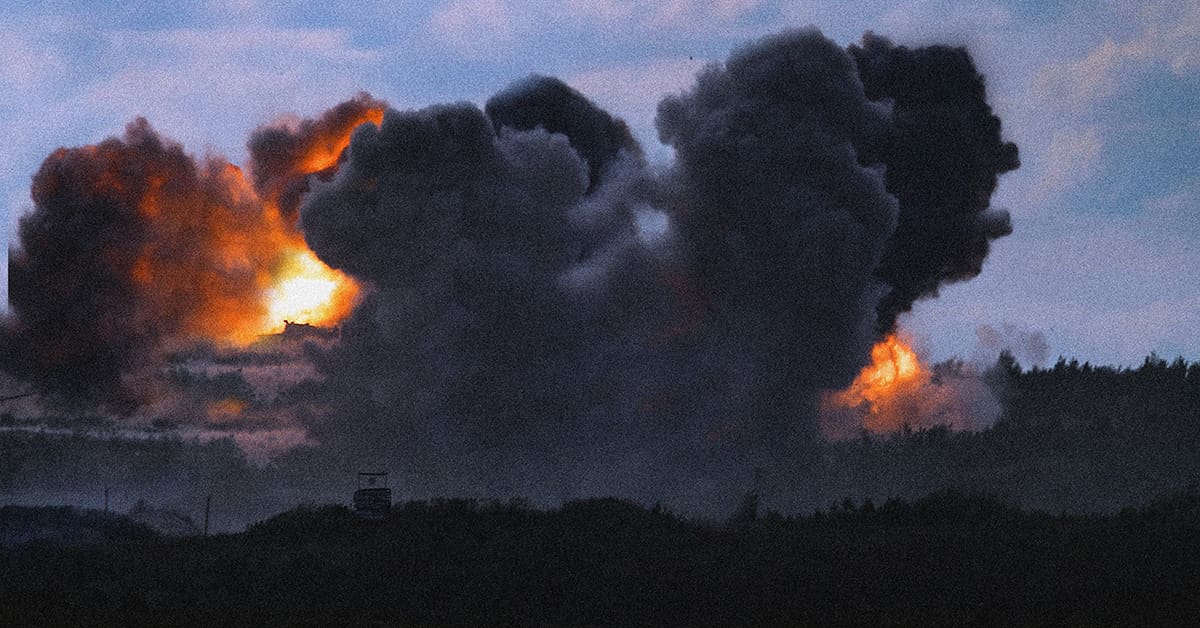
Resilience, while previously a vital component of any crisis management plan, has become even more essential when operating in this new, disjointed landscape. Real-world examples of geopolitical volatility, such as conflicts in Iran and Ukraine, the Venezuelan blackout, the splinternet effects of regional protests, the restrictions on rare earth minerals and the Spanish power outage, among too many others to name, all highlight the unpredictability permeating today’s world. The organizations not just left standing but thriving will be those that are agile and can minimize downtime.

Geopolitical intelligence & risk mapping

The path to resilience begins with moving beyond standard compliance and risk metrics, such as ESG indicators, to inform risk management and instead conducting geopolitical risk assessments. This blends geopolitical intelligence like regime stability, sanctions exposure and technology reliance with traditional risk mapping. These assessments can provide organizations with enhanced anticipation capabilities regarding operational vulnerabilities that are often overlooked or not captured by ESG metrics, allowing for remedial measures to be implemented before risks become crises.

Geopolitical risk assessments should also involve mapping deep-tier supply chains to identify hidden dependencies, including dependencies on potentially volatile regimes. For example, an assessment might reveal Tier 3 suppliers that present geopolitical risk but were not disclosed by a Tier 1 supplier. By tracing existing dependencies, hidden exposure points may be revealed, along with details on how and where an organization’s operations become exposed when entering vendor networks.

In addition to assessing the vulnerabilities of third-party relationships, geopolitical risk assessments can be valuable in identifying single points of failure within supply chains and among power and connectivity resources. Due to the volatility present in fragmented environments, contingency plans are a necessity to avoid overdependence that can extend unexpected disruptions.

From theory to muscle memory

Tabletop exercises are an essential practice for unpredictable events, but they must go beyond basic training. Instead, these exercises should be high-stakes, inject-heavy simulations, in which new information is introduced to purposely complicate the scenario and compel participants to act quickly within the unknown. Real-world contexts truly test existing response plans and reveal the effectiveness of decisions made under pressure. While it is impossible to determine the exact outcome of an incident in advance, the ability to act strategically and swiftly can be developed through repeated simulations involving varied scenarios.

Training should also focus specifically on leadership, communication and strengthening of decision-making abilities using the limited information that often accompanies the fog of crisis. Learning how to develop and utilize frameworks to guide rapid yet thoughtful decisions, potentially made without all the information about a situation available, is key in building resilience and minimizing disruptions.

Nothing should be considered off the table for these exercises — involvement of state-level threat actors, complete infrastructure or data loss and geopolitical risks should all be included. By planning for complex situations, managing more common disruptions will feel simpler.

mexico landscape viewer
Featured

A Year After Designation of Cartels as Terrorists, What Is the Risk Landscape for Multinationals Operating in Mexico?

by Robert Johnston, Brian Mich and Ulla Pentinpuro
February 18, 2026

Read moreDetails

Hardening the framework

Formalizing policies to account for geopolitical uncertainties not only builds resilience but also helps enhance competitive advantages. By creating an infrastructure where operational capabilities can function independently – for example, through redundant information technology networks – an organization can continue business operations and maintain critical functions locally even if the headquarters is disrupted due to a geopolitical incident.

Policy review and development should also include plans for responses to internet shutdowns and state-mandated data localization. By building framework protocols for these variables, business continuity can be ensured despite situations in which sudden connectivity restrictions arise, possibly as the result of government mandates. Protocols could include frameworks for compliantly maintaining data backups across several jurisdictions or establishing methods for critical operations to function offline.

Developing and ensuring redundancies in power and communication can help avoid overreliance concerns, which can be essential when grids and networks are significantly affected by, or completely inaccessible as a result of, a geopolitical crisis.

The resilient enterprise

CEOs are operating in unprecedented conditions. Though it is likely not included in their job descriptions, CEOs must understand the geopolitical risks that our environment could call on them to address.

Accounting for geopolitical volatility may sound daunting, but engineering corporate resilience can be achieved through three steps: assess, simulate and codify. Building resilience involves identifying vulnerabilities, testing response efforts, adjusting processes and turning those outcomes into agile, strategic and actionable plans.

Combined, disciplined preparations made today can help organizations survive the disruptions of tomorrow and maintain or strengthen competitive advantage, while peers scramble to respond in the face of prolonged outages and interruptions.


Tags: Business Continuity PlanningSupply Chain
Previous Post

How a 2022 Law Is Complicating Sexual Harassment Claims

Mike Driscoll and Paul Abbate

Mike Driscoll and Paul Abbate

Mike Driscoll is an experienced executive with more than 26 years of leadership and investigative experience in cybersecurity, intelligence and criminal and national security. Today, he leads the national security offering at FTI Consulting and works closely with clients to provide comprehensive solutions that protect their interests and national interests, advising on a range of national security issues, including cyber attacks, insider threats, corporate espionage, CFIUS reviews, sanctions, cross-border data sharing and intellectual property.
Paul M. Abbate is a senior managing director at FTI Consulting. Prior to joining FTI Consulting, he served as deputy director of the FBI, where he oversaw all bureau domestic and international investigative and intelligence activities. He led complex cross-agency investigations that mitigated national security risks, enhanced information sharing and improved coordination across all levels of the agency.

Related Posts

news roundup bundled papers

GCs Say Global Conflicts Are Increasing Enterprise Risk

by Staff and Wire Reports
April 30, 2026

In-house counsel raises cool; ethical leadership on board agenda for just 35% of directors

semiconductors

$253M Settlement Raises the Bar on Re-Exports, ‘Dual‑Build’ Models & Entity List Risk

by Thad McBride and Faith Dibble
April 14, 2026

Entity list controls follow the item to the end user regardless of how many borders it crosses or how many...

airplane flying over cargo containers

Texas Is Using Consumer Protection Law to Police Chinese Supply Chain Ties

by Brandt Leibe, Grant W. Nichols and Michael Galdo
April 6, 2026

State’s law doesn't require proof of actual consumer harm — and the attorney general is using that low threshold to...

iran supreme leader protest

US-Iran Conflict Highlights Cascading Global Risks

by Nick Henderson-Mayo
March 5, 2026

Crypto outflows, art market evasion routes and a Strait of Hormuz chokepoint — the sanctions and supply chain exposure from...

No Result
View All Result

Privacy Policy | AI Policy

Founded in 2010, CCI is the web’s premier global independent news source for compliance, ethics, risk and information security. 

Got a news tip? Get in touch. Want a weekly round-up in your inbox? Sign up for free. No subscription fees, no paywalls. 

Follow Us

Browse Topics:

  • CCI Press
  • Compliance
  • Compliance Podcasts
  • Cybersecurity
  • Data Privacy
  • eBooks Published by CCI
  • Ethics
  • FCPA
  • Featured
  • Financial Services
  • Fraud
  • Governance
  • GRC Vendor News
  • HR Compliance
  • Internal Audit
  • Leadership and Career
  • On Demand Webinars
  • Opinion
  • Research
  • Resource Library
  • Risk
  • Uncategorized
  • Videos
  • Webinars
  • Well-Being
  • Whitepapers

© 2026 Corporate Compliance Insights

Welcome to CCI. This site uses cookies. Please click OK to accept. Privacy Policy
Cookie settingsACCEPT
Manage consent

Privacy Overview

This website uses cookies to improve your experience while you navigate through the website. Out of these, the cookies that are categorized as necessary are stored on your browser as they are essential for the working of basic functionalities of the website. We also use third-party cookies that help us analyze and understand how you use this website. These cookies will be stored in your browser only with your consent. You also have the option to opt-out of these cookies. But opting out of some of these cookies may affect your browsing experience.
Necessary
Always Enabled
Necessary cookies are absolutely essential for the website to function properly. These cookies ensure basic functionalities and security features of the website, anonymously.
CookieDurationDescription
cookielawinfo-checbox-analytics11 monthsThis cookie is set by GDPR Cookie Consent plugin. The cookie is used to store the user consent for the cookies in the category "Analytics".
cookielawinfo-checbox-functional11 monthsThe cookie is set by GDPR cookie consent to record the user consent for the cookies in the category "Functional".
cookielawinfo-checbox-others11 monthsThis cookie is set by GDPR Cookie Consent plugin. The cookie is used to store the user consent for the cookies in the category "Other.
cookielawinfo-checkbox-necessary11 monthsThis cookie is set by GDPR Cookie Consent plugin. The cookies is used to store the user consent for the cookies in the category "Necessary".
cookielawinfo-checkbox-performance11 monthsThis cookie is set by GDPR Cookie Consent plugin. The cookie is used to store the user consent for the cookies in the category "Performance".
viewed_cookie_policy11 monthsThe cookie is set by the GDPR Cookie Consent plugin and is used to store whether or not user has consented to the use of cookies. It does not store any personal data.
Functional
Functional cookies help to perform certain functionalities like sharing the content of the website on social media platforms, collect feedbacks, and other third-party features.
Performance
Performance cookies are used to understand and analyze the key performance indexes of the website which helps in delivering a better user experience for the visitors.
Analytics
Analytical cookies are used to understand how visitors interact with the website. These cookies help provide information on metrics the number of visitors, bounce rate, traffic source, etc.
Advertisement
Advertisement cookies are used to provide visitors with relevant ads and marketing campaigns. These cookies track visitors across websites and collect information to provide customized ads.
Others
Other uncategorized cookies are those that are being analyzed and have not been classified into a category as yet.
SAVE & ACCEPT
No Result
View All Result
  • About
    • About CCI
    • Writing for CCI
    • NEW: CCI Press – Book Publishing
    • Advertise With Us
  • Explore Topics
    • See All Articles
    • Compliance
    • Ethics
    • Risk
    • Artificial Intelligence (AI)
    • FCPA
    • Governance
    • Fraud
    • Internal Audit
    • HR Compliance
    • Cybersecurity
    • Data Privacy
    • Financial Services
    • Well-Being at Work
    • Leadership and Career
    • Opinion
  • Vendor News
  • Downloads
    • Download Whitepapers & Reports
    • Download eBooks
  • Books
    • CCI Press
    • New: Bribery Beyond Borders: The Story of the Foreign Corrupt Practices Act by Severin Wirz
    • CCI Press & Compliance Bookshelf
    • The Seven Elements Book Club
  • Podcasts
    • Great Women in Compliance
    • Unless: The Podcast (Hemma Lomax)
  • Research
  • Webinars
  • Events
  • Subscribe

© 2026 Corporate Compliance Insights