
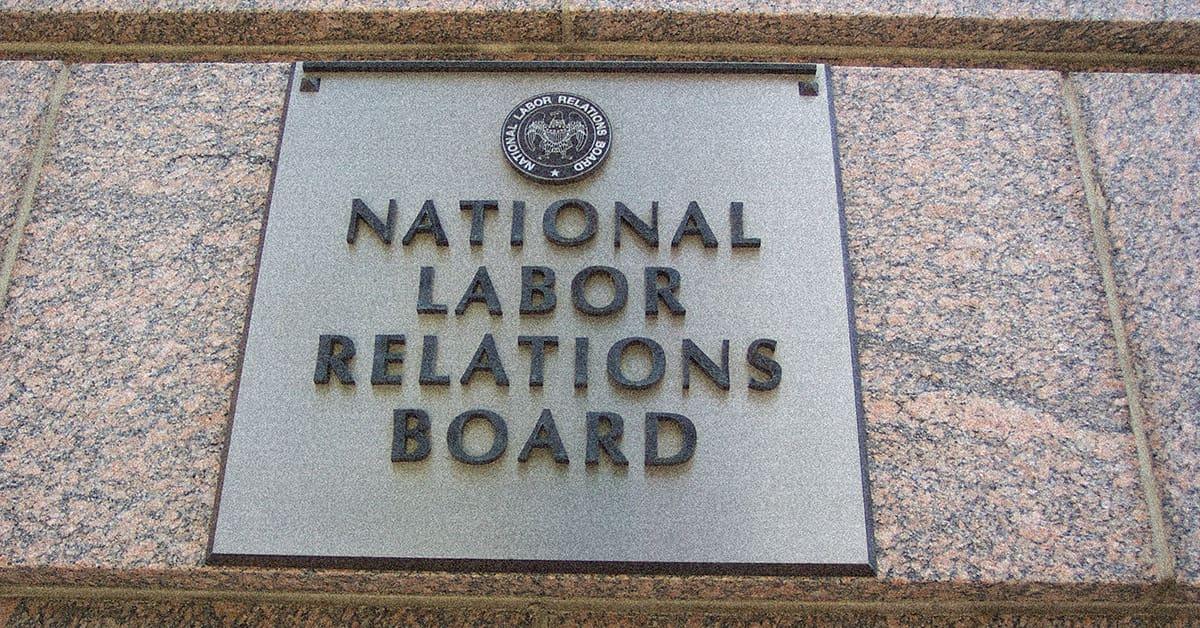
It is tempting, with the midterms a few weeks out, to read the recent upheaval in federal labor and employment law as something the next election could swing back. Steve Kruzel, a partner in Quarles’ labor and employment practice group, argues in a Q&A with CCI that the ground has shifted in a more lasting way over the past two years.
Over roughly 24 months, three decisions have shifted the ground under federal labor and employment regulation more than any comparable stretch in modern memory. In Loper Bright Enterprises v. Raimondo (June 2024), the Supreme Court ended four decades of Chevron deference, returning statutory interpretation to the courts. In Trump v. Slaughter (June 2026), the court overruled Humphrey’s Executor and gave the president at-will removal power over most independent agency heads, including those at the National Labor Relations Board (NLRB) and Equal Employment Opportunity Commission (EEOC). And in July 2026, the D.C. Circuit’s Hospital Menonita de Guayama v. NLRB struck down the board’s longstanding successor bar as beyond statutory authority, a major post-Loper Bright casualties among established board doctrines.
With Election Day a few weeks out, there is an understandable temptation among compliance and legal leaders to treat all of this as a snapshot — a function of who sits in the White House and which party controls the agencies — rather than a structural shift. That is a risky notion, Steve Kruzel, a partner in Quarles’ labor & employment practice group, told CCI in a written Q&A.
“Loper Bright and Slaughter are judicial and constitutional holdings, and it’s difficult to imagine they will be quickly overturned in the current environment,” Kruzel said. Enforcement priorities will swing with each administration — faster now, he noted, since Slaughter stripped away the for-cause removal protections that gave agencies like the NLRB and EEOC some insulation from administration-to-administration turnover — but the loss of agency deference and the exposure of board-created doctrines will persist no matter which party gains seats in November.
What that means in practice, Kruzel said, is that compliance programs built around the assumption that federal rules will stay put should be re-examined: “Corporate compliance programs can no longer treat a federal rule as settled simply because it exists on the books.”
CCI: Loper Bright, Trump v. Slaughter and the D.C. Circuit’s successor bar ruling are typically discussed as separate developments, but taken together, what direction do they set for federal labor and employment regulation over the next several years, and does the combined picture change the fundamental posture a corporate compliance program should adopt?
Steve Kruzel: These three developments converge on a single new reality: Federal agencies now have less interpretive authority, less leadership insulation and less doctrinal durability than at probably any other point in modern labor and employment law. Loper Bright lets courts second-guess agency statutory interpretations, Slaughter lets presidents replace agency leadership potentially overnight, and the D.C. Circuit’s successor bar ruling shows that board-created doctrines built on policy rationale rather than statutory text may not survive independent judicial review. Corporate compliance programs can no longer treat a federal rule as settled simply because it exists on the books — there must be continuous monitoring, scenario planning and a sharper focus on underlying statutory text rather than agency guidance and interpretation.
CCI: On the successor bar specifically, the D.C. Circuit’s decision binds within that circuit, but the NLRB has not abandoned the doctrine and can continue applying it in other regions. How should a company acquiring a unionized workforce weigh the risk-reward of challenging incumbent recognition vs. following the traditional path?
SK: The D.C. Circuit’s Hospital Menonita de Guayama decision is an opening, not a green light — it binds only in that circuit, and the board has not abandoned the doctrine, so companies may still face it elsewhere. That said, any reviewable board order can be appealed to the D.C. Circuit regardless of where the case arose, which meaningfully broadens the ruling’s practical reach for employers with strong, objective evidence that an incumbent union lacks majority support. Acting without that evidence still carries refusal-to-bargain exposure and risks upending the labor relationship a buyer typically needs on Day One. Companies seeking to challenge a union’s lack of majority support should build the evidentiary record during transaction diligence, retain the optionality and make the recognition-vs.-challenge call based on actual facts rather than a blanket assumption in either direction.
CCI: With Chevron deference gone, which categories of existing labor and employment regulations look most exposed to challenge, and which are more insulated because they rest on clear statutory text, decades of appellate case law or a Skidmore-style persuasive footing?
SK: The most exposed rules are those built on agency gap-filling rather than clear statutory text — for example, the Department of Labor’s Fair Labor Standards Act salary-threshold increases, NLRB board-created doctrines like the successor bar and joint-employer standards and the EEOC’s more expansive Pregnant Workers Fairness Act interpretations all fit that description. More insulated are the foundational antidiscrimination frameworks under Title VII, the Americans with Disabilities Act (ADA) and the Age Discrimination in Employment Act (ADEA), where explicit statutory text, decades of independent case law and repeated congressional amendment provide footing that does not depend on agency deference. Rules that can claim Skidmore weight — longstanding, contemporaneous with the statute and consistently applied — will fare far better than recent policy reversals or agency expansions into contested territory. The practical line is between regulations that interpret clear text and those that create obligations the statute does not specify.
CCI: Compliance teams have long treated subregulatory materials — DOL opinion letters, EEOC guidance, NLRB general counsel memoranda, agency enforcement manuals — as, if not technically binding, an unmistakable indication of regulator sentiment. What weight should those documents carry now, and how do you counsel clients who built policies around guidance whose staying power is uncertain?
SK: Those materials still matter, but their role has shifted from quasi-roadmap to informed advocacy a court may or may not find persuasive. Under Skidmore, weight turns on the thoroughness of the agency’s reasoning and its consistency over time, so recently issued or politically motivated guidance carries far less weight than it did previously. For clients who built policies around specific guidance, the advice is not to dismantle overnight but to stress-test each policy against the statute’s actual text and existing appellate precedent. If the policy stands independently, you are in a stronger position; if it rests entirely on agency guidance (guidance that is not founded in the statute), you should start working on a contingency plan.
CCI: Trump v. Slaughter eliminates the for-cause removal protections that gave agencies like the NLRB and EEOC a degree of insulation from administration-to-administration policy swings. How much faster can we realistically expect doctrine and enforcement priorities to shift now, and what does a compliance program that can absorb that pace of change actually look like? Midterm elections are coming up, but even if Democrats gain seats, would anything change in this arena?
SK: Doctrine and enforcement priorities at the NLRB and EEOC can now shift materially within months of a new administration, not the one- to two-year lag that staggered terms once imposed. Slaughter has the ability to turn agencies into tools directly responsive to presidential direction. A compliance program that can absorb that pace needs real-time monitoring of personnel and enforcement signals, policies flexible enough to adjust without full rewrites and pre-built decision trees for foreseeable regulatory pivots. As for the midterms, even if Democrats gain seats, Loper Bright and Slaughter are judicial and constitutional holdings, and it’s difficult to imagine they will be quickly overturned in the current environment.

The EU Is Making Forced Labor a Trade Compliance Problem, Not Just an ESG Issue
Most forced labor compliance frameworks ask companies to publish statements and describe their policies. The EU's new forced labor regulation operates differently — it gives authorities the power to block imports and pull products from shelves if forced labor is found anywhere in the supply
Read moreDetailsCCI: As federal doctrine becomes less stable and less deferential to agencies, several states have moved more aggressively on wage-hour, noncompete, pay transparency and organizing rules. For multistate employers, how is the regulatory center of gravity actually shifting, and does the compliance function need to be reorganized around that shift?
SK: For multistate employers, the governing rules increasingly depend on where employees sit rather than what the federal agency says, and the variation is substantial enough that a single national policy rarely satisfies the most restrictive jurisdictions without over-compliance elsewhere. The compliance function needs to reorganize around state-by-state legal mapping, jurisdiction-specific policy carveouts and real-time legislative monitoring — these are operational necessities now, not aspirational extras. The federal floor is getting lower and less certain while the state ceilings are getting higher and more diverse, and effectively managing that spread is critical.
CCI: In a period when established doctrines can be revisited on relatively short notice, what should compliance and in-house legal teams be doing at the ground level to keep options open for later challenges or defenses?
SK: Build and maintain a strong compliance documentary record — the legal basis for every material compliance decision, the guidance relied upon and the business rationale supporting the chosen approach. When doctrines can be revisited on short notice, the companies with the best litigation posture are those that can show they acted reasonably based on the law as it stood and preserved the ability to adjust. Conduct proactive statutory-text audits of your most consequential compliance obligations to identify which rest on firm statutory ground and which depend on agency interpretation that may not survive independent judicial review. Where the law is genuinely unsettled, documenting that you identified the ambiguity, sought counsel and made a reasoned judgment is a far stronger position than defaulting to whatever the agency last said.
CCI: Zooming out to the compliance function itself, given this environment, what changes would you recommend in how compliance teams are staffed, how they engage with outside counsel, how they monitor developments or how they report legal-regulatory uncertainty up to the C-suite and the board?
SK: Build your compliance team for statutory-text fluency, not just regulatory tracking. Compliance teams need people who can read statutory text and case law and identify where agency positions lack firm statutory footing. Shift outside counsel from reactive to anticipatory; retain firms for regular horizon-scanning briefings. Rebuild your monitoring function around primary sources — court decisions, agency personnel changes, Federal Register filings — rather than secondary summaries that trail such developments. And change how you report up: The C-suite and the board need risk ranges and scenario analyses, not binary “we are compliant/we are not” assessments, because the honest answer on many questions right now is that the legal landscape is in motion and the company needs a strategy built for multiple plausible outcomes.