No Result
View All Result
SUBSCRIBE | NO FEES, NO PAYWALLS
MANAGE MY SUBSCRIPTION
NEWSLETTER
Corporate Compliance Insights
  • About
    • About CCI
    • Writing for CCI
    • NEW: CCI Press – Book Publishing
    • Advertise With Us
  • Explore Topics
    • See All Articles
    • Compliance
    • Ethics
    • Risk
    • FCPA
    • Governance
    • Fraud
    • Internal Audit
    • HR Compliance
    • Cybersecurity
    • Data Privacy
    • Financial Services
    • Well-Being at Work
    • Leadership and Career
    • Opinion
  • Vendor News
  • Downloads
    • Download Whitepapers & Reports
    • Download eBooks
  • Books
    • CCI Press
    • New: Bribery Beyond Borders: The Story of the Foreign Corrupt Practices Act by Severin Wirz
    • CCI Press & Compliance Bookshelf
    • The Seven Elements Book Club
  • Podcasts
    • Great Women in Compliance
    • Unless: The Podcast (Hemma Lomax)
  • Research
  • Webinars
  • Events
  • Subscribe
Jump to a Section
  • At the Office
    • Ethics
    • HR Compliance
    • Leadership & Career
    • Well-Being at Work
  • Compliance & Risk
    • Compliance
    • FCPA
    • Fraud
    • Risk
  • Finserv & Audit
    • Financial Services
    • Internal Audit
  • Governance
    • ESG
    • Getting Governance Right
  • Infosec
    • Cybersecurity
    • Data Privacy
  • Opinion
    • Adam Balfour
    • Jim DeLoach
    • Mary Shirley
    • Yan Tougas
No Result
View All Result
Corporate Compliance Insights
Home Cybersecurity

Why ‘Use MFA’ Inspires Fatigue but ‘MFA Blocked This Breach Last Month’ Inspires Cooperation

Employees are far more likely to comply when they understand the reasoning behind requirements like multifactor authentication

by Stephen Ross
January 26, 2026
in Cybersecurity
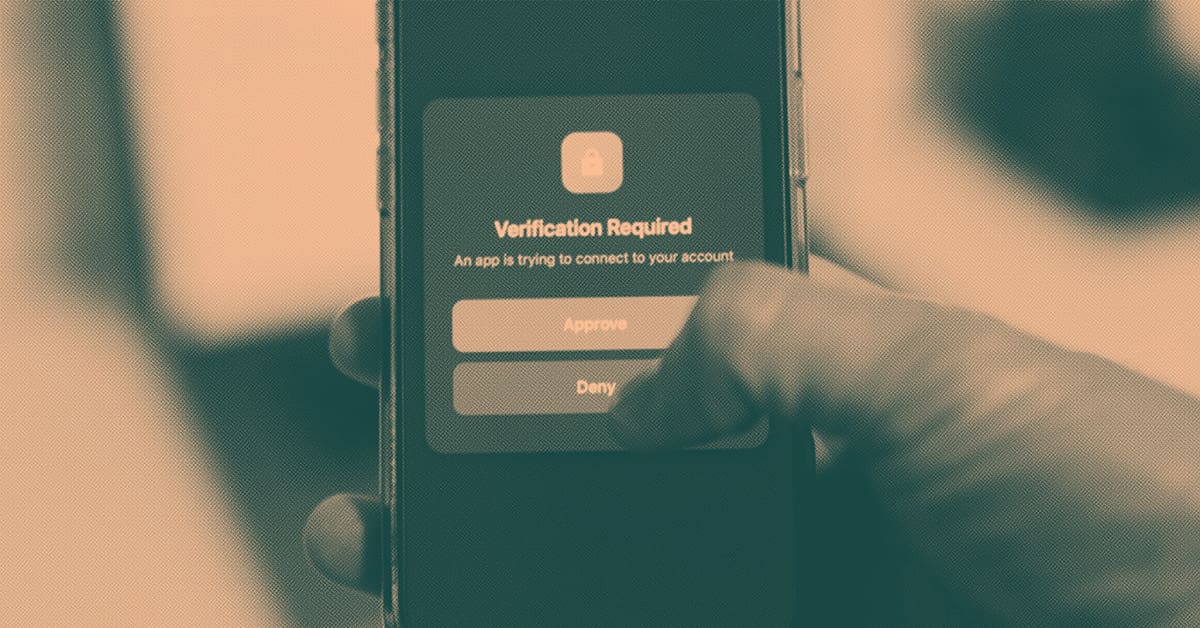
multifactor authentication on phone

Companies are investing heavily in cybersecurity protection, weaving it into their business models as a core function rather than a peripheral obligation. But this leaves employees facing a relentless barrage of notifications that first spark paranoia, then numb them into desensitization until they stop paying attention altogether. Stephen Ross of consultancy S-RM examines cybersecurity fatigue and explores whether organizations can address it without weakening defenses.

Cybercrime continues to surge. The FBI recorded more than 859,000 complaints in 2024, with reported losses exceeding $16 billion — a 33% jump from the previous year.

Many organizations have responded by becoming more vigilant and investing heavily in protection, no longer treating it as just another box to check for regulators. Cybersecurity is now woven into their business models, a core function rather than a peripheral obligation.

While companies are definitely on the right track, it leaves employees facing a relentless barrage of notifications: warnings that their files may not be safe, alerts about attempted breaches, reminders to reset passwords and a steady drip of news stories about major attacks.

The result is cybersecurity fatigue, an emerging phenomenon where alerts first spark paranoia, then numb employees into desensitization until they stop paying attention altogether. A phishing notification becomes just another pop-up to dismiss. A training module becomes something to click through mindlessly. In some cases, on a personal level, apathy can even harden into nihilism: my data’s already out there, so who cares?

Is this simply the cost of doing business in the digital age, a burden organizations have to bear? Or is there a way to address cybersecurity fatigue without weakening defenses?

Promise, price and limits of advanced defenses

Security information and event management systems (SIEMs) and their more advanced successors, SOAR platforms (security orchestration, automation and response), were built to tame the flood of alerts by streamlining and automating the way organizations respond. When implemented well, they can separate signal from noise, consolidating disparate warnings into a digestible feed and even triggering routine responses, such as locking a suspicious account or quarantining a compromised device. For companies willing to make the investment, these tools can be transformative, sparing analysts — and employees further downstream — from drowning in false alarms. But the price tag keeps them out of reach for many small and mid-sized firms.

Endpoint detection and response systems (EDRs) are also growing more sophisticated. Many now incorporate machine learning to recognize suspicious behavior, and some can flag activity that would have slipped past older defenses. These advances make them invaluable day-to-day, yet most vendors are reluctant to let their systems automatically suppress potential false positives because if a flagged threat turns out to be real, the liability is immense. Agent-based AI, the next frontier, holds out the promise of doing just that: autonomously sifting signal from noise. For now, though, it remains largely theoretical.

sharks digital risk concept
Cybersecurity

2026 Operational Guide to Cybersecurity, AI Governance & Emerging Risks

by Rebeca Vergara Gaona
January 16, 2026

AI has shifted from an emerging fintech area to a clear operational risk linked to cybersecurity and disclosures

Read moreDetails

Practical stopgaps

For organizations that lack the budget for advanced tooling, there are still pragmatic ways to keep fatigue in check. The first is tuning their alerts. Calibrating a system so that it distinguishes a genuine threat from background noise is not just a matter of flipping a switch; it takes experience. Many companies bring in managed service providers (MSSPs) who have seen hundreds of systems and can help set thresholds that balance sensitivity with sanity. A properly tuned system may still generate a heavy stream of alerts, but it spares teams from the most obvious false positives.

Another stopgap is outsourcing security operations center (SOC) coverage. Around-the-clock monitoring is essential, but few firms can afford to keep a full roster of analysts on duty 24 hours a day, and those that try risk burning out their own teams. Again, partnering with providers offers a practical alternative: some firms hand off the midnight shift while keeping daytime monitoring in-house, while others outsource the entire function.

Finally, organizations can reduce strain by prioritizing their “crown jewels.” Not every system or data set is equally valuable, and not every alert needs to be treated with the same urgency. By identifying the assets that matter most — financial databases, customer records, proprietary designs — companies can concentrate their limited resources where the risk is greatest. An alert on a testing server might not warrant an all-hands investigation; a similar alert on the payment system almost certainly does.

Building a culture of defense

Addressing fatigue requires a cultural shift inside organizations, one that treats security not as an obligation imposed from above but as part of the daily fabric of work.

That starts with rethinking training. Too often, security awareness programs are treated as twice-a-year compliance hurdles. Employees click through dull slide decks, absorb little and resent the time lost. To stick, training must be interactive, engaging and clearly tied to the real-world threats employees face

Organizations could start by gamifying the process. Imagine departments competing for top scores on phishing simulations, with the winners earning recognition or even a pizza lunch. They could also run “red team” exercises to stage mock attacks, showing employees how a real phishing email or malicious attachment might appear in their inbox. These tactics may sound small and even playful, but they have the power to shift security from an abstract burden into a lived, memorable experience.

Equally important is explaining the why. Employees are far more likely to comply with requirements like multifactor authentication (MFA) or VPN use when they understand the reasoning behind them. If workers know that MFA would have stopped a real-world ransomware attack or that a VPN could have blocked an attempted intrusion on an unsecured Wi-Fi network, compliance feels less like arbitrary punishment and more like participation in collective defense. A training slide that simply says “use MFA” inspires fatigue; one that shows how MFA would have blocked a breach last month inspires cooperation.

The modern workplace can no longer be divided between “soldiers” in security and “civilians” in other roles. Every employee is part of the supply line, whether they are an engineer safeguarding code repositories, a marketing associate recognizing a phishing email, or a customer service representative securing sensitive data. Defense should be collective — but not fatiguing.


Tags: Cyber RiskData Breach
Previous Post

Decoding Duty of Care in the Agentic AI Era

Stephen Ross

Stephen Ross

Stephen Ross is director of cybersecurity at corporate intelligence firm S-RM.
Related Posts

AU10TIX 2026 Fraud Signals Report

2026 Fraud Outlook Report

by Corporate Compliance Insights
January 16, 2026

Fraud detection in the AI era Special edition report AU10TIX Global Identity Fraud Report Q4 2025 What's in this report...

sharks digital risk concept

2026 Operational Guide to Cybersecurity, AI Governance & Emerging Risks

by Rebeca Vergara Gaona
January 16, 2026

AI has shifted from an emerging fintech area to a clear operational risk linked to cybersecurity and disclosures

hacker penetrating system

How to Reassure Stakeholders When Facts Are Still Unknown During Cyber Incidents

by Jena Valdetero, Wouter van Wengen, Jonah Pitkowsky, Lily Williams and Jamie Singer
December 22, 2025

Scenario planning and coordination between legal and communications experts allows organizations to build adaptable messaging

news roundup bw

Boards Seeking AI Specialists

by Staff and Wire Reports
November 13, 2025

73% of CISOs report significant cyber incident in past year; AI implementation on par with economy on list of business...

reminder to speak up
No Result
View All Result

Privacy Policy | AI Policy

Founded in 2010, CCI is the web’s premier global independent news source for compliance, ethics, risk and information security. 

Got a news tip? Get in touch. Want a weekly round-up in your inbox? Sign up for free. No subscription fees, no paywalls. 

Follow Us

Browse Topics:

  • CCI Press
  • Compliance
  • Compliance Podcasts
  • Cybersecurity
  • Data Privacy
  • eBooks Published by CCI
  • Ethics
  • FCPA
  • Featured
  • Financial Services
  • Fraud
  • Governance
  • GRC Vendor News
  • HR Compliance
  • Internal Audit
  • Leadership and Career
  • On Demand Webinars
  • Opinion
  • Research
  • Resource Library
  • Risk
  • Uncategorized
  • Videos
  • Webinars
  • Well-Being
  • Whitepapers

© 2026 Corporate Compliance Insights

Welcome to CCI. This site uses cookies. Please click OK to accept. Privacy Policy
Cookie settingsACCEPT
Manage consent

Privacy Overview

This website uses cookies to improve your experience while you navigate through the website. Out of these, the cookies that are categorized as necessary are stored on your browser as they are essential for the working of basic functionalities of the website. We also use third-party cookies that help us analyze and understand how you use this website. These cookies will be stored in your browser only with your consent. You also have the option to opt-out of these cookies. But opting out of some of these cookies may affect your browsing experience.
Necessary
Always Enabled
Necessary cookies are absolutely essential for the website to function properly. These cookies ensure basic functionalities and security features of the website, anonymously.
CookieDurationDescription
cookielawinfo-checbox-analytics11 monthsThis cookie is set by GDPR Cookie Consent plugin. The cookie is used to store the user consent for the cookies in the category "Analytics".
cookielawinfo-checbox-functional11 monthsThe cookie is set by GDPR cookie consent to record the user consent for the cookies in the category "Functional".
cookielawinfo-checbox-others11 monthsThis cookie is set by GDPR Cookie Consent plugin. The cookie is used to store the user consent for the cookies in the category "Other.
cookielawinfo-checkbox-necessary11 monthsThis cookie is set by GDPR Cookie Consent plugin. The cookies is used to store the user consent for the cookies in the category "Necessary".
cookielawinfo-checkbox-performance11 monthsThis cookie is set by GDPR Cookie Consent plugin. The cookie is used to store the user consent for the cookies in the category "Performance".
viewed_cookie_policy11 monthsThe cookie is set by the GDPR Cookie Consent plugin and is used to store whether or not user has consented to the use of cookies. It does not store any personal data.
Functional
Functional cookies help to perform certain functionalities like sharing the content of the website on social media platforms, collect feedbacks, and other third-party features.
Performance
Performance cookies are used to understand and analyze the key performance indexes of the website which helps in delivering a better user experience for the visitors.
Analytics
Analytical cookies are used to understand how visitors interact with the website. These cookies help provide information on metrics the number of visitors, bounce rate, traffic source, etc.
Advertisement
Advertisement cookies are used to provide visitors with relevant ads and marketing campaigns. These cookies track visitors across websites and collect information to provide customized ads.
Others
Other uncategorized cookies are those that are being analyzed and have not been classified into a category as yet.
SAVE & ACCEPT
No Result
View All Result
  • About
    • About CCI
    • Writing for CCI
    • NEW: CCI Press – Book Publishing
    • Advertise With Us
  • Explore Topics
    • See All Articles
    • Compliance
    • Ethics
    • Risk
    • FCPA
    • Governance
    • Fraud
    • Internal Audit
    • HR Compliance
    • Cybersecurity
    • Data Privacy
    • Financial Services
    • Well-Being at Work
    • Leadership and Career
    • Opinion
  • Vendor News
  • Downloads
    • Download Whitepapers & Reports
    • Download eBooks
  • Books
    • CCI Press
    • New: Bribery Beyond Borders: The Story of the Foreign Corrupt Practices Act by Severin Wirz
    • CCI Press & Compliance Bookshelf
    • The Seven Elements Book Club
  • Podcasts
    • Great Women in Compliance
    • Unless: The Podcast (Hemma Lomax)
  • Research
  • Webinars
  • Events
  • Subscribe

© 2026 Corporate Compliance Insights