
Corruption moves faster than diligence teams. This is a structural challenge for institutions worldwide as financial engineering grows more sophisticated, business professor Marvin Starominski-Uehara writes. The case of Daniel Vorcaro and Banco Master in Brazil is a reminder that defending people with direct ties to allegations of corruption is a tough check to cash.
In November 2025, Brazil’s Federal Police arrested Daniel Vorcaro, founder and one-time president of Banco Master at São Paulo’s Guarulhos airport as he tried to board a private jet to Dubai. He was released and arrested again in March 2026. The investigation that followed claims to have exposed one of Brazil’s largest financial frauds.
It comprises $8.6 billion in fabricated carbon credits from public Amazon lands and $2.2 billion in diverted funds from Brazil’s State Bank (BRB) through phantom credit portfolios, according to reports. It has also drawn in Brazil’s Central Bank (BC), Supreme Court justices, the prosecutor-general and the leaders of both houses of Congress of the South American country.
For compliance and anti-corruption professionals, the question is less about the political fallout and more about what a proper due diligence review would have turned up. The warning signs were visible, showing why seeing them is not enough and what integrity programs should do differently. Six red flags stood out before the collapse.
Red flags
Returns far above the market
Banco Master promised returns far above the Interbank Deposit Certificate (CDI), in some cases reaching 140%, well beyond what the rest of the market paid, Forbes reported. A return that far above peers implies either outsized risk or an undisclosed source of profit and diligence should have asked which.
Assets don’t withstand basic questions
Through Alliance Participações, a company controlled by Vorcaro’s father and sister, the family acquired rights to carbon credits from Fazenda Floresta Amazônica in Apuí, according to a report by Folha, a São Paulo news organization. The 143,900-hectare territory belonged to the federal government and had been set aside for agrarian reform. The report said that between 2020 and 2024, two shell companies, Global Carbon and Golden Green, inflated their valuations to $8.6 billion based entirely on theoretical carbon stock estimates from a São Paulo State University report using methods “never before applied in the market.” Not a single credit was ever sold, Folha reported.
Due diligence analysts should have asked who held legal title to the land and who was behind the valuation method. Both questions required asking about the asset itself and not about the paperwork around it.
Professional stamps standing for verification
By 2020, Global Carbon and Golden Green existed as shell companies with audited financials showing valuations in the billions of reais, even though they had conducted no legitimate business, Folha reported. When Alliance Participações formally joined the project in 2023, the Vorcaro family positioned itself behind corporate veils and intermediaries. According to the report, the inflated value then flowed into Banco Master’s books through investment funds managed by REAG Investimentos, which BC liquidated in January 2026. The funds created an illusion of solvency that let the bank sell certificates of deposit to investors, as reported by the press and investigators. Meanwhile, BRB bought billions of US dollars in non-existent credit portfolios.
Each calculated layer put more distance between the fraud’s origins and its financial payoff. Each carried a professional stamp, such as an auditor’s signature or a fund manager’s name that made the value look independently confirmed. But an audit opinion in this case was not asset verification, and a fund structure was not transparency into what the fund held.
A fast-moving deal
BRB’s reported transactions of non-existent credit portfolios show what happens when a deal gains speed faster than its red flags can be resolved. BRB’s president, Paulo Henrique Bezerra Costa, made Banco Master portfolio purchases despite relevant inconsistencies, according to reports by UOL and Reuters. Bezerra Costa led BRB from 2019 until November 2025, when he was removed. He was arrested in April 2026, and the federal police allege he received about $25 million in bribes, which he denies, CNN Brazil reported.
Treating this case only as institutional negligence, malfeasance or one allegedly corrupt executive misses a deeper problem. Prosecutors and regulators will read audits with the benefit of hindsight, so a known warning sign not resolved creates a perilous position for an auditor.
On Theranos & Holmes, We Can See Everything — the Fraud Is Still Clear
Nathan Fielder’s new documentary wants you to wonder whether Elizabeth Holmes merely thinks differently — too literal a mind to have knowingly lied. CCI editorial director Jennifer L. Gaskin isn’t buying it.
Read moreDetailsProximity to officials sold as credibility
Through reports and authorities’ allegations, Vorcaro had sophisticated ways of hiding the truth and designed them to win institutional legitimacy. Counterparties outside his inner circle, regulators included, presumably could not see through these defenses in early encounters, and so probably trusted him and acted in good faith.
This is the dynamic compliance teams should expect and look out for — the illicit use of institutional association sometimes called reputation laundering. In Banco Master’s case, a sponsored legal forum in London appears to fit the pattern. Justices Alexandre de Moraes and Dias Toffoli, Prosecutor-General Paulo Gonet and federal police Director-General Andrei Rodrigues were among the participants at the April 2024 forum that coincided with a $640,000 whisky-tasting event organized by Vorcaro, Poder360 reported.
Trusted intermediaries amplified the effect. Vorcaro gained access to President Luiz Inácio Lula da Silva through former finance minister Guido Mantega, entering the presidential palace for a meeting that included BC president-designate Gabriel Galípolo, according to UOL. Such introductions carry implicit endorsement. Whether Mantega understood Banco Master’s true condition remains unclear, but his involvement illustrates how allegedly corrupt actors can use social capital to get into decision-making circles and manufacture credibility. Messages also show lawyer Ciro Soares, a former Banco Master counsel, relaying contacts between Gonet and Vorcaro, including calls in March 2025, CNN Brazil reported. Gonet denies any friendship with Vorcaro.
For compliance officers, the lesson is that proximity to officials is what a bad actor sells, so it should be taken as a risk indicator, not a credential.
A banking license treated as a safety net
Banco Master was licensed, but holding a license did not shield its investors and counterparties who treated it as a safety net.
Eighteen pension funds had invested roughly $350 million in the Banco Master’s securities not covered by deposit insurance, according to UOL and Estadão. Mastercard, which was enforcing guarantees on debts within the Banco Master conglomerate, unexpectedly ended up holding stakes in BRB and the e-commerce firm Westwing, while Will Bank’s operations were suspended after Mastercard stopped accepting Will Bank cards to curb losses, and BC liquidated the bank, Folha and Tecnoblog reported. While questions had lingered about the central bank’s handling of Banco Master, in March 2026, Brazil’s Federal Court of Accounts concluded that there were no “improprieties, omissions or negligence” by the BC in managing the extrajudicial liquidation of Banco Master, according to TV Globo and G1.
The practical lesson is that regulatory status is an input to diligence, not a substitute for it. Companies that wait for regulators to act risk learning about a problem when everyone else does; that is, after the losses have landed.
Where corporate exposure lives
The federal police report documents a recurring pattern in which Vorcaro cultivated relationships across Brazil’s judiciary, executive and legislature. It reports several meetings between Vorcaro and Moraes and a contract of about $24 million with Moraes’ wife’s law firm, G1 reported. Police are also examining payments to the son of another justice, Nunes Marques, from a consultancy that received almost $1.3 million from Banco Master, according to reports. Justice Toffoli drew criticism and was the subject of a police report for alleged involvement with Vorcaro, reports said.
In the legislature, the Senate president called Vorcaro his “brother for life” on the day of his re-election, and the chamber president asked Vorcaro for guidance on a land purchase and carnival box seats, Poder360 and Globo’s Valor publication reported. Senator and recently defeated Brazilian presidential candidate Flávio Bolsonaro asked Vorcaro for about $25 million for a film about his father, according to Aos Fatos. All those mentioned in these reports deny wrongdoing.
Whatever the courts conclude about these officials, the channels are familiar to anti-corruption professionals: retaining the firms of officials’ relatives, paid travel and hospitality, sponsored events attended by officials and former officials acting as door-openers. Anti-corruption laws target exactly these channels because each can amount to an improper benefit or undue advantage. If a company’s partners or sponsored events show these features, the exposure does not stop at them.
What this means for diligence and compliance
Brazil’s Clean Company Act imposes strict civil and administrative liability on companies for acts against the public administration, so an effective integrity program is among the most important mitigating factors. Under the FCPA, “knowledge” can be established through high probability of obvious red flags.
Each red flag maps to a diligence step. Integrity officers should test whether returns are explainable, verify title and valuation of the underlying asset, look through audits and fund structures to what is actually held. Do not let deal speed outrun open questions, and treat access to officials as a risk indicator while treating regulatory status as an input, not a conclusion.
Vorcaro seems to have needed counterparties to believe his initial presentations. Corrupt actors will always know more about their schemes than diligence teams can discover in early encounters, so integrity programs should be designed around that asymmetry.

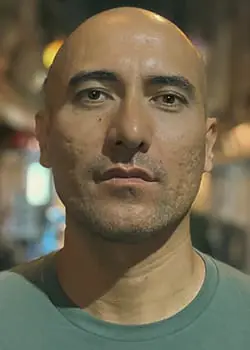 Marvin Starominski-Uehara, PhD, is an adjunct assistant professor of international business studies at Temple University Japan.