No Result
View All Result
SUBSCRIBE | NO FEES, NO PAYWALLS
MANAGE MY SUBSCRIPTION
NEWSLETTER
Corporate Compliance Insights
  • About
    • About CCI
    • Writing for CCI
    • NEW: CCI Press – Book Publishing
    • Advertise With Us
  • Explore Topics
    • See All Articles
    • Compliance
    • Ethics
    • Risk
    • Artificial Intelligence (AI)
    • FCPA
    • Governance
    • Fraud
    • Internal Audit
    • HR Compliance
    • Cybersecurity
    • Data Privacy
    • Financial Services
    • Well-Being at Work
    • Leadership and Career
    • Opinion
  • Vendor News
  • Downloads
    • Download Whitepapers & Reports
    • Download eBooks
  • Research
  • Books
    • CCI Press
    • New: Bribery Beyond Borders: The Story of the Foreign Corrupt Practices Act by Severin Wirz
    • CCI Press & Compliance Bookshelf
    • The Seven Elements Book Club
  • Podcasts
  • Webinars
  • Videos
  • Subscribe
Jump to a Section
  • At the Office
    • Ethics
    • HR Compliance
    • Leadership & Career
    • Well-Being at Work
  • Compliance & Risk
    • Compliance
    • FCPA
    • Fraud
    • Risk
  • Finserv & Audit
    • Financial Services
    • Internal Audit
  • Governance
    • ESG
    • Getting Governance Right
  • Infosec
    • Cybersecurity
    • Data Privacy
  • Opinion
    • Adam Balfour
    • Jim DeLoach
    • Mary Shirley
    • Yan Tougas
No Result
View All Result
Corporate Compliance Insights
Home Compliance

Between Scylla and Charybdis: Chinese Banks Navigate PRC Secrecy Laws and US Subpoenas

Hard Decisions Ahead for Chinese Banks Under U.S. Jurisdiction

by Wendy Wysong
July 26, 2019
in Compliance, Featured
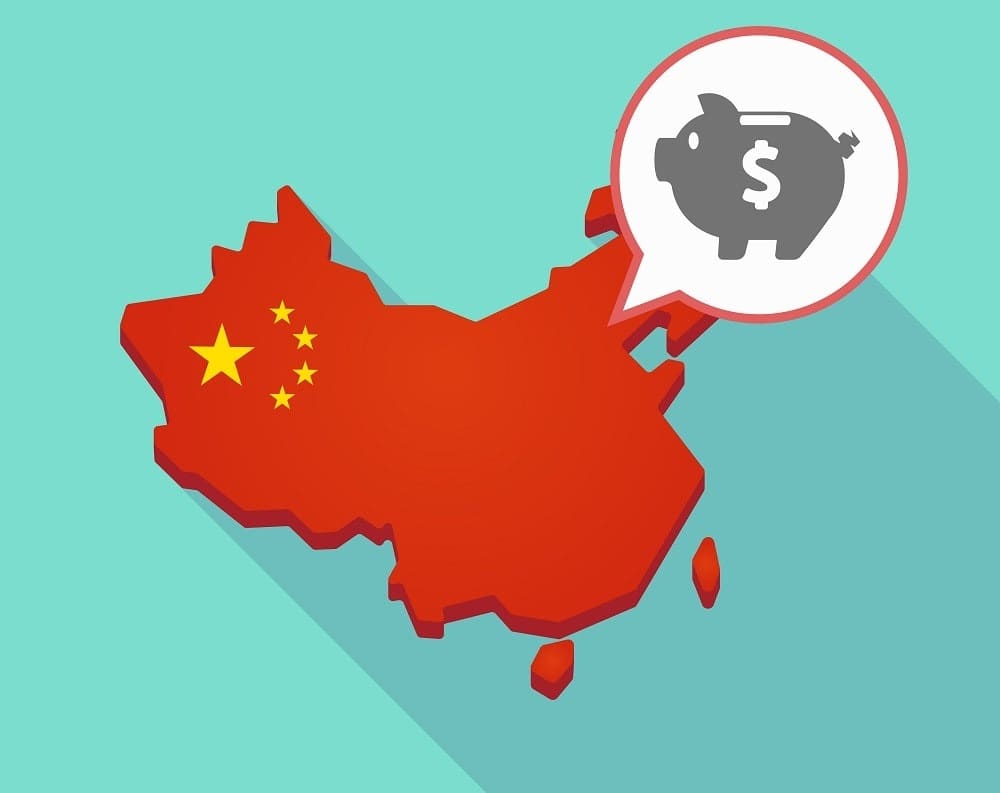
illustration of china with piggy bank in speech bubble

Wendy Wysong and team discuss a recent U.S. court ruling that reinforces the well-understood rule that non-U.S. banks with branches or correspondent accounts in the U.S. must comply with U.S. government subpoenas regardless of their own country’s laws. Under the USA PATRIOT Act, noncompliance risks access to the U.S. financial system.

with co-authors Ali Burney and Nick Turner

Background

On March 18, 2019, the U.S. District Court for the District of Columbia unsealed a memorandum opinion ordering three Chinese banks to comply with law enforcement subpoenas issued in part under the USA PATRIOT Act. Two months later, on May 15, 2019, the Court unsealed a separate memorandum opinion and order holding the Chinese banks in contempt and fining them $50,000 per day for failing to comply with a March 28, 2019 deadline for responding to the subpoenas. The Court’s decision is currently stayed, pending appeal to the D.C. Circuit Court of Appeals.

According to the Court’s March opinion, in December 2017, two of the Chinese banks (referred to as “Bank One” and “Bank Two”) received grand jury subpoenas, while the third (referred to as “Bank Three”) received an administrative subpoena. The subpoenas sought records relating to a Hong Kong-based company suspected of acting as a front company for North Korea (the “HK Customer”).

Following the issuance of the subpoenas, between January and August 2018, the Chinese banks and the U.S. Department of Justice (DOJ) consulted with the PRC government and were informed that responses to the subpoenas could only be made through the process established under a Mutual Legal Assistance Agreement (MLAA). After the MLAA process failed to produce the records sought by the DOJ, the U.S. government filed a motion seeking to compel the Chinese banks to comply, notwithstanding PRC law.

In reviewing the government’s motion, the Court considered the following three issues: the Court’s jurisdiction over the banks, the DOJ’s authority to issue the administrative subpoena to Bank Three and whether enforcing the subpoenas would be reasonable under the principle of international comity. Key points from the Court’s comprehensive opinion include:

Jurisdiction: The Court found that Bank One and Bank Two had expressly consented to jurisdiction when they opened branches in the United States. Moreover, Bank Three had sufficient contacts through its U.S.-based correspondent account to satisfy the traditional test for establishing a U.S. court’s jurisdiction.

DOJ Authority: In short, the Court held that the DOJ had not exceeded its authority, because information about the HK Customer’s activities outside the United States was directly relevant to the DOJ’s investigation.

Reasonableness: The Court found there was a bona fide conflict between U.S. and PRC laws, because the Chinese banks could face penalties in China for failing to utilize the MLAA process. However, the Court decided that the records sought by the DOJ were important to the investigation and that the information could only be obtained from China. The Court also held that the MLAA process was unlikely to produce the records sought by the DOJ. Finally, the Court held that the U.S. national interest in investigating the HK Customer outweighed the PRC’s interest in maintaining bank secrecy.

Potential Impact of Noncompliance

If the Chinese banks continue to refuse to comply with the subpoenas and the Court’s subsequent orders, the U.S. government could theoretically invoke the PATRIOT Act to prohibit or restrict the Chinese banks’ access to U.S.-based correspondent or payable-through accounts. The Court’s $50,000 daily penalty will also take effect unless overruled by the D.C. Court of Appeals.

Lessons for Other Non-U.S. Banks

Non-U.S. banks with correspondent accounts or branches in the United States are subject to information disclosure requirements pertaining to their non-U.S. activities. It is also clear that non-U.S. banks are also prohibited from processing transactions involving money laundering or U.S. sanctions violations through their U.S.-based correspondent accounts. Even when the target of an investigation is a customer, U.S. law requires the bank to cooperate in that investigation. Failure to comply with such requests can invite a range of measures designed to compel disclosure.

Some commentators and media have tried to frame the Court’s opinion in terms of ongoing U.S.-China trade tensions. A more sensible (and legally accurate) view is that the Court’s decision is a straightforward, albeit impactful, application of case law. The Chinese banks are not the first foreign banks to refuse to comply with U.S. government subpoenas and likely won’t be the last. It must also be noted that the investigation involving the HK Customer started well before the Trump administration.

This case further emphasizes that compliance with U.S. law enforcement subpoenas is not optional. The U.S. government will use the full extent of the law and its leverage over the U.S. financial system to investigate and prosecute matters of national security — especially sanctions. Does that mean that non-U.S. banks with U.S. branches and correspondent accounts are expected to breach their home laws? Not necessarily. The U.S. government routinely exchanges information with foreign governments through mutual legal assistance treaties and is (usually) open to compromise when a bank cooperates in good faith. In this case, the Court found the Chinese MLAA process inadequate to meet the U.S. government’s needs. Now it’s up to the Chinese banks or the PRC government to navigate toward a workable solution.


Tags: AMLBankingSanctions
Previous Post

An Interview with Elizabeth O’Keefe, Compliance Manager at KAYAK

Next Post

The Overwhelmed CCO

Wendy Wysong

Wendy Wysong

Wendy L. Wysong is a partner at Steptoe & Johnson. She served previously as a litigation partner with Clifford Chance, offering clients advice and representation on compliance and enforcement under the Foreign Corrupt Practices Act, the Arms Export Control Act, International Traffic in Arms Regulations, Export Administration Regulations, and OFAC Economic Sanctions. She was appointed by the State Department as the ITAR Special Compliance Official for Xe Services (formerly Blackwater) in 2010. Wendy combines her experience as a former federal prosecutor with the United States Attorney for the District of Columbia for 16 years with her regulatory background as the former Deputy Assistant Secretary for Export Enforcement at the Bureau of Industry and Security, U.S. Department of Commerce. She managed its enforcement program and was involved in the development and implementation of foreign policy through export controls across the administration, including the Departments of Justice, State, Treasury and Homeland Security, as well as the intelligence community. Wendy received her law degree in 1984 from the University of Virginia School of Law, where she was a member of the University of Virginia Law Review.
Related Posts

shipping containers

When Oversight Findings Lead to More Oversight: An OIG Report on China Exports

by Parisa Salehi
July 15, 2026

Six steps exporters should take to ready their due diligence, documentation and escalation for closer scrutiny

uk flag garland

The UK’s FCA Is Weighing Real-World Impact, Not Just Careful Wording

by Chloe-Jane Belton
July 14, 2026

With disclaimers carrying less weight and financial promotion risk moving to the fore, perimeter compliance is becoming a matter of...

shipping containers in port aerial view

Redesigning the Trade Compliance Operating Model for an Era of Structural Disruption

by Alyson Potenza, Emal Ehsan & Sydney Hurst
June 22, 2026

The combination of global volatility and overwhelming data presents a challenge multinationals must contend with

uae flag

The Day My Job Description Changed: Compliance & Personal Liability

by Amarjeet Singh
June 16, 2026

A UAE compliance officer explains what Federal Decree Law No. 10 of 2025 means in practice and why the profession...

Next Post
illustration of man in suit putting out flames using fire extinguisher

The Overwhelmed CCO

GGR sq
No Result
View All Result

Privacy Policy | AI Policy

Founded in 2010, CCI is the web’s premier global independent news source for compliance, ethics, risk and information security. 

Got a news tip? Get in touch. Want a weekly round-up in your inbox? Sign up for free. No subscription fees, no paywalls. 

Follow Us

Browse Topics:

  • CCI Press
  • Compliance
  • Compliance Podcasts
  • Cybersecurity
  • Data Privacy
  • eBooks Published by CCI
  • Ethics
  • FCPA
  • Featured
  • Financial Services
  • Fraud
  • Governance
  • GRC Vendor News
  • HR Compliance
  • Internal Audit
  • Leadership and Career
  • On Demand Webinars
  • Opinion
  • Research
  • Resource Library
  • Risk
  • Uncategorized
  • Videos
  • Webinars
  • Well-Being
  • Whitepapers

© 2026 Corporate Compliance Insights

No Result
View All Result
  • About
    • About CCI
    • Writing for CCI
    • NEW: CCI Press – Book Publishing
    • Advertise With Us
  • Explore Topics
    • See All Articles
    • Compliance
    • Ethics
    • Risk
    • Artificial Intelligence (AI)
    • FCPA
    • Governance
    • Fraud
    • Internal Audit
    • HR Compliance
    • Cybersecurity
    • Data Privacy
    • Financial Services
    • Well-Being at Work
    • Leadership and Career
    • Opinion
  • Vendor News
  • Downloads
    • Download Whitepapers & Reports
    • Download eBooks
  • Research
  • Books
    • CCI Press
    • New: Bribery Beyond Borders: The Story of the Foreign Corrupt Practices Act by Severin Wirz
    • CCI Press & Compliance Bookshelf
    • The Seven Elements Book Club
  • Podcasts
  • Webinars
  • Videos
  • Subscribe

© 2026 Corporate Compliance Insights