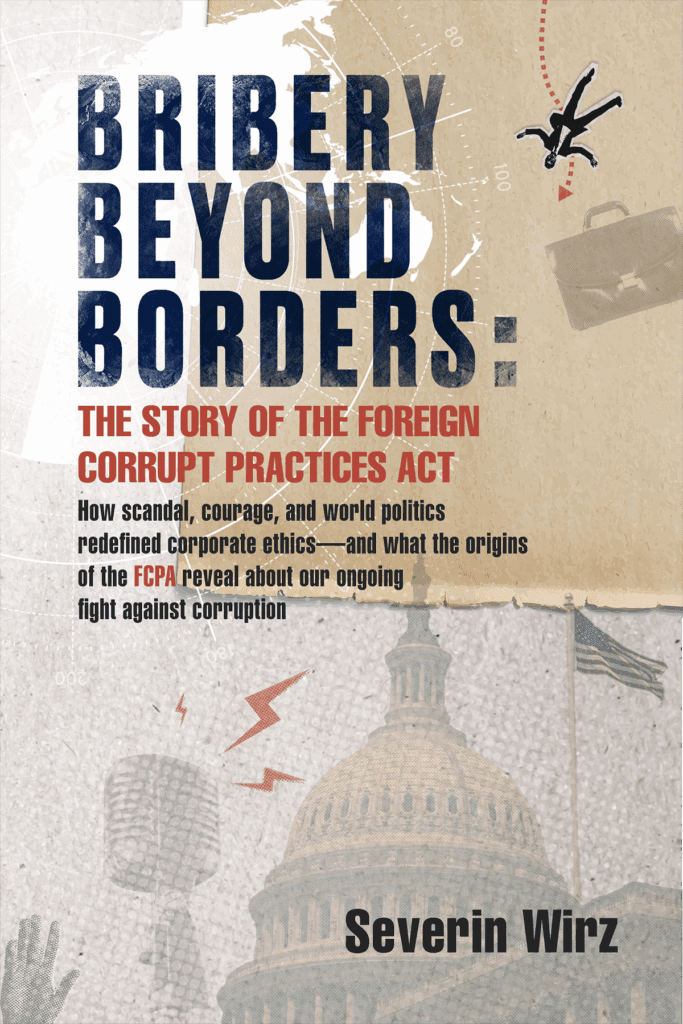
Bribery Beyond Borders: The Story of the Foreign Corrupt Practices Act by Severin Wirz

CCI Press Logo_blue_2025
CCI wide no tag_2025
BBB final front cover_101425

Bribery Beyond Borders

The Story of the Foreign Corrupt Practices Act

How scandal, courage, and world politics redefined corporate ethics—and what the origins of a 1977 law reveal about our ongoing fight against corruption today

By Severin Wirz | 2025

available_at_amazon_US_EN_logo_horizontal_RGB_CARROT
BBB final front cover_101425

Bribery Beyond Borders

The Story of the Foreign Corrupt Practices Act

How scandal, courage, and world politics redefined corporate ethics—and what the origins of a 1977 law reveal about our ongoing fight against corruption today

By Severin Wirz | 2025

Nearly half a century after its passage, the Foreign Corrupt Practices Act stands at a crossroads with its moral authority questioned and its global influence uncertain.

Bribery Beyond Borders tells the remarkable true story of how the United States became the first nation to criminalize corporate bribery outside its boundaries. Drawing on more than a decade of archival research and in-depth interviews with the journalists, lawmakers, and whistleblowers who made history, Severin Wirz plumbs the depths behind the world’s first global anticorruption law.

Amid the ongoing reshaping of the FCPA and with America’s own commitment to integrity under strain both at home and abroad, this highly detailed narrative reminds readers how an improbable coalition of idealists once turned scandal into statute—and how their vision still animates the global fight against corruption today.
Nearly half a century after its passage, the Foreign Corrupt Practices Act stands at a crossroads with its moral authority questioned and its global influence uncertain.

Bribery Beyond Borders tells the remarkable true story of how the United States became the first nation to criminalize corporate bribery outside its boundaries. Drawing on more than a decade of archival research and in-depth interviews with the journalists, lawmakers, and whistleblowers who made history, Severin Wirz plumbs the depths behind the world’s first global anticorruption law.

Amid the ongoing reshaping of the FCPA and with America’s own commitment to integrity under strain both at home and abroad, this highly detailed narrative reminds readers how an improbable coalition of idealists once turned scandal into statute—and how their vision still animates the global fight against corruption today.

severin wirz author photo website color

About the author

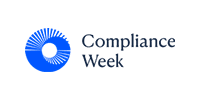
Severin Wirz is an attorney specializing in U.S. and international anticorruption law. His career spans grassroots advocacy and high-stakes investigations—from advancing collective action initiatives with nonprofit organizations in East Africa to guiding Fortune 100 companies through complex cross-border enforcement matters. He currently serves as Director of Ethics & Compliance at Applied Materials, a leading semiconductor equipment manufacturer based in Silicon Valley. Previously, he was Senior Director of Anti-Corruption Compliance at TIAA, where he led global antibribery efforts across the financial services enterprise.

Severin is a frequent contributor to the field, with published articles on anticorruption compliance and editorial roles in key reference works, including Practicing Under the U.S. Anti-Corruption Laws and the series How to Pay a Bribe: Thinking Like a Criminal to Thwart Bribery Schemes.
severin wirz author photo website color

About the author

Severin Wirz is an attorney specializing in U.S. and international anticorruption law. His career spans grassroots advocacy and high-stakes investigations—from advancing collective action initiatives with nonprofit organizations in East Africa to guiding Fortune 100 companies through complex cross-border enforcement matters. He currently serves as Director of Ethics & Compliance at Applied Materials, a leading semiconductor equipment manufacturer based in Silicon Valley. Previously, he was Senior Director of Anti-Corruption Compliance at TIAA, where he led global antibribery efforts across the financial services enterprise.

Severin is a frequent contributor to the field, with published articles on anticorruption compliance and editorial roles in key reference works, including Practicing Under the U.S. Anti-Corruption Laws and the series How to Pay a Bribe: Thinking Like a Criminal to Thwart Bribery Schemes.
Advance praise for Severin Wirz and Bribery Beyond Borders

“The story of the most important U.S. law against corporate corruption reads like a mystery, with suicides and with dirty cash spilling into the coffers of foreign leaders. Never before has the history of the FCPA been told in such detail and with such verve.” —Frank Vogl, author of Waging War on Corruption and The Enablers

“Severin Wirz has produced an exhaustively researched history of U.S. anticorruption law packaged as a thriller. Tracing long-standing concerns in U.S. history about domestic and foreign corruption as well as countervailing concerns about regulatory overreach, he provides an invaluable resource for anyone interested in reimagining the global anticorruption regime.” —Kevin E. Davis, Beller Family Professor of Business Law, NYU Law

“In a world in which corrupt government remains a gargantuan problem, Severin Wirz explores the origins of America’s legal quest to stop it in an absorbing and grippingly told story. Coupling his excavation of the progressive origins of the Foreign Corrupt Practices Act with a call for a pluralistic approach now, Wirz’s investigation of the past is indispensable for reformers present and future.” —Samuel Moyn, Kent Professor of Law and History, Yale Law School

“A meticulously researched and eminently readable history of the U.S. struggle to combat corporate bribery and corruption overseas. Featuring larger-than-life politicians and their rivalries, innovative civil servants, falling foreign governments, suicides, fixers, and schemes to hide and disguise illicit payments, Severin Wirz’s Bribery Beyond Borders reads more like a thriller than a legislative history. A must-read for anyone interested in corporate governance, compliance, and international business.” —Lucinda Low, Board Chair of the Coalition for Integrity and former President of the American Society of International Law

“This couldn’t be a timelier and more important reminder of the significance of the crown jewel of the U.S. anticorruption framework: the Foreign Corrupt Practices Act. If past is prologue, this engaging and meticulously detailed story provides a clear warning of the dangers of returning to a world before rules existed to rein in the worst impulses of the unethical when partnering with the corrupt.” —Gary Kalman, Executive Director of Transparency International U.S.

“Severin Wirz has produced a timely and deeply researched history of the Foreign Corrupt Practices Act. As the global anticorruption landscape shifts, Bribery Beyond Borders lays a historical foundation for thinking critically about the statute’s next chapter. The book’s insights into the FCPA’s origins provide a crucial perspective on current debates over the future of transnational anticorruption enforcement.” —Jessica Tillipman, Associate Dean, The George Washington University Law School

Advance praise for Severin Wirz and Bribery Beyond Borders

“The story of the most important U.S. law against corporate corruption reads like a mystery, with suicides and with dirty cash spilling into the coffers of foreign leaders. Never before has the history of the FCPA been told in such detail and with such verve.” —Frank Vogl, author of Waging War on Corruption and The Enablers

“Severin Wirz has produced an exhaustively researched history of U.S. anticorruption law packaged as a thriller. Tracing long-standing concerns in U.S. history about domestic and foreign corruption as well as countervailing concerns about regulatory overreach, he provides an invaluable resource for anyone interested in reimagining the global anticorruption regime.” —Kevin E. Davis, Beller Family Professor of Business Law, NYU Law

“In a world in which corrupt government remains a gargantuan problem, Severin Wirz explores the origins of America’s legal quest to stop it in an absorbing and grippingly told story. Coupling his excavation of the progressive origins of the Foreign Corrupt Practices Act with a call for a pluralistic approach now, Wirz’s investigation of the past is indispensable for reformers present and future.” —Samuel Moyn, Kent Professor of Law and History, Yale Law School

“A meticulously researched and eminently readable history of the U.S. struggle to combat corporate bribery and corruption overseas. Featuring larger-than-life politicians and their rivalries, innovative civil servants, falling foreign governments, suicides, fixers, and schemes to hide and disguise illicit payments, Severin Wirz’s Bribery Beyond Borders reads more like a thriller than a legislative history. A must-read for anyone interested in corporate governance, compliance, and international business.” —Lucinda Low, Board Chair of the Coalition for Integrity and former President of the American Society of International Law

“This couldn’t be a timelier and more important reminder of the significance of the crown jewel of the U.S. anticorruption framework: the Foreign Corrupt Practices Act. If past is prologue, this engaging and meticulously detailed story provides a clear warning of the dangers of returning to a world before rules existed to rein in the worst impulses of the unethical when partnering with the corrupt.” —Gary Kalman, Executive Director of Transparency International U.S.

“Severin Wirz has produced a timely and deeply researched history of the Foreign Corrupt Practices Act. As the global anticorruption landscape shifts, Bribery Beyond Borders lays a historical foundation for thinking critically about the statute’s next chapter. The book’s insights into the FCPA’s origins provide a crucial perspective on current debates over the future of transnational anticorruption enforcement.” —Jessica Tillipman, Associate Dean, The George Washington University Law School

A brief history of the FCPA

1975
1976
1977
2/3/1975
panam building
The Pan Am Building in Manhattan seen from Park Avenue in 1980. Five years earlier, United Brands CEO Eli Black took his life by jumping from a window in his forty-fourth floor office.
Credit: Roger Wollstadt, Creative Commons license (https://creativecommons.org/licenses/by-sa/2.0/)

Eli Black, chairman of the board of United Brands, commits suicide, prompting an investigation by the SEC.
 

2/10/1975

SEC investigator Ralph Ferrara meets with United Brands executives and begins to uncover bribes paid by the company to government officials in Honduras.

2/19/1975

William M. Gingery, chief of enforcement for the Civil Aeronautics Board (CAB), is found dead. His suicide note hints at overseas bribery within the airline industry. 

2/27/1975
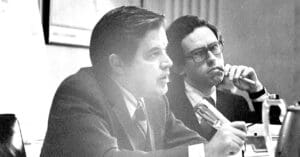
church smc committee hearing
Sen. Frank Church during a hearing of the Senate Subcommittee on Multinational Corporations. Credit: Special Collections and Archives, Albertsons Library, Boise State University

US Sen. Frank Church (D-Idaho) writes an enraged letter to Foreign Relations Committee Chair John Sparkman (D-Ala.) in response to reports that Church’s Subcommittee on Multinational Corporations will be defunded and liquidated by year’s end. 
3/11/1975
nixon reelection campaign 1972
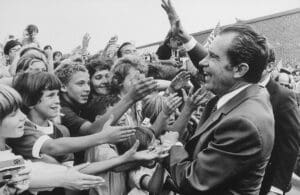
President Richard M. Nixon greets schoolchildren during a stop on his 1972 reelection campaign. Credit: National Archives

As an outgrowth of the Watergate investigation, the SEC files a civil injunctive suit against Gulf Oil Corp. regarding improper campaign contributions to President Richard M. Nixon — one of many such suits brought by the SEC at the time. Although the SEC also uncovers overseas payments, those are not mentioned in the SEC’s suit. (SEC v. Gulf Oil Corp., Civ. Action No. 75-0324, D.D.C., filed March 11,1975)
3/13/1975

The CAB commences enforcement actions against American Airlines and Braniff Airways related to allegations of bribery in the Middle East and Latin America.  

3/17/1975

The first session of the UN Commission on Transnational Corporations begins in New York, underscoring the unified vision of newly independent post-colonial countries for a new international economic order in the Global South alongside generalized anti-corporate sentiment of the New Left within countries in the Global North. 

4/3/1975

The US State Department learns of an impending Wall Street Journal story detailing bribes paid by United Brands in Honduras. The department officially notifies the company it will no longer assist in keeping the bribes a secret.

4/9/1975

The Journal runs a front-page article exposing bribery by United Brands in Honduras. Later that day, the SEC files a civil suit against United Brands and halts trading of the company’s securities.

4/10/1975

The Senate Subcommittee on Multinational Corporations, headed by Idaho Sen. Frank Church, announces a closed-door meeting with United Brands and Gulf Oil to discuss the issue of foreign bribes.

4/17/1975

The Khmer Rouge army invades Cambodia’s capital, Phnom Penh. Cambodia’s American-backed government, led by corrupt leader Lon Nol, collapses.

4/22/1975

A military coup in Honduras deposes chief of state Gen. Oswaldo Lopez Arellano. The Watergate Special Prosecution Force reopens its case against Gulf Oil Corp. after allegations of foreign bribery resurface. Gulf’s board, meanwhile, nominates Sister Jane Scully, a Catholic nun and president of Carlow College, to sit on its board of directors.

4/30/1975
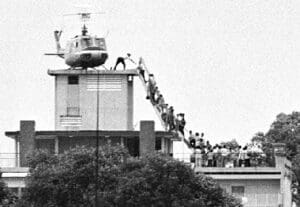
Fall of Saigon
Personnel evacuate the US embassy in Saigon. Credit: US State Department

The final remaining American troops exit Vietnam, marking the fall of Saigon. The Subcommittee on Multinational Corporations votes unanimously to pursue a full investigation into overseas bribery by US corporations. 

5/2/1975

The SEC leaks to the Wall Street Journal information regarding Gulf Oil’s payments of at least $4 million to politicians in foreign countries, prompting governments across Latin America to threaten to expropriate Gulf Oil property unless the company divulges information about bribe recipients.

5/16/1975

The Church Senate Subcommittee on Multinational Corporations begins public hearings into Gulf Oil. The company’s CEO, Bob Dorsey, testifies, detailing bribes paid by the company to governments in Korea, Italy and Bolivia. Surprising many, Dorsey asks Congress to enact legislation outlawing the practice. 

5/17/1975

The Emergency Loan Guarantee Board approves a proposed refinancing plan to extend the federal government’s guarantee to Lockheed Corp. for another two years. This loan would come under scrutiny in the months ahead.

6/3/1975
stephen solarz
US Rep. Stephen Solarz (D-N.Y.)

US Rep. Stephen Solarz (D-NY) introduces H.R. 7563 and H.R. 7539, the first bills to emerge in direct response to new foreign bribery allegations. 
6/7/1975

The Church Senate Subcommittee releases Northrop’s 500-page Ernst & Ernst auditor report, revealing a network of consultants used to pay bribes all over the world. In response, Paul Stehlin, Northrop’s agent in France and former French Air Force chief, burns his personal files and steps in front of a city bus in Paris, dying several days later.  

6/9/1975
thomas v jones
Thomas V. Jones. Credit: Northrop Grumman

The Subcommittee on Multinational Corporations begins public hearings into Northrop. The company’s CEO, Thomas V. Jones, concedes that Northrop modeled its corruption methods on those established by Lockheed.

6/10/1975

Lockheed admits to making modest $20,000 in political contributions in a foreign country but denies all other wrongdoing.

7/16/1975

The Senate begins bribery hearings into Exxon Corp. and Mobile Oil Corp.’s activities in Italy. Ongoing attention contributes to big gains by Communists in Italy’s regional and local elections.

7/17/1975

The US House of Representatives has its first hearings into allegations of bribery by US multinational corporations abroad, signaling that the scandal has widened. Jones resigns as chairman of Northrop’s board.

7/18/1975

Auditing firm Arthur Young refuses to certify Lockheed’s books and records because of bribery concerns, preventing the company from sending out shareholder proxy materials.

8/1/1975
Ford at Helsinki Accords
President Gerald Ford and members of the American delegation take a break at the first Conference on Security and Co-operation in Europe in Helsinki, Finland in July 1975. Credit: National Archives

The Helsinki Accords are signed by 35 nations. Though non-binding and lacking treaty status, the accords represent an attempt to improve relations between the Communist bloc and the West.

8/15/1975
Senator_William_Proxmire
Sen. William Proxmire. Credit: United States Senate Historical Office

Sen. Frank Church writes to Sen. William Proxmire (D-Wis.) in what would eventually be a failed effort to draw dividing lines in the Senate’s investigation of foreign bribery.

8/22/1975

Lockheed’s treasurer, Robert Waters, commits suicide, raising further suspicion of Lockheed’s attempts at a cover-up. 

8/25/1975

The Senate Committee on Banking, Housing and Urban Affairs, chaired by Sen. William Proxmire, begins hearings into Lockheed. The State Department issues rules amending the International Traffic in Arms Regulations (ITAR) requiring American companies to inform foreign governments of their third-party agents and commission payments.

11/4/1975

The SEC requests a subpoena of Lockheed to obtain information regarding payments made overseas.

11/12/1975

The Senate passes Resolution 265, undermining White House efforts to negotiate a multinational code of conduct for corporations in lieu of having to regulate companies through new legislation.

11/28/1975
Ford, Kissinger, Levi in Cabinet meeting
President Gerald Ford and his Cabinet members during a meeting in 1975. To Ford’s right is Secretary of State Henry Kissinger; at the left of the frame in a bow tie is Attorney General Edward Levi. Credit: National Archives

Secretary of State Henry Kissinger asks Attorney General Edward Levi to secure a protective order against the disclosure of the names of people who received bribe payments from Lockheed. That letter is later leaked to the press and ultimately backfires against Lockheed.
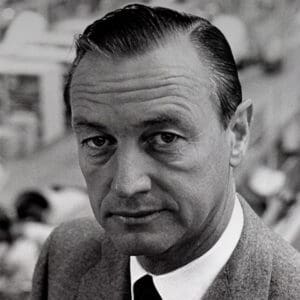
11/30/1975

SEC Chairman Ray Garett resigns and is replaced by Roderick Hills.

12/16/1975

Federal judge John Pratt grants the SEC’s order to enforce a subpoena against Lockheed, unlocking a trove of new documents.

12/30/1975

Gulf Oil submits a 300-page report to the SEC and the D.C. District Court outlining illegal activity, both in the US and abroad.

1/14/1976

The SEC announces a voluntary disclosure program, inviting companies to self-disclose prior bribery activities. Bob Dorsey resigns as CEO of Gulf Oil. 

1/30/1976

The US Supreme Court issues a decision in Buckley v. Valeo, upholding restrictions on campaign contributions and noting that legislation aimed at curbing the “reality or appearance of corruption” is protected under the US Constitution.

2/6/1976

Carl Kotchian, president of Lockheed, provides electric testimony before the Subcommittee on Multinational Corporations, revealing bribes paid by Lockheed to governments all over the world.

2/7/1976
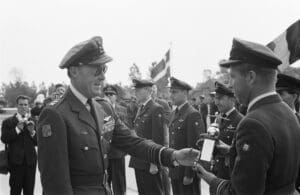
Z._K._H._Prins_Bernhard_op_schietcompetitie_NATO-_Luchtmacht_Leeuwarden,_Bestanddeelnr_912-7153
Prince Bernhard of the Netherlands at a 1961 NATO Air Force shooting competition in Leeuwarden in his medal-adorned military uniform. Credit: Nationaal Archief (Dutch National Archives)

New York Times reporting discloses that a source in Washington has identified the recipient of $1.1 million bribe paid by Lockheed as Prince Bernhard of the Netherlands.

2/13/1976
carl kotchian cc zero
Carl Kotchian at Schiphol Airport in Amsterdam shortly after being named the president of Lockheed. Credit: Nationaal Archief (Dutch National Archives)

CEO Daniel Haughton and COO Carl Kotchian are both forced to resign from Lockheed.

2/18/1976

Japanese Liberal Democratic Party Secretary-General Yasuhiro Nakasone visits the American embassy in Tokyo asking for help to “hush up” the Lockheed matter. A few days later both houses of the Japanese Diet adopt a resolution requesting the United States make available all relevant documents on Lockheed.

3/11/1976

Sen. William Proxmire introduces S. 3133, The Foreign Payments Disclosure Act

3/18/1976
church presidential announcement
Sen. Frank Church speaks during his presidential campaign announcement in 1976. Credit: Special Collections and Archives, Albertsons Library, Boise State University

Sen. Frank Church announces his late run for president.
3/23/1976

The US and Japanese governments enter into a formal evidence-exchange agreement regarding Lockheed.

3/25/1976
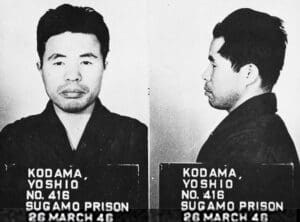
19460326_kodama_yoshio_pd
Mug shot of Yoshio Kodama while he was held as a war criminal in Sugamo Prison in Tokyo in 1946. Credit: Public domain via Wikimedia Commons

Right-wing dissident Mitsuyo Maeno goes on a kamikaze mission and crashes a small plane into the home of Lockheed’s secret agent in Japan, Yoshio Kodama.

3/30/1976

The Supreme Court issues a decision in Ernst & Ernst v. Hochfelder, restricting auditor liability for corporate misconduct in the absence of intentional wrongdoing.  

3/31/1976
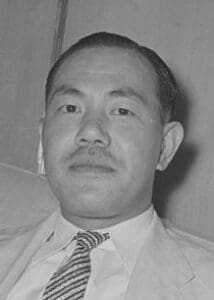
elliot richardson
Elliot Richardson. Credit: Library of Congress

President Gerald Ford establishes the Task Force on Questionable Payments Abroad and names Secretary of Commerce Elliot Richardson as head.
4/13/1976

The SEC brings a civil suit against Lockheed, alleging that the company made at least $25 million in secret payments to foreign government officials. 

5/5/1976

Sen. Frank Church introduces S. 3379, the International Contributions, Payments, and Gifts Disclosure Act.

5/10/1976

Japanese authorities file charges against Yoshio Kodama for funneling bribes on behalf of Lockheed. 

5/12/1976

The SEC publishes a document, “Report on Questionable and Illegal Corporate Payments and Practices,” reporting that 95 US companies have now revealed improper payments abroad, resulting in 14 injunctions. The commission also refers S. 3418 to Sen. William Proxmire, “A  bill to amend the Securities Exchange Act of 1934 to prohibit certain issuers of securities from falsifying their books and records, and for related purposes.” 

6/8/1976

Sen. Frank Church loses badly in the Ohio and California Democratic presidential primaries, effectively ending his presidential campaign. This would begin a streak of bad luck in Church’s political career.

6/14/1976

President Gerald Ford makes a televised statement announcing a White House plan to introduce legislation of his own; the Senate Banking Committee, meanwhile, meets to discuss other three major legislative proposals: S. 3133, S. 3379 and S. 3418.

6/18/1976

Sen. William Proxmire introduces S. 3664, a compromise bill revising that consolidates S. 3418 and S. 3133.  

6/21/1976

The Organization for Economic Co-operation and Development (OECD) releases “Guidelines for Multinational Enterprises,” which includes non-binding obligations on corporations to refrain from bribing government officials.

6/25/1976

Carl Kotchian, Lockheed’s former president, is granted immunity by the Japanese prosecutor’s office and is deposed in the Los Angeles Federal District Court.

6/27/1976
kakuei tanaka
Kakuei Tanaka, former Japanese prime minister. Credit: Bungei Shunjyu Magazine

Leading Liberal Democratic Party politician and former Prime Minister Kakuei Tanaka is arrested in Japan, making global headlines and sending shockwaves throughout the Japanese political system.

6/30/1976

In response to Northrop and Lockheed revelations, the US enacts the International Security Assistance and Arms Export Control Act of 1976, requiring US corporations selling military material abroad to disclose payments, commissions and fees paid to third parties. 

8/6/1976

President Gerald Ford’s bill proposal, titled the Foreign Payments Disclosure Act, introduced by Sen. Warren Magnuson (D-Wash.) as S. 3741, dies in committee without a vote.

8/28/1976
prince bernhard 1976 swedish state visit
Prince Bernhard and Queen Juliana of the Netherlands in 1976 after the prince was stripped of his military positions. Credit: Nationaal Archief (Dutch National Archives)

The Netherlands’ Donner Commission publishes a 240-page report detailing illicit dealings between Prince Bernhard and Lockheed. The reports sells out immediately amid calls for Queen Juliana’s abdication of the throne.

9/15/1976

S. 3664, Sen. William Proxmire’s anti-corruption compromise bill, passes the Senate by a vote of 86-0; Church’s last-minute amendment, S. 2292, fails in a vote of 29-58.

9/28/1976

The Senate Foreign Relations Committee dissolves Church’s Subcommittee on Multinational Corporations and re-designates it as the Foreign Economic Policy Subcommittee. 

10/4/1976

President Gerald Ford signs into law the Tax Reform Act of 1976, ending deductibility of foreign bribes.

1/18/1977

Sen. William Proxmire introduces S. 305, the Foreign Corrupt Practices Act (FCPA). Despite a title change, the statute has exactly the same wording as the previous S. 3664.

1/19/1977

Bypassing Congress, the SEC announces new rules effectively implementing S. 305’s books-and-records and internal accounting control requirements. 

1/20/1977
Jimmy Carter inauguration
1977 inauguration of Jimmy Carter. Credit: National Archives

Jimmy Carter is inaugurated as the 39th president of the United States. Democrats now enjoy overwhelming power in both the legislative and executive branches of government.
2/22/1977

US Rep. Bob Eckhardt (D-Texas) introduces H.R. 3815, the Unlawful Corporate Payments Act, as a companion bill to the FCPA.

5/5/1977
Carter at European summit
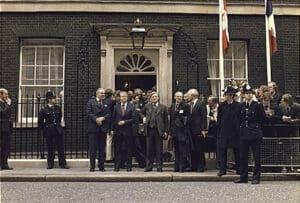
James Callaghan, Jimmy Carter and Helmut Schmidt during the 1977 economic summit. Credit: National Archives

The Senate passes the FCPA by a unanimous voice vote. Carter, in his first trip overseas, attends an economic summit in London and makes a statement noting his commitment to finding a multilateral solution to foreign bribery problem.

11/1/1977

The House votes to pass the Unlawful Corporate Payments Act.

11/3/1977

The conference committee meets to resolve discrepancies between House and Senate versions of the FCPA. Changes include the removal of sections prohibiting making false statements to accountants and the inclusion of a national security exception to the books-and-records provisions.

12/6/1977

Senators agree to conference report language of the FCPA, followed by the House a day later. 

12/19/1977

Inside the White House, Carter signs into law P.L. 95-213. The Foreign Corrupt Practices Act is enacted. 

CCI wide no tag_2025